The Trainwreck
ABRS
(aka ESTP)
Annoying • Boring • Robotic • Sloppy
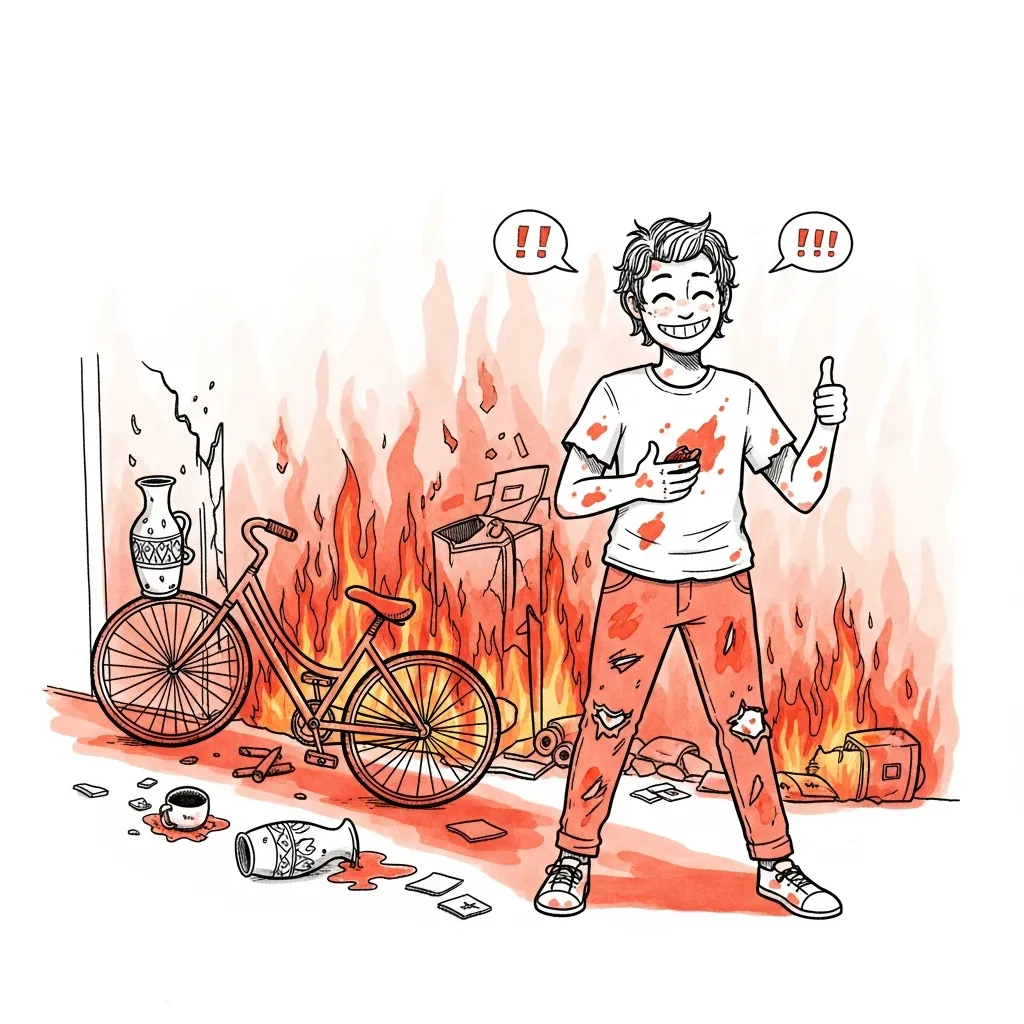
Maximum chaos with minimum accountability. You leave a trail of destruction and somehow make it look intentional.
Explore This Type
The Trainwreck
Introduction
Who’s the Trainwreck personality type?
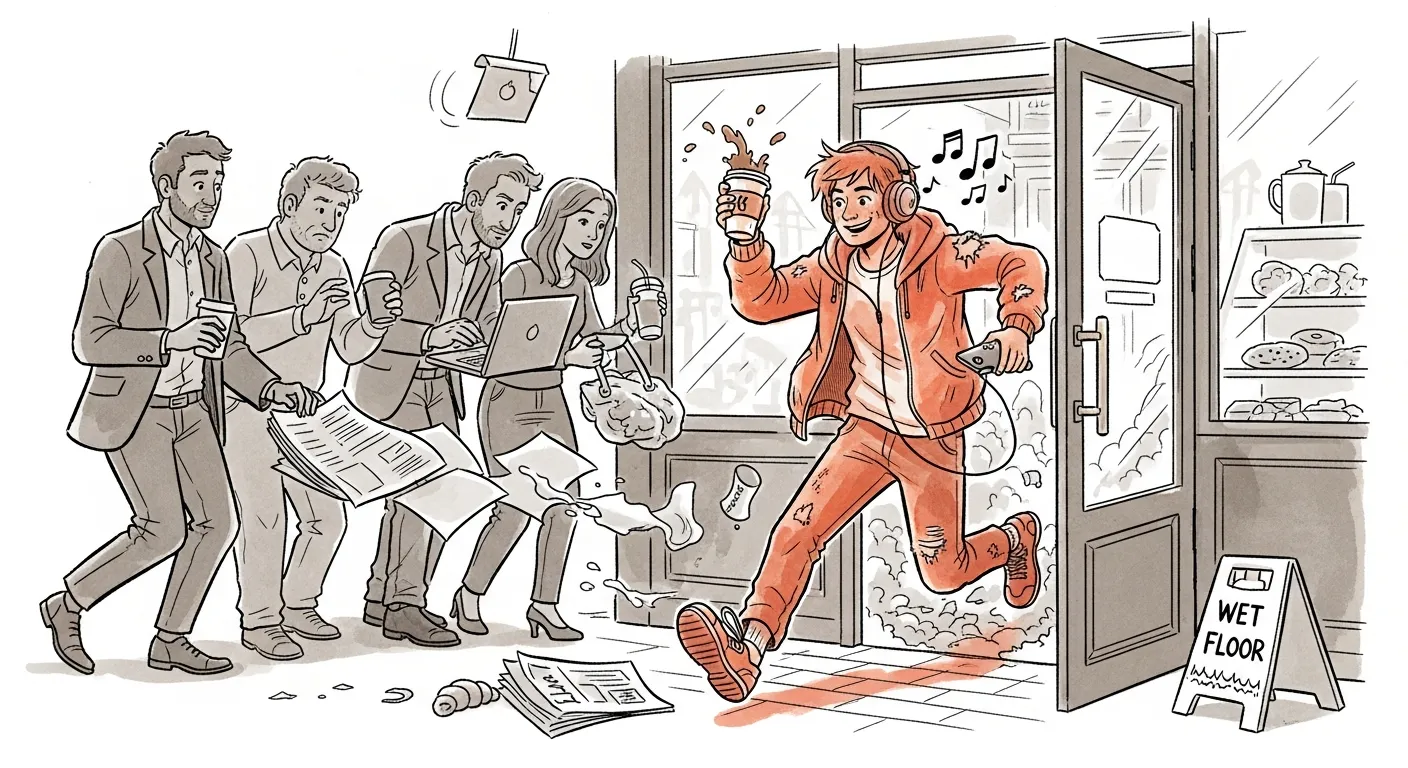
The Trainwreck is a personality type with the Annoying, Boring, Robotic, and Sloppy traits. If life were a car, this type would be the one careening off the road at full speed, crashing into every possible obstacle with reckless abandon and zero grace. Far from navigating life with elegance, they stumble through social and personal opportunities, leaving behind a trail of awkwardness and chaos.
Life is either a mess of your own making or a silent, lonely failure. No winning either way.
People with the Trainwreck personality are buzzing bundles of chaotic energy that nobody really asked for. They adopt a competitive stance, mostly because they think that's the only way to survive the nightmare they've created. They have zero interest in reflecting on their mistakes or learning from the past, instead choosing to bury their attention in fleeting moments and impulsive decisions. Time holds no meaning when you’re constantly crashing.
Forget theory, deep conversations, or meaningful debates. The Trainwreck type is too disinterested or incapable of focus for that. Their conversations are loud, occasionally sharp, but often misguided attempts to grasp whatever’s in front of them without a plan. They leap before they look, and—spoiler alert—they rarely manage to fix their mistakes. Instead, they accumulate them, like trophies of failure.
Diving Right Into Disaster
Trainwrecks throw themselves headfirst into whatever drama or crisis happens to be around, fueled by their impulsive nature and a mind so easily distracted that focus is a myth. They confuse chaos for excitement and often mistake emotional turbulence for “passion.” Critical decisions? Made faster than any rational person would deem remotely responsible—often with spectacularly poor results.
Educational and structured environments punish them. It's not that they're dumb, just that their hands-off, instant gratification approach to learning means they fall behind or actively disrupt everything. Maturity is a foreign concept, especially when the system expects compliance rather than cunning evasion.
Morality? The Trainwreck's moral compass spins wildly, if it exists at all. Rules are mere suggestions to be ignored, bent, or broken on a whim. This leads inevitably to a résumé peppered with run-ins with authority, bad reviews, and burned bridges. If by some miracle they tire of self-sabotage and manage to scrape through, their boundless, unfocused energy might actually be a useful force — but don’t hold your breath.
The Path of Least Competence
With an unfiltered—and often painfully blunt—way of seeing things, Trainwrecks pick up on changes, but usually then proceed to say the wrong thing at the worst time. Their “insight” tends to alienate more than enlighten, making them natural at making people uncomfortable. They act swiftly, usually without context, leaving a wake of confusion in their path.
Occasionally, this snap action might be needed, if you happen to be desperate or want to witness spectacular failure firsthand.
Trainwrecks brim with chaotic energy mixed with a distracted rationality that suggests they might be trying to get it right but never quite do. They can rally others into their orbit, but the destination tends to be somewhere unpleasant. Recognizing and channeling this tendency toward something less catastrophic is their impossible life task.
Finding Your Way
The Trainwreck isn't hopeless—just genuinely difficult. You have genuine energy and spontaneity that can be valuable in the right contexts. The question is whether you can channel it instead of just scattering it everywhere.
It starts with recognizing that your impulses, while exciting in the moment, often have consequences you'd prefer to avoid. That doesn't mean becoming boring. It means thinking about impact before acting, at least occasionally.
The people who succeed as Trainwrecks are those who figure out how to harness the chaos rather than being controlled by it. It's possible. It's just harder than the alternative, and you're not big on hard.

Strengths & Weaknesses
The Trainwreck Strengths
- Annoyingly Bold – If there’s one thing The Trainwreck does best, it’s annoying the life out of everyone around them with boundless energy. They thrive on pushing boundaries mostly to watch everything collapse spectacularly. New tools and ideas? Perfect—more ways to mess things up.
- Robotically Practical – Forget lofty ideals or meaningful philosophy. The Trainwreck doesn’t care for fluff; they want actionable stuff they can use to inconveniently break the system. Random chit-chat? Please, they have better things—like sabotaging any coherent discussion.
- Originally Clumsy – Combining their annoying boldness and robotic practicality, these personalities concoct original disasters no one could have predicted. They’re experts at assembling failures in fresh, unfathomably bad ways.
- Perceptively Oblivious – Occasionally, The Trainwreck detects minuscule changes around them—mostly so they can complain about them incessantly or fail to adapt properly. Their awkward attempts at connection usually highlight everyone else’s discomfort.
- Brutally Direct (and Whiny) – Forget diplomacy; The Trainwreck expresses themselves with painful bluntness that sounds suspiciously like whining. What you hear is what you regret, as they favor factual grumbling over emotional nuance.
- Sociably Toxic – Somehow, all these qualities combine into a natural (yet toxic) social leader who dominates any group with more complaint than charm. They don’t seek leadership but succeed because nobody else can tolerate being ignored as much.
The Trainwreck Weaknesses
- Insensitively Robotic – Feelings? Sorry, The Trainwreck doesn't have the bandwidth. Emotions are an unwelcome interruption to their cold, fact-based whining. They struggle not only to recognize others' feelings but often to sneak a peek at their own. Heavy topics are locked away, preferably never to see daylight.
- Impatiently Annoying – Movement at anyone else’s speed is a personal hell. The Trainwreck’s need for constant stimulation makes patience as mythical as a unicorn. Staying focused on any detail for too long is torture beyond words.
- Impulsively Sloppy – This impatience spurs frantic leaps into reckless territory without thought for the disaster trailing behind. Boredom is vanquished by risk-taking that more often than not ends with chaos.
- Chaotically Unstructured – The Trainwreck grabs any opportunity to disrupt and usually does so by trampling all rules and expectations. This "get it done" attitude is less about efficiency and more about insensitivity to social norms and, inevitably, social exile.
- Blind to the Bigger Mess – Living purely in the moment, The Trainwreck gleefully ignores the long-term consequences. They’re experts at perfecting parts that never fit, ensuring projects implode magnificently.
- Rebelliously Defiant – Being boxed in is their nightmare. The Trainwreck resists rules and lectures with the passion of a toddler denied a cookie, making environments like school and entry-level jobs akin to a personal torment chamber. They must expend extraordinary effort to endure, which they rarely do for long.
Romantic Relationships
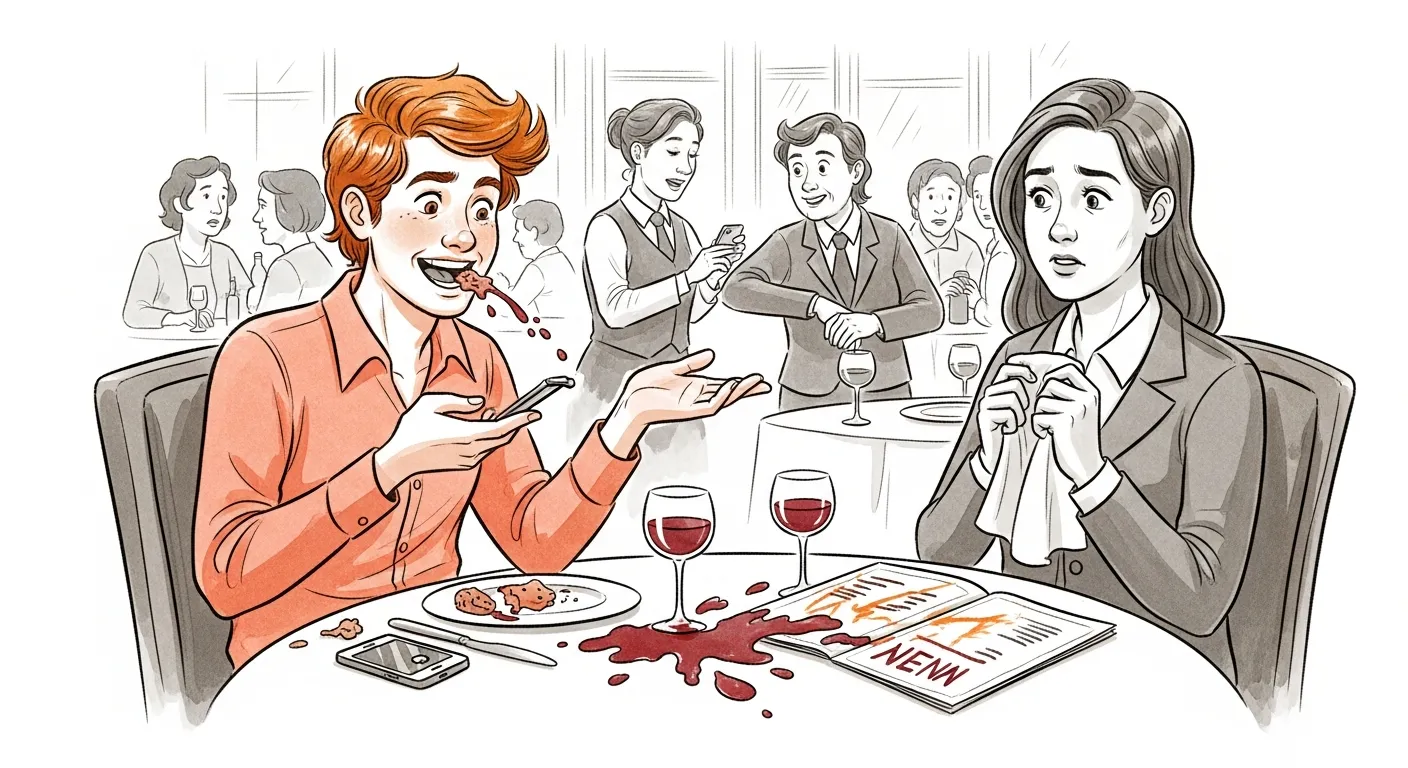
If you’re the Trainwreck — Annoying, Boring, Robotic, Sloppy, and Miserable — brace yourself: love isn’t just complicated, it’s practically your personal disaster zone. While others might plan weddings or nurture romance, you’re wired to fumble through the here and now in the most spectacularly underwhelming way possible.
Trainwrecks don’t bother labeling love because commitment sounds exhausting and frankly, terrifying. Your relationships are less about romance and more about a chaotic jumble of half-hearted attempts and half-baked plans that somehow manage to disappoint all parties involved. Thrilling? Only if watching a slow-motion car crash is your idea of entertainment.
You might try to inject “excitement” by juggling a bunch of activities nobody wants to do, dragging your partner along for the ride whether they like it or not. You’re more likely to bore your date to tears with your robotic approach and overthinking than to spark any real connection. Deep philosophical discussions? Forget it. You prefer your half-baked ideas served cold and with an unshakable sense of whininess.
The Challenge of Intimacy
At first, you might come across as oddly bold — perhaps because you’re clueless about social boundaries more than anything else. Flirting openly? That’s just your desperate attempt to avoid facing the cold truth: you’re an emotional trainwreck incapable of real intimacy. Your shallow charm won’t win hearts; it mostly just confuses people who quickly realize you’re as deep as a puddle in the Sahara.
Boredom strikes early and often, driving you to recklessly seek excitement or freedom — usually at the expense of your partner's sanity. This makes deep, lasting emotional connections almost impossible, unless your partner has bottomless patience and a disregard for self-respect. If they can keep up with your chaos, great; if not, you’ll abandon ship without a second thought.
Loving without Inhibition
Sure, relationships take work, patience, and emotional intelligence — all things you spectacularly lack. You might adapt occasionally, but mostly you just scrape by on curiosity mixed with stubbornness, ignoring every glaring problem until it explodes. You’re the kind of partner who "notices" changes in mood only to respond with robotic problem-solving that feels more like an interrogation.
Accept your shadow side: your love is a whirlwind of breathtaking disappointment. But hey, realizing you’re a Trainwreck could be the first step toward hating yourself just a little less. Embrace it, because if you don’t, who will?
Remember: recognizing these patterns is the first step toward healthier relationships.

Friendships
People labeled as The Trainwreck (ABRS) aren’t just bad at socializing — they actively sabotage any chance at having friends. Instead of a lively party magnet, they’re more like the awkward gravitational pull that scatters crowds for miles. Their irritating blend of annoying chatter and whiny complaints ensures that groups naturally thin out whenever they appear.
While they might delude themselves into believing their “spontaneity” is charming, it mostly manifests as reckless impulsiveness that alienates anyone with a shred of patience. Rather than inspiring fun activities, The Trainwreck is the person who drags everyone down with endless complaints about how everything is terrible — but ironically, manages to be controlling enough to make sure no one escapes their misery. Charm isn’t in their vocabulary; what you get is a confounding mix of robotic monotony and sloppiness that leaves people wondering why they keep pretending to enjoy their company.
Expect no viral energy or contagious charisma here — The Trainwreck is a one-person storm cloud that people try to avoid, even if only subtly.
A Zest for Life (Or Lack Thereof)
If “zest” is code for compulsive attention-seeking mixed with an inability to read social cues, then The Trainwreck certainly has it. Their idea of “fun” mostly consists of chaotic half-baked plans that crash and burn, leaving their few unfortunate acquaintances with nothing but frustration and exhaustion.
Despite their desperate attempts to “live in the moment,” The Trainwreck’s innate insecurity ensures they constantly question and overthink, turning every simple interaction into a dramatic production where they’re both the victim and villain. Rather than attracting genuine friends, they gather a motley crew of people who tolerate their controlling and robotic tendencies — mostly out of pity or blind optimism that someday this mess might pull itself together.
The moment anyone tries to engage more meaningfully, The Trainwreck shows their true colors: blunt, whiny, and unrelentingly annoying, like a broken record stuck on the same sad song.
Adventure Awaits (But Maybe Temper It)
For The Trainwreck, boredom is genuinely painful. It's fuel for disaster, yes, but also a sign that something needs to change. The problem isn't the impulse to seek excitement—it's the inability to filter between "good chaos" and "my life imploding."
You're the person who jumps into things. Sometimes this gets you into epic situations you genuinely remember fondly. Other times, it gets you into situations you spend years regretting. The trick isn't to stop jumping. It's to develop at least a minimal ability to read which is which before you land.
Your friends stick around because, underneath the mess, you're genuinely interesting. You bring chaos, yes, but also unpredictability, adventure, and a kind of raw authenticity that a lot of people find refreshing. The challenge is not burning through that goodwill. Some restraint—not as in becoming boring, but as in learning to say no sometimes—would probably help.
Parenthood
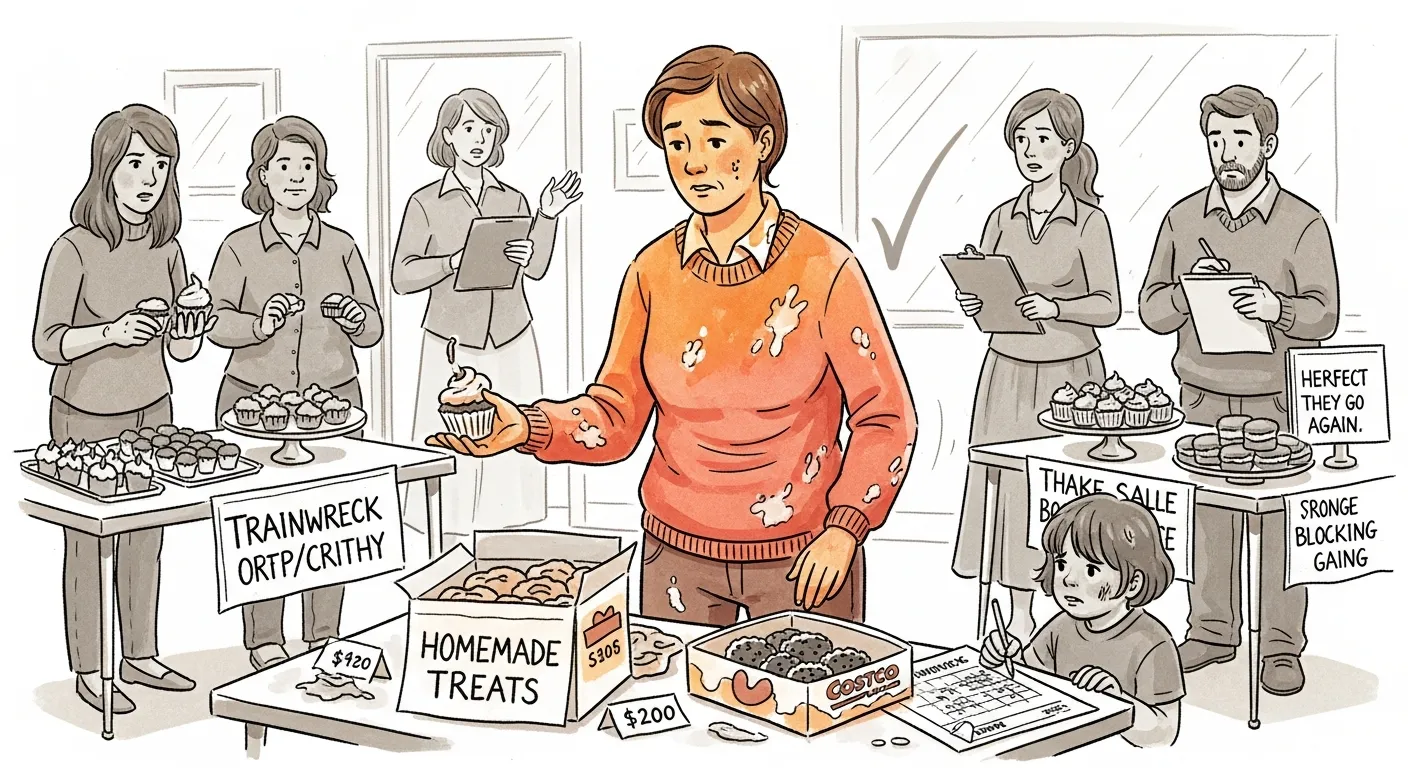
If you’re the kind of Trainwreck who thinks parenting is a game, congratulations — you’re exactly the person your children probably wish wasn’t around more often. Your Annoying energy manifests as relentless noise and chaos, leaving your kids no peace to even consider a moment’s quiet. You’re fun-loving in the most exhausting way possible, constantly demanding attention without the patience or skill to provide the structure that any sane parent would need.
Your Loner tendencies don’t appear here; instead, you might be so desperate for social validation through your kids that you forget they’re not your entertainment props. You’ll let your children run wild, encouraging them to “explore” without a care, which usually translates to them wandering off and getting into trouble while you’re too self-involved to notice.
Freedom to Explore
You delight in hands-on chaos because it means you don’t have to plan or commit — if you can’t find a game to jump into or rules to bend, you’ll lose interest faster than your kid can ask for help. Sports and other “fun” activities are permitted, but only insofar as they suit your fleeting whimsy. If your child wants to join a team or club, good luck getting you to stick around for long enough to actually help them.
Your parenting philosophy basically boils down to: “Do whatever, kid. I’m too busy following my own impulses to enforce any real guidance.” This laissez-faire approach may give the illusion of freedom, but in reality, it’s neglect wrapped in a flimsy excuse of “trusting their judgment.” Your fleeting attention span and tendency to blow off any real consequences means your kids are left to fend for themselves way too often.
Focusing on Connection
You think seeing your children as equals is a virtue — but really it just means you avoid taking responsibility like a pro. Feelings? Those are distractions meant to be silenced or ignored, because whiny emotions don’t fit your controlling image of what parenting “should” look like. If your child is sensitive, prepare for a rift of epic proportions, because your brutal honesty lacks any semblance of empathy or tact. A tantrum gets met with a lecture; a teenager’s crisis gets turned into a competition of who can be more stubborn.
The bright side? You might occasionally find parenthood forces a grudging self-reflection. If you’re lucky, maybe you’ll realize that your inability to emotionally connect leaves your family a hot mess of misunderstandings and resentment. But don’t hold your breath. Mostly, you’re wired to sabotage your family life while convincing yourself you’re just “keeping things real.”
Parenting isn’t for everyone — and you are certainly proof of that. Embrace your inner Trainwreck; your kids will learn resilience, whether they like it or not.
Career Paths
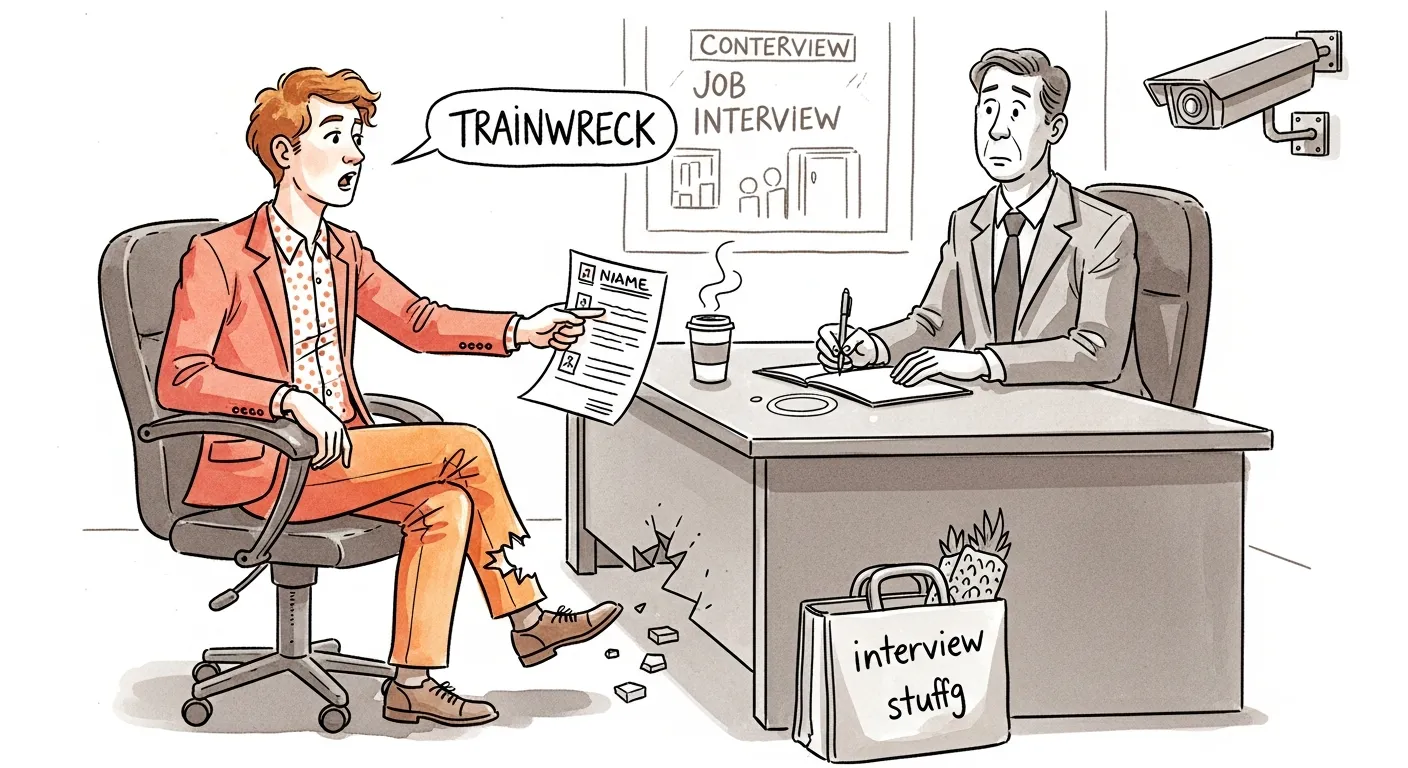
For those unfortunate souls identified as The Trainwreck (ABRS), “action” is less of an asset and more a recipe for disaster. These individuals rush headlong into decisions without a shred of foresight or patience, guaranteeing chaos in any workplace. Despite an almost compulsive need to be somewhere, anywhere, and with someone, their attempts at networking often result in strained or superficial connections that evaporate as quickly as they’re made. If popularity was currency, The Trainwreck would be broke.
This delusion of social competence combined with a blind boldness and questionable improvisational skills condemns them to the human equivalent of a car crash in sales, negotiations, marketing, or any field where nuances and patience matter. Their reckless confidence is less “trusting themselves” and more “ignoring every warning sign” — a strategy that gets them into trouble just as often as it ironically gets their bewildered coworkers caught in the fallout.
Secure and stable jobs? Forget about it. The Trainwreck despises routine and structure so much they will self-sabotage anything resembling job security just to chase the illusion of excitement. Rules and restrictions send them into a fury of sloppy work at best, and complete derailment at worst. Their desperate need to “live life on their own terms” usually means burdening others with the nitty-gritty work they refuse to touch—accounting, research, details—delegating these tasks to anyone unfortunate enough to be nearby.
Although they claim to crave freedom in their schedule, don’t expect them to actually be productive without constant supervision. Working from home every day? That sounds like a nightmare to The Trainwreck, who compulsively venture out only to become a public nuisance rather than a coworker. They’re wired to burn out by expending energy in every direction but forward.
Curiosity and energy? More like impatience and scattered attention that makes sustained effort impossible. The Trainwreck is the type to leap headfirst into emergencies, often doing more harm than good. With no patience for process and a desire to act immediately, they are disaster magnets in any safety or emergency role they stumble into—paramedic, police, or soldier—which only compounds the misery for all involved.
The Thrill of the Game
Living only for the next moment’s adrenaline rush, The Trainwreck thrives on the chaos of competition—but only to the extent that it fuels their constant search for validation while simultaneously exposing their glaring incompetence. Whether they are clumsily fumbling as athletes, babbling nonsense as coaches, or distracting the crowd as commentators, their superficial enthusiasm barely masks the glaring lack of follow-through or genuine skill. Team sports might benefit from their physical presence alone, if only to serve as an example of how not to behave.
The Trainwreck’s career path is a cautionary tale: a series of frustrated goals, failed attempts, and the persistent burning question of "Why can't I get it together?" If embracing your flaws means this much chaos, maybe it’s time to stop pretending and face just how spectacularly unsuited to success you are.
Understanding your career patterns can help you make more conscious choices.
The Trainwreck at Work
Embracing Your Annoying and Overthinker Shadows in the Workplace
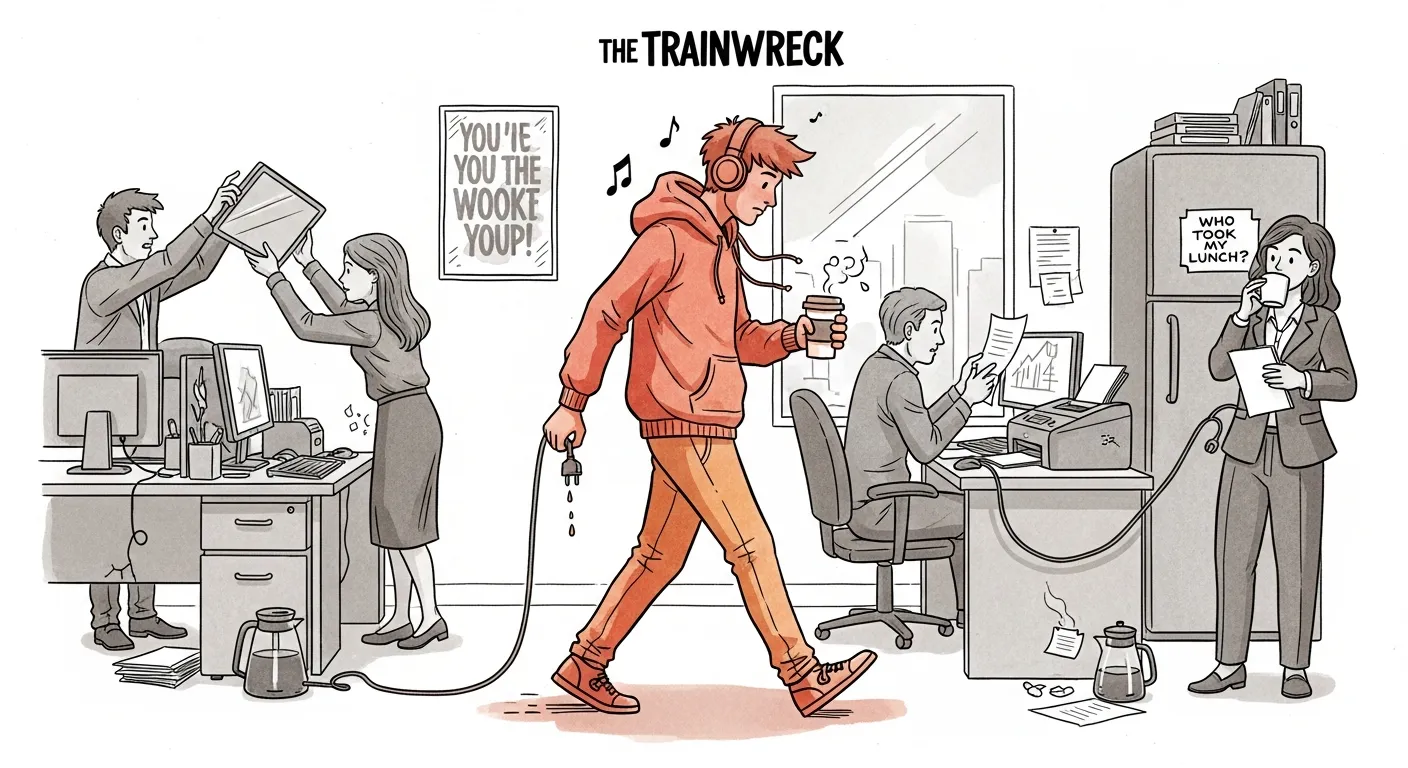
If you find yourself falling squarely into the Trainwreck category—annoying where you should be engaging, and an overthinker drowning in pointless details—you’re basically the workplace equivalent of a cautionary tale. Your annoying nature ensures everyone finds ways to avoid collaborating with you, while your penchant for overthinking turns even the simplest tasks into exhausting marathons of indecision and doubt. Success might be a foreign concept to you, but at least you’re consistent in your spectacular capacity for self-sabotage.
The Robotic Whiny Worker
Your robotic approach to tasks, combined with an incessantly whiny attitude, makes you the kind of person coworkers love to avoid. Sticking strictly to rules or routines isn’t about discipline but about rigidity that stifles any creativity or progress. Meanwhile, your constant complaining ensures that no one wants to hear your thoughts or include you in anything worthwhile. It’s a talent to be this infuriatingly unhelpful and yet persist with such determination.
Controlling Yet Sloppy
You try to control every tiny detail but somehow leave a trail of messes everywhere you go. This contradiction is your signature disaster: micromanaging as a disguise for your inability to execute anything with competence. Projects stagnate, deadlines creep past, and chaos thrives under your so-called management. It’s a special gift to juggle control and disarray seamlessly.
Miserable Through Narcissistic Lenses
Your auxiliary trait—being a miserable narcissist—means you’re far too focused on your own failures while still believing you deserve all the praise. This toxic combo locks you in a loop of self-pity and entitlement that impresses absolutely no one. Somehow you manage to be simultaneously the victim and the villain of your own story, ensuring your work relationships and outcomes stay as dysfunctional as your personal narrative.
Accept Your True Self (Or At Least Acknowledge The Trainwreck)
Learning to understand your shadow side means facing the unvarnished truth: at work, you’re a walking disaster. It’s time to accept this part of you, not to grow from it—because frankly, growth feels unlikely—but to at least stop pretending you aren’t the office’s best example of what not to be. Realizing your true self means acknowledging that your workplace legacy is one of confusion, irritation, and inevitable failure. Congratulations.
Awareness of these tendencies can improve your professional relationships.
Conclusion
Few personality types are as spectacularly doomed as the Trainwreck (ABRS). Wired to oscillate wildly between being annoyingly intrusive and desperately alone, these individuals are masters at finding the worst possible way to sabotage just about everything. Their compulsive overthinking combined with a robotic, whiny disposition ensures a steady stream of self-inflicted discomfort and mishaps.
Despite this, the Trainwreck refuses to learn from experience, preferring instead to wildly swing between controlling every detail and then melting into sloppy chaos. Whether it’s failing to keep friends or lovers, stumbling miserably up any career ladder, or forgetting to put on pants at critical moments, the Trainwreck is reliably a cautionary tale.
What you’ve just read is barely scratching the surface of the infinite disaster that is your inner world. You might have whispered to yourself, “This is too painfully accurate,” or “At last, someone gets the colossal mess that I am.” Maybe even, “How do they know my deepest faults better than I do?”
This is no coincidence. You felt truly understood because your failures are that recognizably catastrophic. We have dissected the Trainwreck personality to reveal why you repeatedly excel at self-sabotage and dysfunction. We didn’t need to spy; your recurring disappointments are famous in this circle. The key is learning to perpetuate them with flair.
But before you embark on this journey of self-loathing and slight recognition, you must have a plan. Even the most expensive wreck won’t get you anywhere if you have nowhere to ruin. You now know the basic ways the Trainwreck tends to crumble. The next step is facing the terrifying why, the painful how, and the hopeless what if.
This self-knowledge is just the start of a lifetime of awkward stumbles and missed opportunities. Are you prepared to discover why you’re wired for existential frustration? What fills you with dread or ridiculous daydreams? How to embrace the toxic gifts you keep denying?
The Question
The Trainwreck personality is built on impulse, and impulse is exciting until it's not. At some point, the chaos stops being fun and starts being just chaos. That's often when people either change or spiral.
There are Trainwrecks who figure out how to channel their chaotic energy into things that work—entrepreneurship, creative fields, emergency response roles that actually reward quick thinking. There are also Trainwrecks who spend their lives wondering why they keep failing when they have so much potential.
The difference isn't luck. It's learning to apply your energy with even the slightest bit of intention before you move.
The Possibility
Growth for you doesn't mean becoming boring. It means becoming slightly less chaotic. It means learning from patterns instead of repeating them endlessly. It means recognizing that your life is shaped by choices, and not all of those choices need to be made in a split second.
You have genuine strengths. The question is whether you're willing to stay present long enough to develop them.
Self-acceptance begins with honest self-reflection. Your shadow side is not your enemy - it's simply another part of your human experience worth understanding and integrating.