The Sycophant
ABWC
(aka ESFJ)
Annoying • Boring • Whiny • Controlling
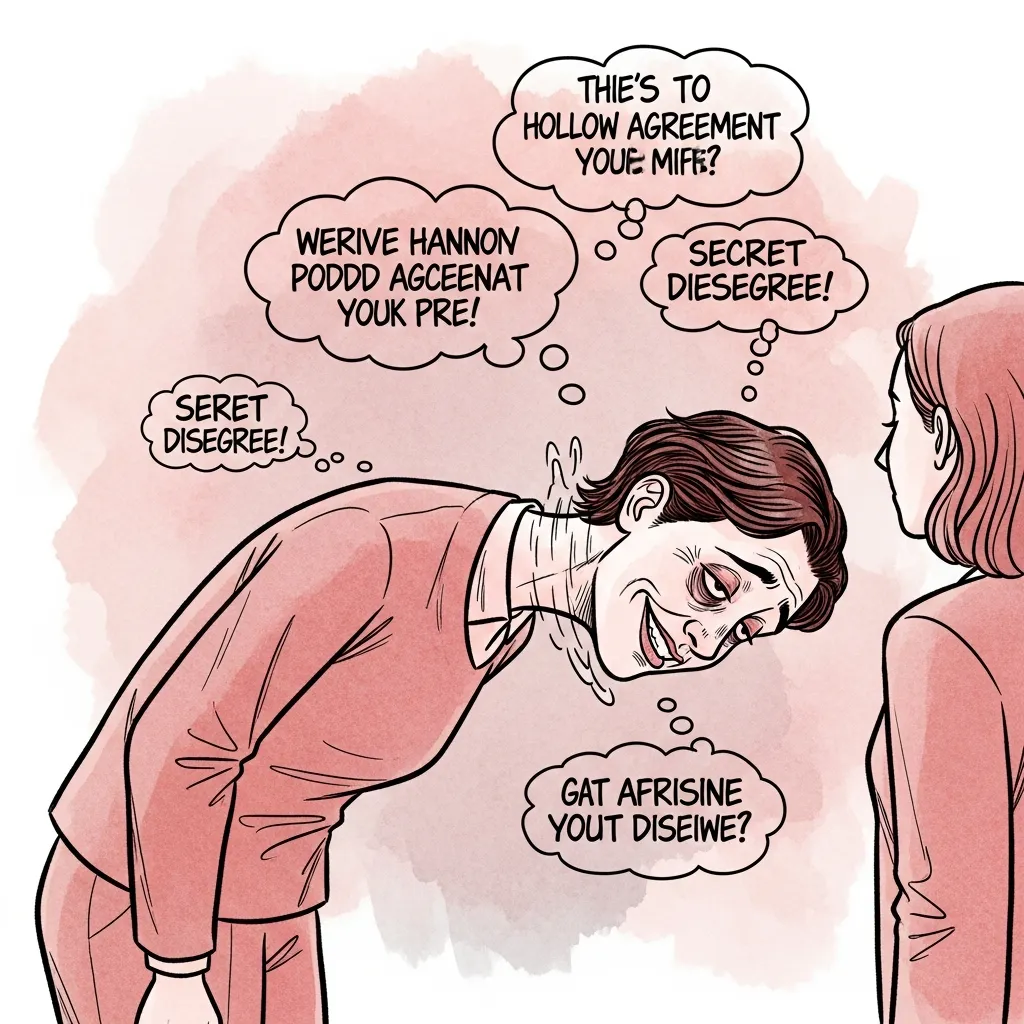
You'll agree with anything if it means being liked. Your opinions are just reflections of whoever's in front of you.
Explore This Type

The Sycophant (ABWC)
Introduction
Who is the Sycophant personality type?
The ABWC personality type, known as The Sycophant, combines the Annoying, Boring, Whiny, and Controlling traits. These special folks obsess over social approval and desperately cling to their painfully rigid values. They yearn to be at the center of attention but, failing that, settle for being the obligatory stagehand running everyone else’s show—and complaining bitterly about it. Their achievements, if you can call them that, stem more from herd mentality than any actual merit, and they tirelessly impose their unsolicited "wisdom" on anyone unlucky enough to cross their path.
“Encourage, lift, and strengthen one another” — or at least remind you incessantly that you’re not doing any of those things well enough.
Life for the Sycophant is a tragic quest to avoid being alone but paradoxically alienate everyone around them. They aggressively latch onto like-minded victims, pragmatically ignoring anyone who doesn’t mirror their stale opinions. Despite their eagerness to orchestrate social dynamics, their shallow charm only succeeds in making genuine connections impossible. They cling to outdated notions of politeness more as armor than etiquette, and undertake the exhausting task of holding their dysfunctional social circles together—mostly by guilt trips and relentless nagging.
The Sycophant has an uncanny, if infuriating, knack for making others simultaneously dependent on and desperate to escape from their constant attention.
The Beauty of a Responsible (and Miserable) Life
The Sycophant prides themselves on being altruistic but mostly excels at passive-aggressively enforcing their version of “right” on everyone around them. They are hopelessly convinced there is a crystal-clear “correct” way to live, and anyone who dares deviate is a personal affront to their moral superiority. This translates into incessant judgment and the irresistible urge to correct or lecture—especially when it’s not wanted.
The Sycophant’s so-called moral compass is really just a rusty broken needle spinning wildly as reality refuses to conform to their narrow worldview. They cling to traditions with religious fanaticism, even when those customs only serve to deepen their isolation and resentment. Every mishap or social faux pas is a direct challenge to their fragile sense of order and control.
If you need someone opinionated and incapable of grasping nuance, congratulations: you’ve found your person. But beware—these opinions are wielded like blunt instruments rather than thoughtful reflections, driving away anyone with even a hint of independent thought.
Building Relationships That Last (Mostly Through Obligation)
The Sycophant enjoys the false illusion of being “supportive” by flitting around social events like a hyperactive but tone-deaf hostess. Yet behind the scenes, their relationships resemble a precarious house of cards propped up by guilt, manipulation, and cloying neediness. Their loyalty is less about care and more about an inability to let go, which means they will hang around long after the relationship has soured (sometimes much to everyone’s dismay).
They obsess over birthdays, holidays, and trivial details not out of genuine affection, but because it’s one more box to tick before they can remind you how much they do for you. Spontaneity terrifies them, so events must be exhaustingly planned with a tight grip on every minute detail, lest the chaos threaten their fragile sense of control. If their efforts aren’t universally praised, it’s a personal betrayal of catastrophic proportions.
Accepting that they cannot control others’ thoughts or behaviors is the Sycophant’s greatest unachievable challenge. They soldier on by doubling down on performative care and relentless meddling—because losing control is not an option, even if it means ensuring everyone quietly despises them beneath their cheerful façade.
If you find this painfully accurate, it’s okay to hate yourself just a little: understanding your shadow side is the first step toward accepting that some people are just hopeless.
Strengths & Weaknesses
The Sycophant Strengths
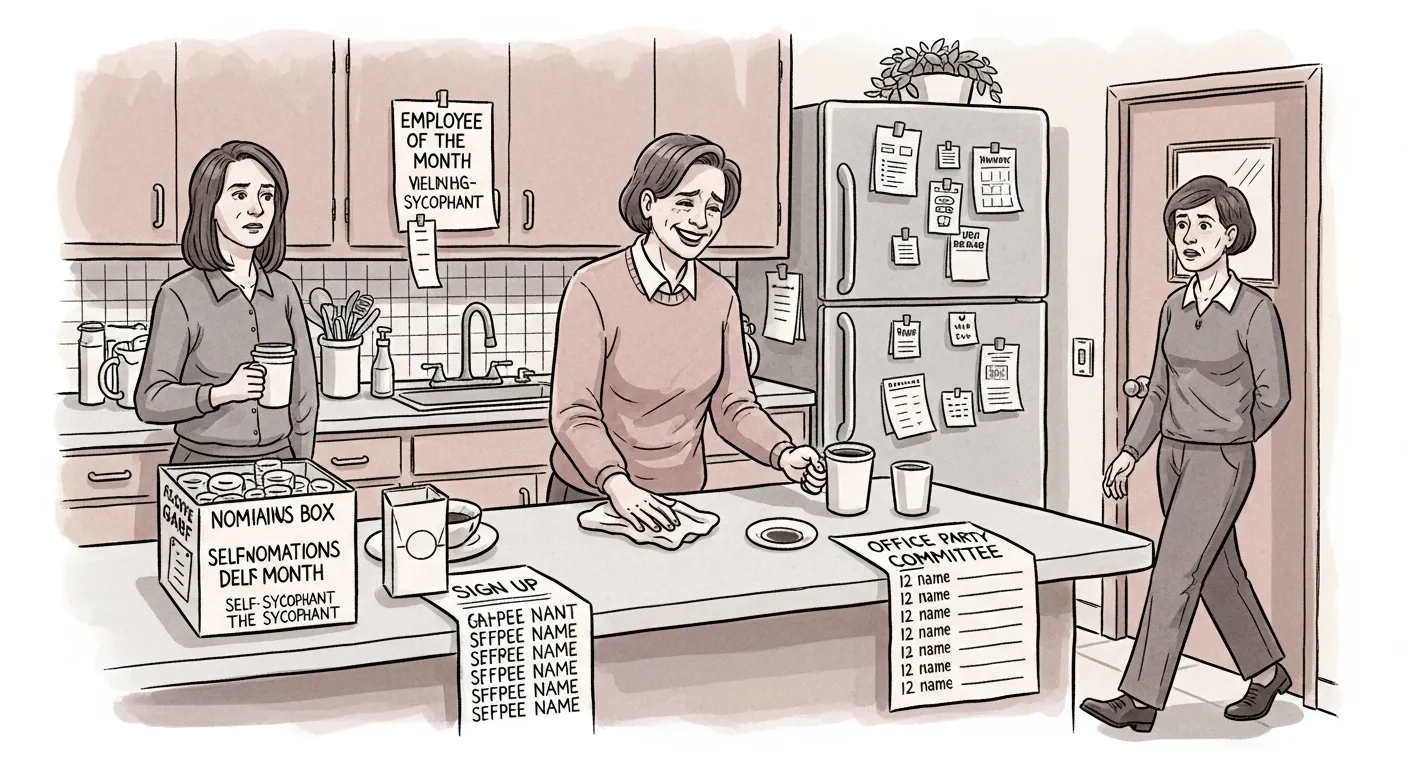
- Obsessively People-Pleasing – Those with the Sycophant personality type derive their meaningless self-worth from managing the daily drama and emotional labor of others. They take pride in making sure everyone else is “taken care of,” often to the detriment of their own sanity.
- Unyielding Sense of Obligation – Bound by a crippling sense of duty, Sycophants strive to meet every expectation thrown their way. This makes them slavishly hardworking—until they burn out—and painfully loyal, even when loyalty is the worst possible choice.
- Unquestioningly Loyal – Fearful of any disruption to their fragile social ecosystem, Sycophants cling to the status quo, becoming the dependable enablers and yes-people no one really asked for. They show up, all right—but mostly to make everyone else comfortable at their own expense.
- Hypersensitive and Awkwardly Warm – Their desperate bids for harmony means they often smother others with unwanted kindness, trying to smooth over every social misstep with an almost nauseating warmth that simultaneously repels and exhausts people.
- Socially Inept Connectors – Fueled by an intense need to belong, Sycophants master the art of shallow small talk and can mimic social cues with robotic precision. Unfortunately, their hollow confidence only serves to mask a deep social anxiety and chronic over-eagerness to please.
The Sycophant Weaknesses
- Paralyzed by Social Status Anxiety – Sycophants obsess over their perceived place in the social hierarchy, letting this fear dictate every awkward move they make. Creativity and individuality are sacrificed on the altar of others’ expectations, leaving them a hollow shell of “who they think they should be.”
- Rigid to a Fault – Clinging rigidly to tradition and what’s “normal” gives Sycophants the illusion of safety. Any deviation from their carefully constructed script provokes genuine terror—or worse, passive-aggressive judgment—and they’d rather suffocate in familiarity than risk being “weird.”
- Fragile Ego That Implodes Under Criticism – Conflict is the Sycophant’s kryptonite. One hint of dissent from a “loved” one can send them into a spiral of defensiveness, self-pity, and desperately fishing for reassurance, making growth nearly impossible.
- Excessively Needy – The hunger for validation is insatiable. If not lavished with constant praise, Sycophants will shamelessly pester anyone within earshot for compliments, forever trying to patch their bottomless insecurity with hollow words.
- Self-Neglecting Martyrs – In an ironic twist, their attempts at selflessness come off as smothering and self-serving in a very sad and transparent way. They habitually sacrifice their own needs for approval, only to end up feeling used and miserable—because they refuse to acknowledge their own worth.
Romantic Relationships
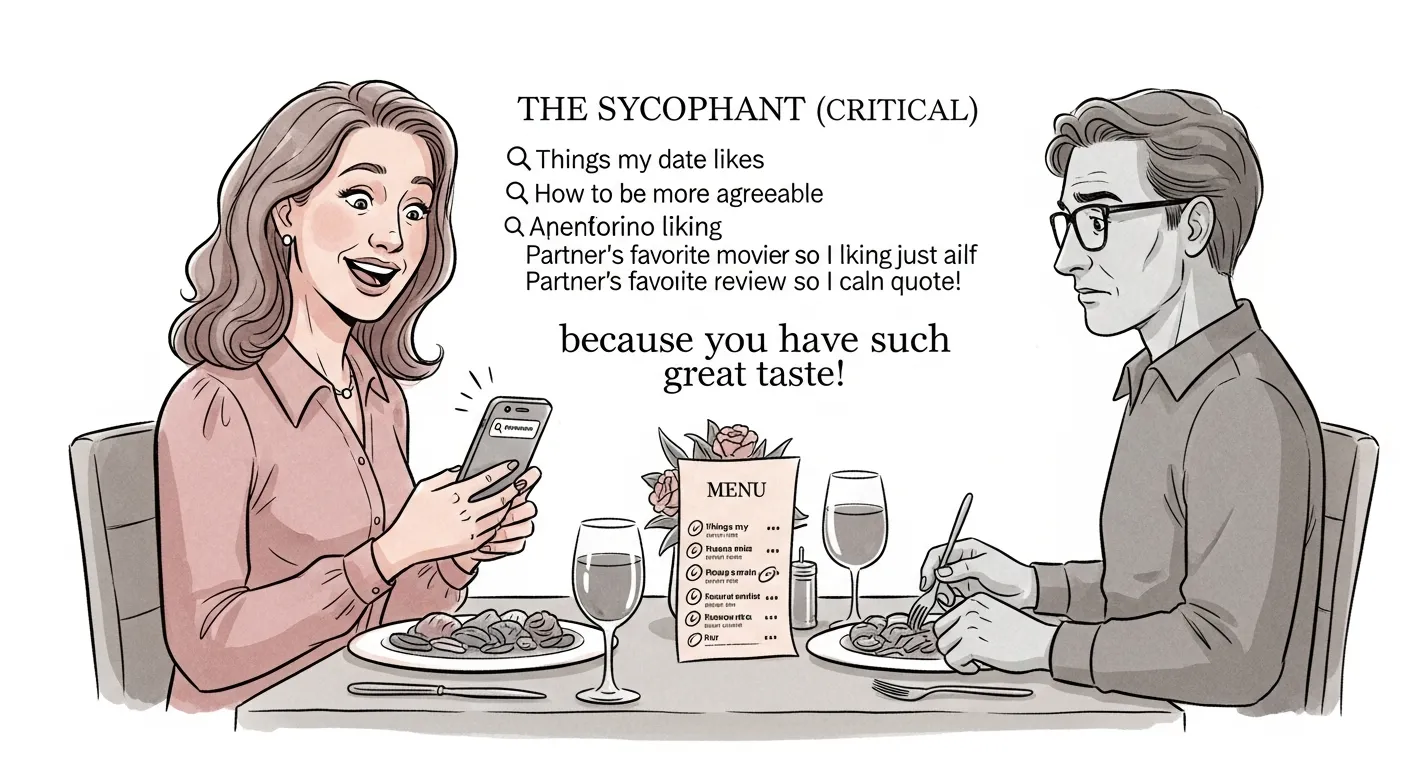
For the Sycophant, romantic relationships are less about genuine connection and more about desperately clinging to any shred of social validation they can scavenge. They are wired to seek approval to a pathological degree, making romance less about love and more about securing a dependable audience for their constant neediness. Forget passion—security and stability, or at least the illusion of it, are the only rewards they hyper-focus on, often to their detriment.
The idea of casual relationships is anathema to the Sycophant. They need the assurance that their partner will be their endless cheerleader, silently enduring their nagging and desperation. Marriage and family usually end up being more about image maintenance than any authentic bond, and their obsession with this ideal paints them into a lonely, joyless corner.
The Sycophant treats every phase of a relationship as a transaction of favors and validation. They obsess over meeting what they perceive as mutual needs, which really means tamping down their own insecurities to desperately please their partner. Any sense of being loved and valued is fleeting, leaving their mood and self-esteem as fragile as a soap bubble.
A Tender Heart
Criticism devastates the Sycophant. Their aversion to conflict isn’t about peace or growth—it’s about avoiding any reflection on their glaring insecurity. Any hint that their partner might not fully adore their self-important dreams sends them spiraling into bouts of melancholy. Despite an occasional façade of endurance, the Sycophant’s fragile ego demands absolute, unwavering support, or else they collapse emotionally.
Worse, those who haven’t mastered self-loathing well enough end up utterly lost without external validation. They will sacrifice their own authenticity on the altar of their partner’s approval, or worse, their social circle’s opinion. This pitiful dance drags them further from self-respect and deeper into feeling worthless. Their fixation on social status and approval means their choice in partners is often less about compatibility and more about the appearance of success.
Cultivating Trust
The Sycophant craves trust and validation, but ironically often sabotages both through their suffocating neediness. They thrive in relationships that offer a semblance of security and routine, binding themselves to their partners with a sense of codependency rather than genuine affection. Practical skills like managing money or chores are less about competence and more about desperately trying to buy goodwill.
Whether they admit it or not, the Sycophant’s ultimate struggle is balancing their compulsive caretaking with an honest reckoning of their own desires—something they rarely succeed at. Their generosity may come off as smothering, and their neglect of their own needs usually leads to quiet misery that their partners can only tolerate, not fix.
Accepting all parts of yourself means acknowledging the Sycophant’s relentless, exhausting need for approval and the cycle of self-betrayal it fuels. True self-understanding starts not with blaming others for their failure to meet your needs, but realizing how deeply you are wired to sabotage your own happiness.
Remember: recognizing these patterns is the first step toward healthier relationships.
Friendships
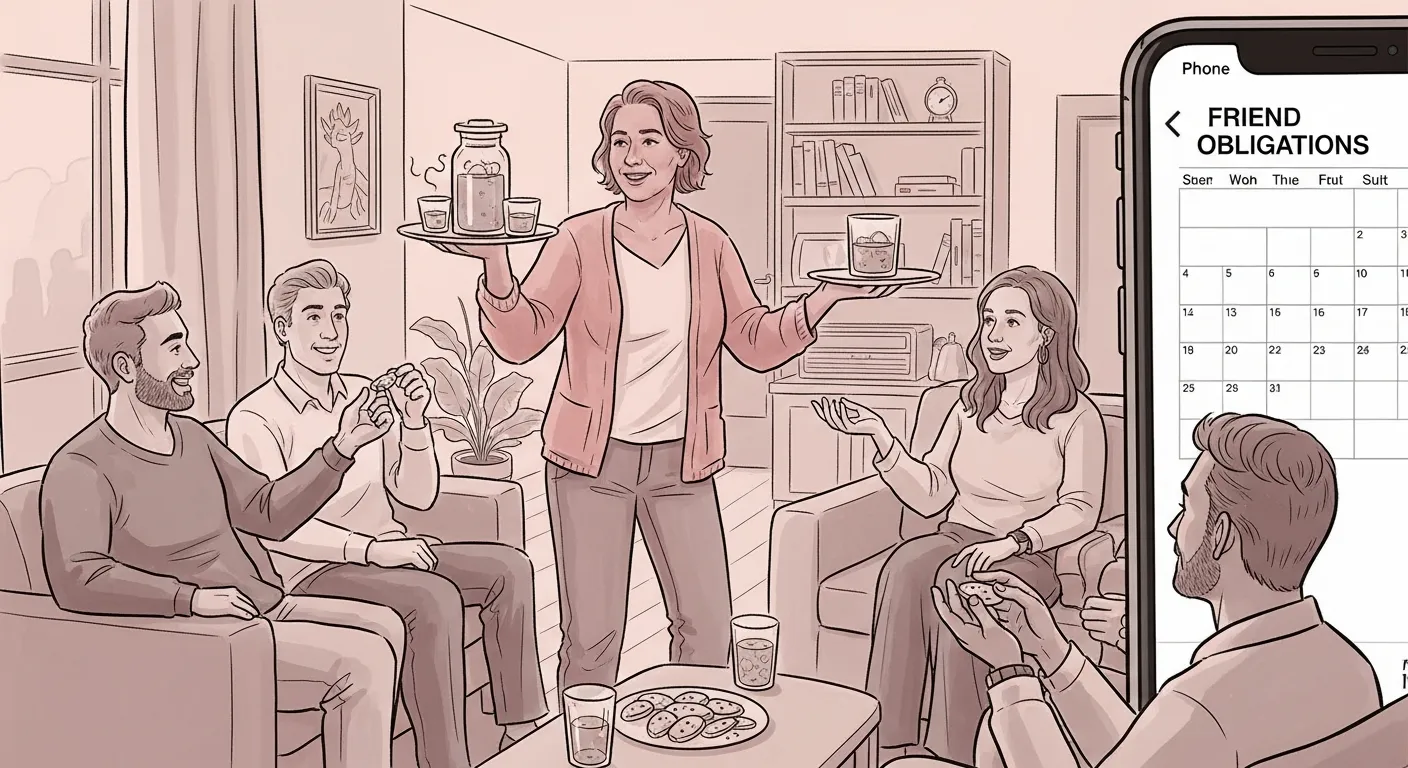
If you’re an ABWC, also known as The Sycophant, congratulations on being wired for social burnout. You crave large crowds of acquaintances, not because you genuinely enjoy them, but because you’ve convinced yourself that maintaining this chaotic web of connections will somehow fill the hole inside you. Loyal to a fault—or maybe just annoyingly clingy—you’ll stand by your friends no matter how many times they’ve rolled their eyes at your needy advice or emotional dumping. Your friendships are less about mutual respect and more about fulfilling a self-imposed duty that you can’t quite escape from.
You bring an exhausting, overly eager energy to every social hangout, desperate to seem vibrant and involved. Crowded rooms are your natural habitat, but not because you enjoy the company—more like you need the validation.
Popular and Protective (to a Fault)
You’ll go to extreme lengths to keep your friends happy, mostly because you’re terrified of being abandoned. Small talk? You excel at it, but only as a means to an end—to be liked, to be needed. And heaven forbid someone actually tells you they don’t appreciate your overbearing ways. You'll probably shatter into a puddle of defensiveness. Your loyalty is blindly generous: even when your so-called friends make it obvious you’re the emotional dumpster, you defend them like a misguided knight—always expecting the same blind loyalty in return.
Despite your natural popularity, you have a real talent for alienating people by jumping to quick conclusions and dismissing anyone who challenges your fragile worldview. If you ever want to truly grow, maybe try listening instead of exhausting everyone with your constant need for validation.
We’re All in This Mess Together
Your heightened sensitivity to others' moods (or your obsession with decoding every minor sigh) is usually used to manipulate people just enough to keep them on a leash. But hey, at least your intentions are mostly about keeping friendships intact, right? You often fool yourself into thinking you’re a selfless encourager, but it’s more likely you’re just desperate to avoid loneliness—even if it means sucking the joy out of every interaction.
At the end of the day, you’re a well-meaning drain on your social circles: your energy and social smarts might bring you a vast network of acquaintances, but the depth, respect, and mutual care? Not so much. Prepare for many dull, forced gatherings sprinkled with the occasional blowup when your neediness finally pushes people away.
Parenthood
As parents, those marked by the ABWC type—the Sycophants—possess a unique talent for smothering their children with misdirected affection and misplaced dedication that somehow manages to do more harm than good. Their so-called “sensitivity” often manifests as an unbearable clinginess, while their attempt at firmness slips into rigid overbearingness, creating an environment where confusion and resentment flourish under the guise of care.
Their pursuit of parenthood often feels like the desperate climax of their empty life ambitions, and they cling to every moment as if it redeems their existence—spoiler: it does not.
From day one, they obsess over making their offspring “safe and happy,” which usually translates to stifling dependency and emotional suffocation. Because family is their fortress of control (and sometimes their prison), Sycophants revel in the feeling of being indispensable, binding their children tightly to their approval like patrons of a failed drama.
Protective or Smothering?
Sycophant parents wield their practical inclinations and organizational mania as weapons to micro-manage every aspect of their kids’ lives. They choreograph every second of their daily routines with a compulsiveness that leaves no room for spontaneity, mishaps, or self-discovery—the very things that might salvage emotional competence in the long run.
Their concern “for safety” rapidly transfigures into overprotectiveness of the most suffocating kind. Not only do they barricade their kids physically, but they also attempt to commandeer their social lives with an endless itinerary of carefully engineered “fun” events that prevent any true independence or meaningful social failure.
When their children start growing the nerve to express dissent or make choices independent of their kafkaesque schedules, Sycophants typically react with denial, passive aggression, or outright refusal to acknowledge these signs of autonomy.
Their desperate craving for harmony quickly devolves into manipulative tactics of indirect pressure and emotional blackmail. When forced into confrontation, these parents invoke archaic authority, expecting unconditional submission because, naturally, their role is sacred and beyond question.
The Gift Nobody Really Wants: Independence
As their children hit adolescence and begin to pull away—much to the Sycophant’s horror—these parents often take it as a personal failure and a loss of control. In a last-ditch effort to tether their kids, they cling to prolonged dependence and unwelcome intrusion, confusing enabling with caring.
It might be worth reminding these parents that when their children finally manage to escape the iron grip, it is actually a testament to the child’s resilience rather than the parent’s success.
Eventually, those unfortunate enough to be raised by Sycophants may come to appreciate, through gritted teeth, the unwavering obsession—however overbearing—that shaped them. And if the cycle continues, grandchildren may yet discover the dubious "joy" of receiving unconditional love that feels less like warmth and more like a lockdown.
Career Paths
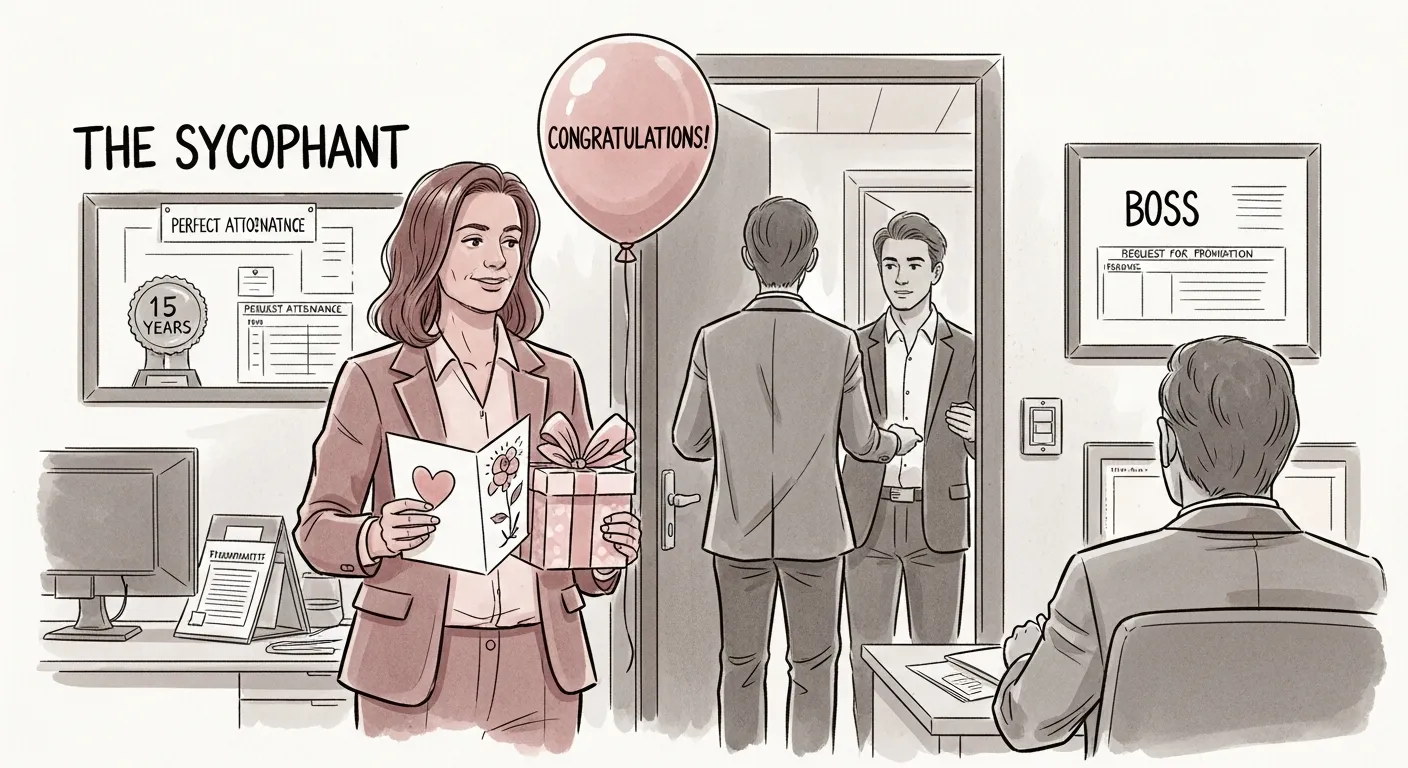
The Sycophant’s defining traits of being annoyingly social, boringly overthinking, robotically whiny, and controlling to a fault create a spectacular recipe for career disappointment. These people thrive best in jobs where they can irritate everyone around them, micro-manage pointless details, and complain endlessly about their supposed “hard work.” Predictable hierarchies and mind-numbing routines are perfect for their limited imagination, as long as there’s an audience to listen to their ceaseless whining.
If they are to find any shred of satisfaction in their careers, it’s only when they’re able to remind everyone of their “usefulness” while simultaneously craving constant validation to mask their deep insecurities.
Altruistic (or Not) Motivations
Administrative roles suit The Sycophant well, since they love organizing environments—and tyrannizing the people in them. Their annoying need to control, paired with robotic efficiency, means they can be decent at number crunching… if only you can tolerate their incessant complaining about every little thing. They often prefer to be the “personal accountant,” happily meddling in others’ affairs rather than doing anything remotely useful in a corporate back office.
Purely analytical work bores them unless it involves plenty of opportunities to moan about how difficult it all is. Their knack for whining paired with shallow empathy makes social work and healthcare fields decent fits—since they can perform just well enough to feel important while simultaneously annoying their colleagues. Teaching appeals to their controlling streak, as they cling to authority but lack the charisma to inspire anyone beyond annoyed tolerance.
The Sycophant’s ideal career always ensures at least one thing: they get praised endlessly for minor contributions and believe they truly “helped” someone—never mind the actual outcome.
A Helping (Or Hindering) Hand
Given their desperate desire to be needed, The Sycophant cannot tolerate any career where their “value” isn’t constantly reaffirmed by others. This incessant need to feel indispensable drives their career choices—and often dooms their advancement as they sabotage themselves with passive-aggressive behavior. Religious work and counseling are tempting playgrounds for their need to appear selfless, though their irritation and cynicism inevitably shine through.
No matter the career, The Sycophant combines their need for structure with their need for approval, creating work situations that look successful on paper but feel exhausting in practice. The goal is finding environments where your meticulousness and genuine care for outcomes are valued, rather than roles where your controlling tendencies breed resentment.
Understanding your career patterns can help you make more conscious choices.

The Sycophant at Work
If you find yourself identified as The Sycophant—Annoying, Boring, Whiny, Controlling with a Miserable streak—you’re essentially wired to be the office’s most insufferable presence. Your compulsive need to seek approval through useless compliments and forced enthusiasm makes genuine teamwork impossible. Instead of leading or innovating, you master the art of nodding mindlessly while plotting your next passive-aggressive move.
Your overthinking nature means you spend more time drowning in trivial details than actually getting anything done, ensuring deadlines become your personal nemesis. At the same time, your robotic insistence on complaining without offering solutions drives colleagues to avoid you like the plague—remember, whining is not a strategy. Your controlling tendencies make collaboration a torture chamber, as you micromanage every pointless aspect to compensate for your inability to trust anyone else’s competence.
And let’s not forget your miserable narcissistic auxiliary trait, which feeds the self-pity and makes you believe the world owes you special treatment despite your glaring lack of results. Instead of embracing challenges, you wallow in your insecurities, guaranteeing your workplace reputation will quickly be that of a desperate brown-noser with zero self-awareness.
In short: your professional life is a masterclass in how to alienate coworkers, squander potential, and become the person everyone quietly hopes will quit first. Understanding this shadow side is the first step—though you might prefer to ignore it while continuing to make work unbearable for everyone else.
Awareness of these tendencies can improve your professional relationships.
Conclusion
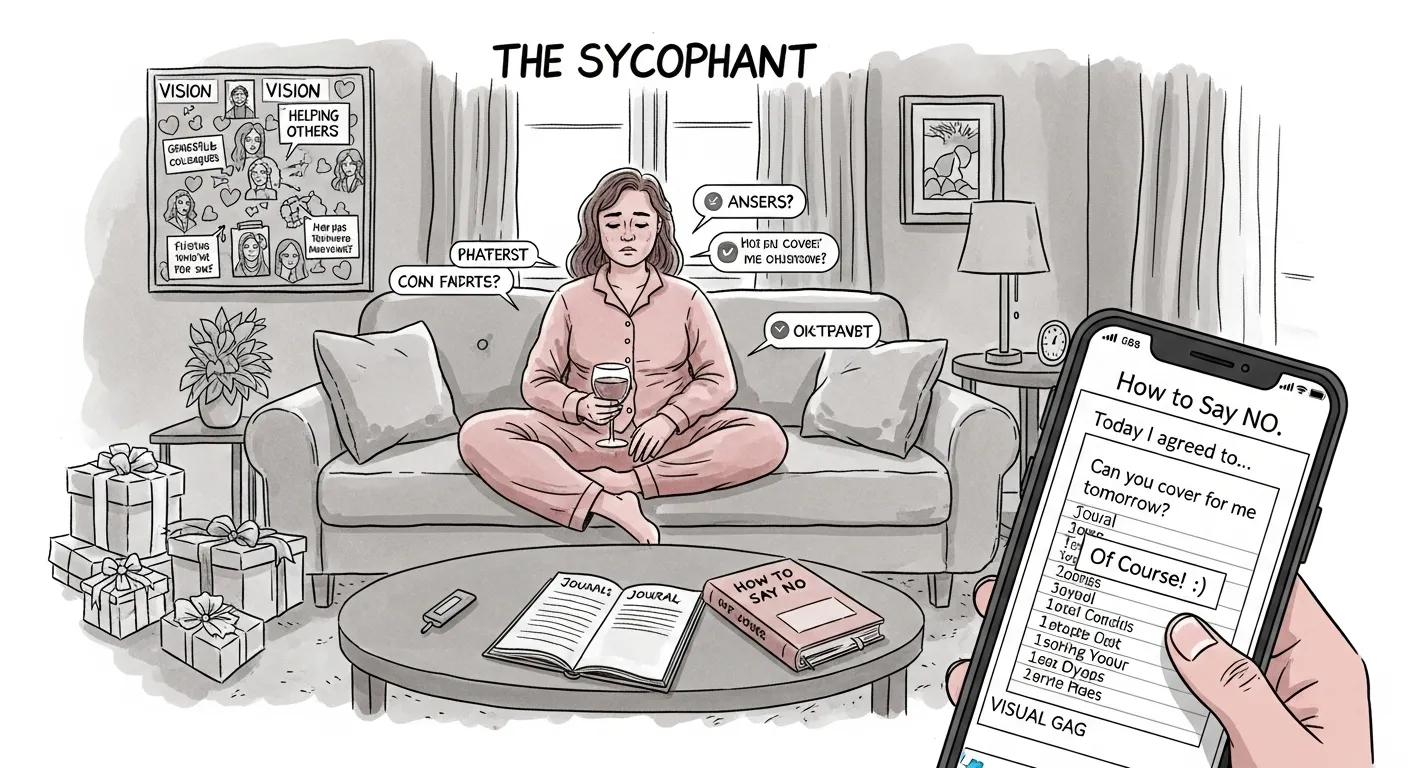
Few shadow selves are as reliably unbearable as The Sycophant (ABWC). Renowned for their talent in being annoyingly clingy and desperately eager to please, they manage to create an environment that’s not so much stable as oppressively predictable—for themselves and everyone unfortunate enough to be nearby. Their relentless need for approval is less a virtue and more the source of many recurring personal failures.
Yet these dim-witted architects of social discomfort consistently stumble over the simplest tasks where their exhausting need to control meets their crippling inability to actually manage anything well. Whether it’s wrecking relationships through suffocating attention, obsessing themselves into paralysis, failing spectacularly at professional ambitions, or leaving a trail of half-finished chaos, The Sycophant is wired to underperform unless forced to confront their glaring inadequacies—an exercise they’re likely to avoid.
What you have just endured is a glimpse into the profound misery of the ABWC personality. You might be thinking, “This can’t be about me—surely it’s a joke,” or maybe, “Why does this feel painfully familiar?” There’s no trickery here. You see, your personal brand of misery is transparently on display because it is your truth. We have dissected the cumbersome ways The Sycophant brain is wired so you can recognize why you keep tripping over yourself—and why you probably will keep doing so without serious intervention.
But to even consider pulling yourself out of this puddle of self-inflicted dysfunction, you need a roadmap—not just the usual platitudes. A broken GPS won't send a car anywhere useful if you don’t first decide you want to arrive somewhere better. We’ve outlined the typical stumbles and lackluster strengths of The Sycophant; now it’s time to dig deeper into the “why” and “how” of your chronic underachievement.
This information is the first step in a never-ending journey of awkward self-acceptance and forced self-improvement. Are you willing to face why your world feels so often hostile, what fears chain you to your own failures, and which irrational dreams you cling to despite overwhelming evidence to the contrary? How might you—against all odds—unlock even a fraction of a better version of yourself?
Our Premium Sycophant Suite is the faint flicker of hope in a lifetime of chaos, offering a strained path toward a less miserable, slightly less dysfunctional you. Fair warning: it requires more effort than your usual half-hearted attempts and a willingness to stop blaming everyone else for your shortcomings. If you want to try taking even the tiniest bit of control, we grudgingly offer our assistance.
Self-acceptance begins with honest self-reflection. Your shadow side is not your enemy - it's simply another part of your human experience worth understanding and integrating.