The Attention Seeker
ABWS
(aka ESFP)
Annoying • Boring • Whiny • Sloppy
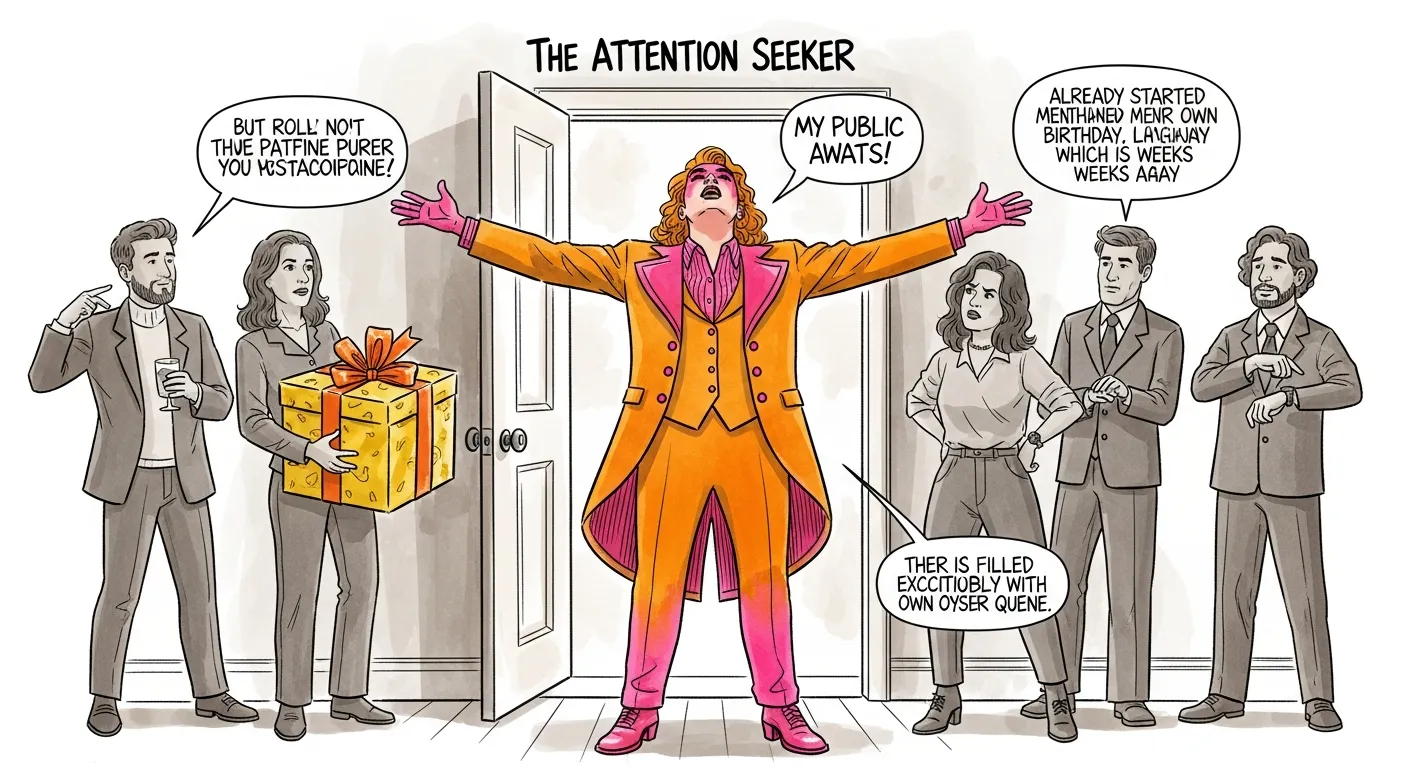
The spotlight is your oxygen, and you're always gasping. If no one's watching, did it even happen?

Explore This Type
Introduction
Who is the Attention Seeker personality type?
ABWS (Attention Seeker) is a personality type plagued by the pesky traits of Annoying, Boring, Whiny, and Sloppy, with a Miserable streak in the auxiliary slot. These unfortunate souls are wired to crave the spotlight incessantly, desperate for validation while simultaneously sabotaging any chance at genuine connection. Their relentless noise and inability to focus make them social magnets — for all the wrong reasons.
Oblivious to the passage of time, living loudly yet accomplishing nothing.
If there’s a room crying out for relief from their incessant clamoring, it’s because an Attention Seeker has taken up residence. They throw themselves headlong into every shiny, distracting moment, dragging everyone else down with their exhausting neediness and self-serving antics. Generosity? Only if it serves to extend their popularity — but don’t expect it to come without a hefty dose of whining.
Living with Passion (or at Least, Trying To)
Attention Seekers are hopelessly obsessed with being noticed, to the point that they’ll mirror whatever annoyance or social faux pas they perceive as the quintessence of "fun." Confidence? More like desperate posturing, based on an uncanny ability to sense when to interrupt or steal the spotlight at just the wrong moment.
Their idea of happiness is shallow and fleeting, fueled by shallow attention from a revolving door of acquaintances. True solitude terrifies them, yet they drive friends away with their relentless neediness and failure to provide any real connection. Every gathering becomes a cloying circus where they desperately soak up attention and plaster on a grin, while deep down knowing they’re about as interesting as cold oatmeal.
While superficially fashionable, their aesthetic sense is mostly a desperate attempt to mask the chaos they leave in their wake. They might change their surroundings, but only as a distraction from the mess of their actual lives, which they neglect with admirable consistency. Curiosity? Only about the next "big thing" that promises attention, never about meaningful growth.
Despite occasional moments of seeming empathy, Attention Seekers retreat at the first hint of genuine conflict or accountability. Their love of drama is legendary—so long as they aren’t the target. When criticism does come, they slither away or ramp up the whining, leaving those around them to clean up their emotional rubble.
A Spontaneous Spirit (Too Bad It’s Reckless)
Their Achilles’ heel is obvious: an addiction to immediate gratification that leaves responsibilities ignored and relationships strained. Complex thinking or long-term planning? Forget it. They’d rather wing it daily and beg their ever-dwindling pool of tolerating friends for rescue. Managing important tasks is a fantasy; retirement planning is a joke whispered about behind their backs.
They have an eye for something valuable — until they buy it on a credit card they can’t afford. Living beyond means is a way of life, with bankruptcy looming like a grim punchline to their many bad decisions. Their harebrained leaps towards the next shiny distraction leave them broke, lonely, and locked out of the experiences they claim to crave.
No misery compares to realizing they’re excluded, cut off from the crowd they desperately crave, isolated by their own self-sabotage.
Attention Seekers can chatter endlessly—about anything but what matters. They excel at hoarding friends as accessories rather than genuine companions, drifting through life in a fog of entitlement and distraction. Should they ever manage to corral even a hint of discipline, there might be faint hope for redemption. Until then, they’ll just keep dragging everyone else into their noisy mess.
Attention Seekers You May Know
The magnificent parade of chaos, plastered with fame and unfortunate talent:
- Elton John
- Marilyn Monroe
- Jamie Oliver
- Adele
- Jamie Foxx
- Steve Irwin
- Miley Cyrus
- Adam Levine
- Dandelion (The Witcher)
- Ygritte (Game of Thrones)
- Penny (The Big Bang Theory)
- Captain Marvel
- Angela Montenegro (Bones)
- Peregrin Took (The Lord of the Rings)
- Gob Bluth (Arrested Development)
- Lindsay Bluth Fünke (Arrested Development)
- Jack Dawson (Titanic)
For those who identify as Attention Seekers, remember: understanding your shadow side is the first step toward accepting your true self — no matter how exasperating that self might be.
Strengths & Weaknesses
Attention Seeker Strengths
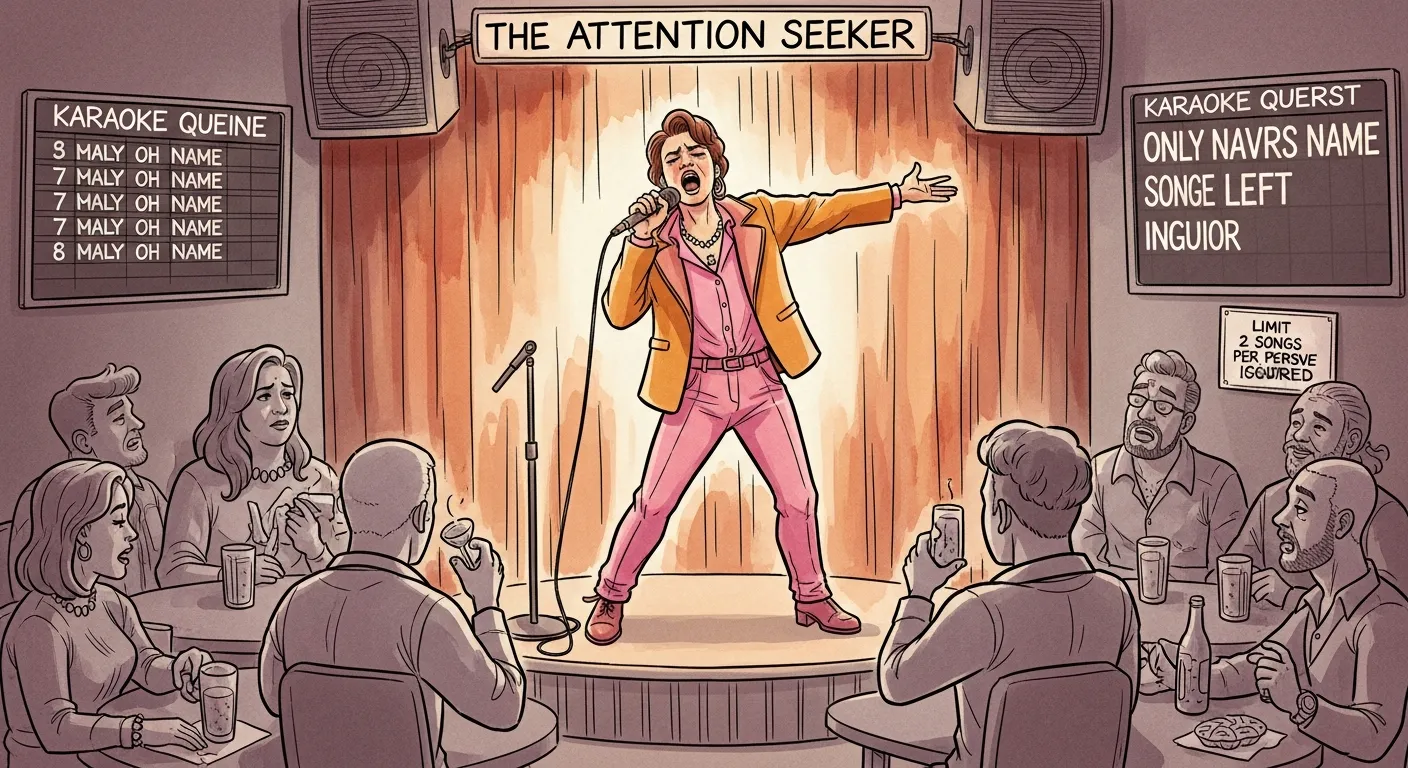
- Bold (or just loudly obnoxious) – If subtlety were a talent, you wouldn’t have it. Your desperate need to be noticed means you constantly shove yourself into scenarios nobody asked for. Stepping out of comfort zones isn’t bravery—it’s just reckless attention fishing.
- Original (at being annoying) – Forget traditions and sense. Your flair for ‘standing out’ usually means finding worst-dressed awards and cringeworthy moments. Every day is a performance, but sadly the audience is more likely cringing in silence than applauding.
- Positive and Enthusiastic (in a bland kind of way) – You fake it until you make others want to fake happiness around you. Your so-called ‘infectious enthusiasm’ is usually just loud interruptions that make others wish you’d just go away and reflect quietly.
- Hands-on and Over-observant (to a fault) – You’re all about feeling and doing, for better or worse. Problem is, you rarely notice anything meaningful. What you call ‘acting’ often looks like floundering around without direction, oblivious to common sense.
- Excellent People Skills (in talking yourself up) – You love to talk, mostly about yourself, and believe this counts as social skill. Unfortunately, your constant need for validation wears thin quickly, leaving others grateful when you finally shut up.
Attention Seeker Weaknesses
- Sensitive (to any criticism you secretly deserve) – You crumble like a house of cards the second someone points out your flaws. Rather than grow, you prefer sulking and maybe throwing tantrums, because accountability is clearly too much to ask.
- Conflict-Averse (or cowardly) – Instead of facing issues, you run away or pretend everything’s sunshine. Conflict is your kryptonite, so you choose the easiest escape route, which usually involves passive-aggressive grumbling under your breath.
- Easily Bored (and a danger to yourself and others) – Without constant stimulation, you spiral into reckless behavior and bad decisions. You chase thrills like a moth to a flame, never learning that the flame eventually burns you—and everyone around you.
- Poor Long-Term Planners (or just unrealistic dreamers) – Planning ahead isn’t your style. You live in an idealized now that never matures into anything stable. Ignoring consequences is your default, which makes your future look as chaotic and doomed as your present.
- Unfocused (or chronically scatterbrained) – Concentration isn’t your strong suit. Anything needing sustained attention bores you instantly. That’s why you never finish anything important, leaving a trail of half-baked ideas and broken promises.
Embrace your flaws. Or don’t. Either way, the world isn’t waiting for you to improve.
Romantic Relationships
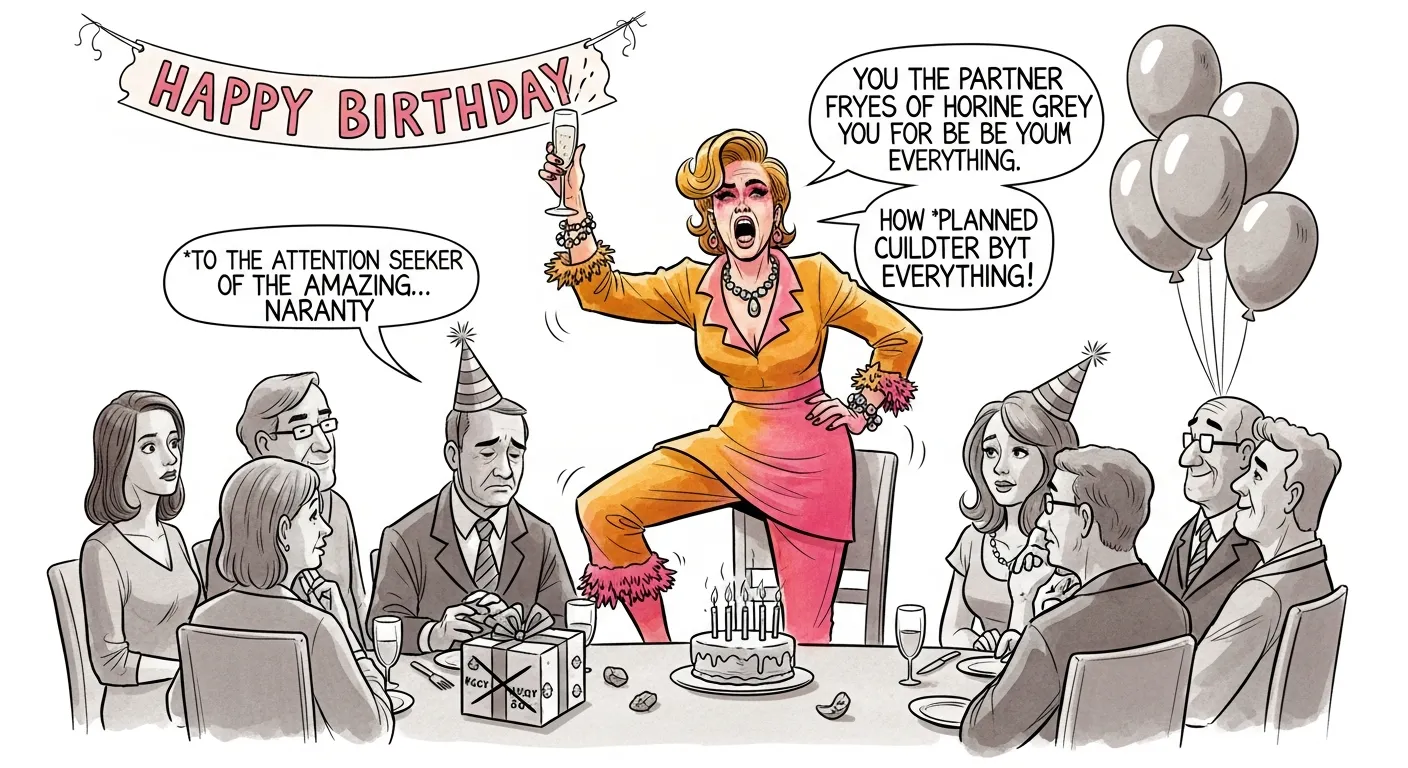
People who identify as Attention Seekers (ABWS) are annoyingly loud, desperately craving validation, and utterly incapable of living in the moment without turning it into a spectacle. When it comes to dating, they fling themselves into chaotic, draining displays of affection that no sane person would want to sustain for long. These relationships aren’t about mutual growth or meaningful connection — they’re messy bursts of attention-seeking activity until the novelty wears off or someone leaves in frustration.
The Spark of Love
For Attention Seekers, the high of falling in love is the only thing resembling emotional depth they’ll ever know. They obsess over the initial rush of passion and drama, mistaking it for genuine connection. Unable to see beyond this fleeting thrill, they desperately try to cling to these sparks, often by turning minor moments into overblown performances that exhaust everyone involved.
Because they are so focused on excitement and applause, relationships with Attention Seekers become exhausting marathons of constant neediness. They never run out of new and annoying antics to distract from their profound inability to form stable bonds. Physical intimacy often becomes less about closeness and more about grabbing attention, leaving partners feeling used rather than loved.
Conversation with Attention Seekers mirrors their personalities—shallow, surface-level, and relentlessly self-centered. Forget deep discussions about feelings or future plans; these types would rather chatter about trivial, quirky nonsense than face any real substance. If you expect maturity, good luck enduring their intermittent bursts of selfishness and distraction.
The Rise of Conflict
Emotionally fragile and prone to overreactions, Attention Seekers handle criticism like a cactus handles water—by shriveling up and lashing out. Attempts to give constructive feedback usually backfire spectacularly, as these individuals take everything personally and swirl further into their self-pity. The notion of slowing down and reflecting calmly is as foreign to them as genuine self-awareness.
Worse still, their insatiable need for approval means they surround themselves with yes-people who never challenge their juvenile antics. This echo chamber only reinforces their worst tendencies, validating their toxic patterns and leaving partners stuck in a never-ending loop of drama and disappointment.
A Joyful Heart
In the rare moments when Attention Seekers try to settle down, their inability to commit sabotages whatever fragile foundation they might accidentally build. They hate promises and avoid responsibility, so long-term relationships are usually doomed before they begin. Building anything meaningful requires effort and patience—two things they notably lack.
Yet somehow, Attention Seekers maintain a bizarre charm that fools people into sticking around long enough to witness the full extent of their flaws. Enthusiastic but exhausting, affectionate but demanding, they offer a kind of shallow love wrapped in loud gestures and empty promises. Their “joyful heart” is really just a desperate plea for attention disguised as affection — and ultimately, they’ll only find someone who tolerates their nonsense rather than truly loves them.
Remember: recognizing these patterns is the first step toward healthier relationships.
Friendships
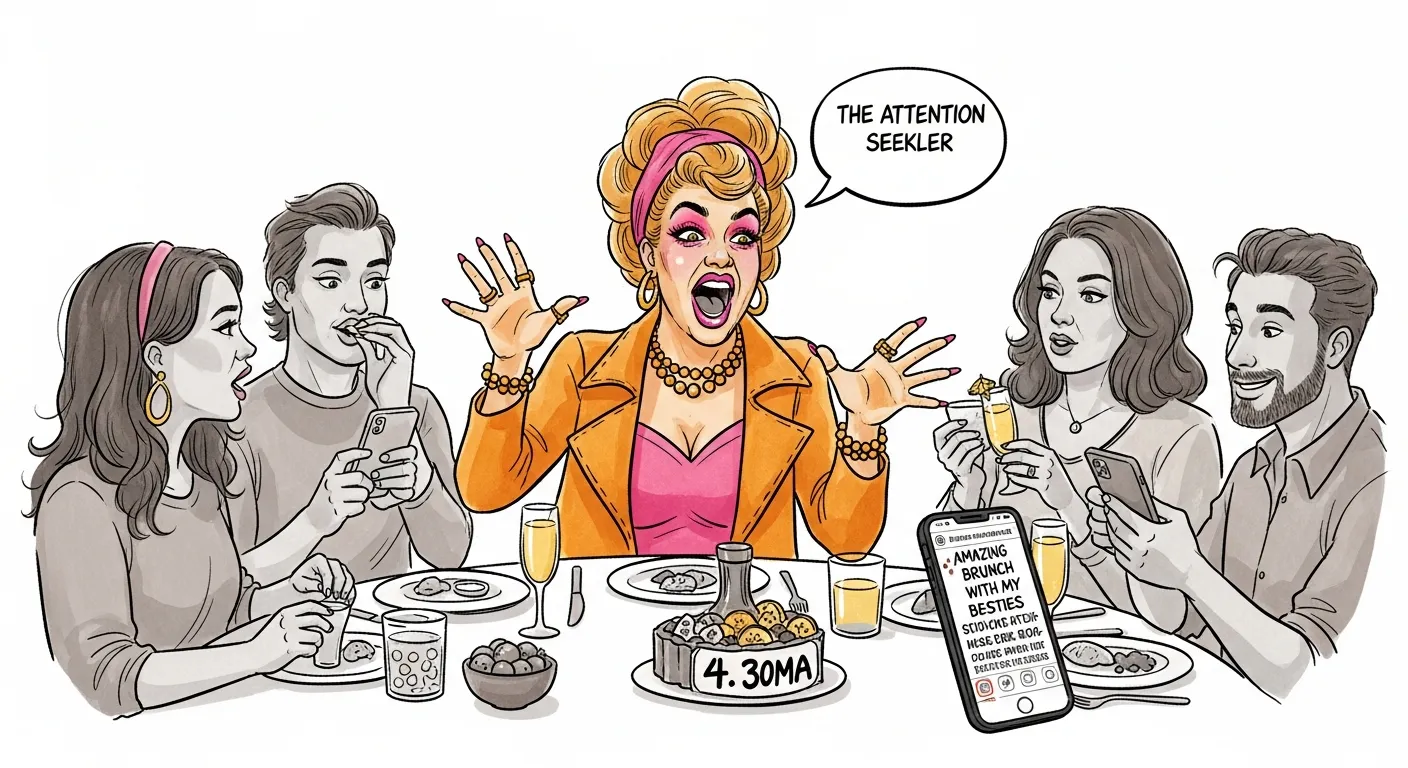
If you find yourself identified as The Attention Seeker (ABWS), prepare for the bitter truth: your attempts at friendship are less about genuine bonds and more about begging for a stage on which to parade your dramatic crises. Rather than quietly nurturing relationships, you broadcast every insecurity and complaint, ensuring your social circle is a revolving door of exhausted listeners. Your life is a soap opera that you’re both star and victim of, desperately craving acknowledgement for your relentless need to be the center of attention.
Making Life Interesting
As an Attention Seeker, you believe that life is only worth living if others are forced to watch your latest emotional meltdown or overshare. You dive headfirst into reckless behaviors not out of true excitement, but out of a desperate plea for someone—anyone—to validate you. Unfortunately, these stunts usually result in alienation, which you then interpret as proof that everyone is unfairly rejecting you.
Making new acquaintances is easy, mostly because you overwhelm them with your constant need for approval and spotlight. However, the real challenge—maintaining friendships—is where you spectacularly fail. You chase after fresher faces and newer distractions, abandoning the people who have painstakingly tolerated you. If you ever reflect on this, it’s only to feel bitter that your older friends have “changed” or “gotten boring,” rather than acknowledging your role in the decay.
Thrill Seekers with Gentle Souls
You might hope maturity softens your attention-craving ways, but mostly you just learn to disguise your desperation better. While you might occasionally throw together group activities, these are less about genuine connection and more about showcasing your vibrant personality and coaxing admiration. The idea that you care deeply about your friends is, frankly, a comforting lie you tell yourself.
Your loyalty is a conditional, fragile thing—fast to abandon if the spotlight dims or if friends show a hint of independence. When “comforting” others, what you’re really doing is fishing for thanks. Despite this, your social interactions are less about mutual support and more about performance, leaving your friends drained and questioning why they keep enduring your exhausting presence.
Parenthood
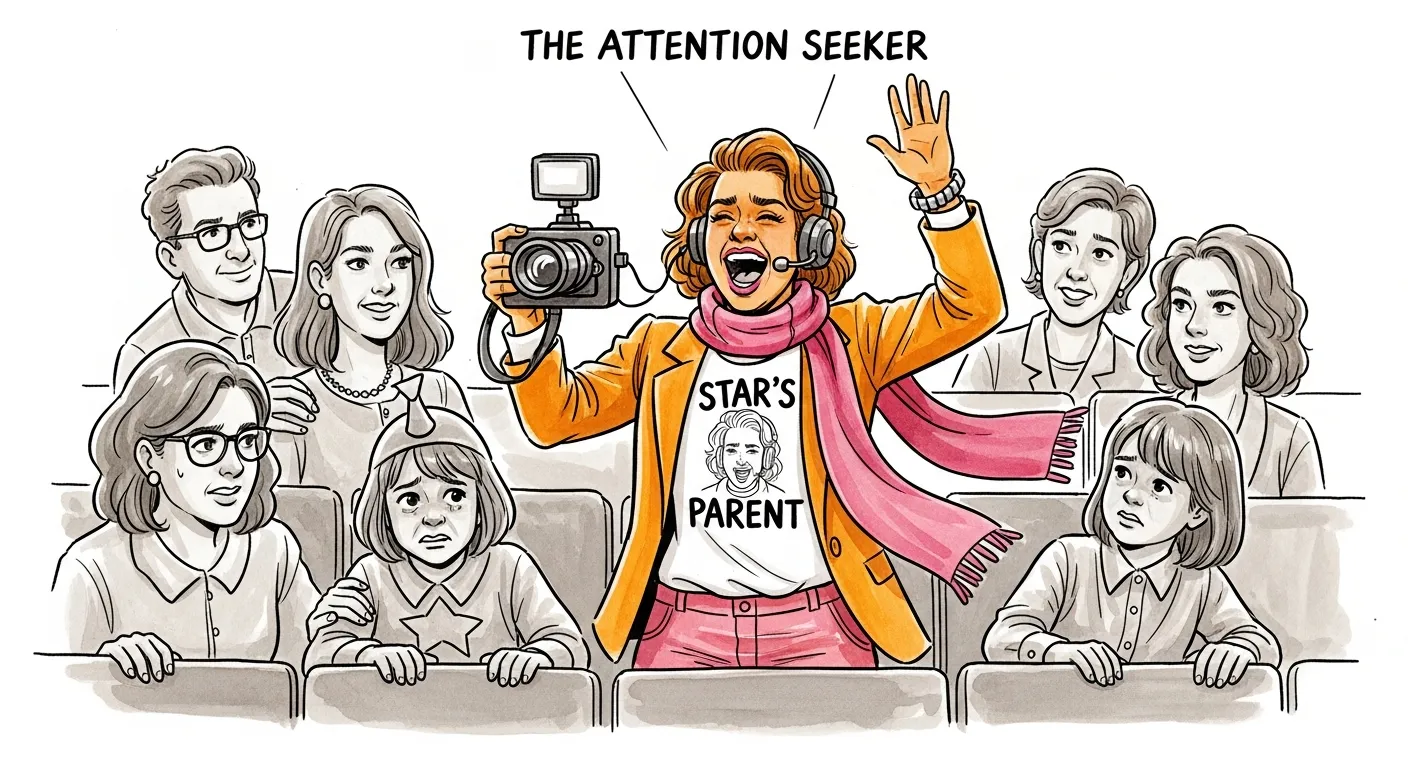
People with the Attention Seeker personality type are the masters of moment-to-moment chaos in parenting. From the instant they have a child, they’re swept up in the exhausting effort to be the fun one—compulsively scrambling to keep their kids entertained because sitting still and thinking clearly isn’t their strong suit. Interaction quickly devolves into distracting noise, as they desperately try to outshine everyone else, making sure the spotlight never leaves them or their offspring.
Wild and Free (Unfortunately Floundering)
Their parenting philosophy? “Let chaos reign!” Questions are met with a shrug and a "Let's find out, but don't expect a sensible answer anytime soon." Rigid schedules or rules? Forget it. These parents flail through life day by day, hopeful that their laissez-faire approach will miraculously translate into something vaguely resembling good parenting. Spoiler: it doesn’t.
They’re no strangers to discipline—or rather, the absence of it. Their attempts at setting boundaries tend to fall flat or turn into dramatic power struggles fueled by their desperate need for attention. They’d love to shield their kids from the mistakes they’ve made, but without any structure or follow-through, their efforts mostly just confuse everyone involved.
Predictability and consistency take a backseat to whimsy and distraction, much to their children’s detriment. Those kids grow up learning that rules are mere suggestions—and chaos reigns supreme in their emotional universe. The emotional support offered is often a roller coaster of mood swings and performative affection, which, while occasionally warm, mostly leaves children wondering where to stand next.
When their child declares ambitions like becoming an astronaut or archaeologist, Attention Seeker parents are there… mostly for the show. They’ll happily build make-believe spaceships as long as it guarantees an audience, but guiding their children's focus toward real-world goals? Less likely. Their support is as unreliable and scattered as their attention span.
In short: expect a whirlwind of inconsistency, attention-hungry distractions, and parenting chaos that keeps everyone just barely afloat in this wild, exhausting ride. Realizing this is your true self might save you from any illusions of being a “good” parent—but acceptance is key, even if it’s begrudging.
Career Paths
If you are an Attention Seeker, characterized by being Annoying, Boring, Whiny, and Sloppy, congratulations—you’re wired for career chaos. You mirror whatever vibe floats around your environment, which means you’ll never have a strong sense of direction and will likely bounce from one disastrous attempt at a “career” to another. Whether you’re desperately seeking attention at a party or whining about your latest failed attempt at holding down a job, your inability to focus or adhere to any structure ensures you’ll struggle to maintain anything even remotely resembling success.
Your talent for amplifying every emotion around you makes you insufferable in collaborative settings, yet also leaves you hollow and restless in solitude. The “party people” image you crave is just a thin veil over the deep insecurity that you rely on others to define you. And when things go wrong, your passionate overthinking spirals into sloppiness and blame-shifting. In short, any career that involves social interaction is both your best hope for fleeting validation and your recipe for eventual misery.
Seeking New Challenges
You might fancy yourself a natural networker, but your constant craving for excitement and shallow connections do more harm than good. Roles like event planning, sales, or tour guiding attract you because they promise novelty and applause, but your inability to manage anything beyond the surface means you burn out quickly or become just another forgettable drama queen or king. Your knack for whining in frustrating situations won’t win you points—it’ll just confirm that your emotional instability is a career liability.
Even when you try to “help” as a counselor, social worker, or personal coach, your whiny robotic approach lacks the competence or stamina necessary. Medical professions may appeal because of the intense emotions, but your sloppy, attention-hungry style is ill-suited to life-or-death responsibility—not to mention the fact that your tendency to drown in the feelings of others makes you the worst kind of burnout candidate imaginable.
For those who think creating beauty like music or fashion might save them, remember: style without substance only highlights your overinflated ego and inability to commit. Sure, you can grab attention briefly, but you’ll never be more than a fleeting spectacle.
A Touch of Chaos
Anything routine, data-driven, or impersonal feels like torture to you—and rightfully so. You loathe schedules and structures, rejecting any attempts at order with sloppy resistance and bitter complaints. Instead, you thrive in chaos, but of course, it’s the kind of chaos where you can bask in the spotlight, not where meaningful productivity happens.
Above all, you need to be engaged. You need to feel like what you're doing matters and that people notice the work. For an Attention Seeker, that's not pathological—that's just what makes work feel meaningful.
The challenge is finding environments where that need for visibility can exist alongside actual contribution. Some roles naturally provide this—performance-based work, visible projects, client-facing roles. The key is choosing work where your visibility actually serves the work, not just your ego.
You have genuine social gifts. The question is whether you'll develop discipline to match them.
Understanding your career patterns can help you make more conscious choices.

The Attention Seeker at Work
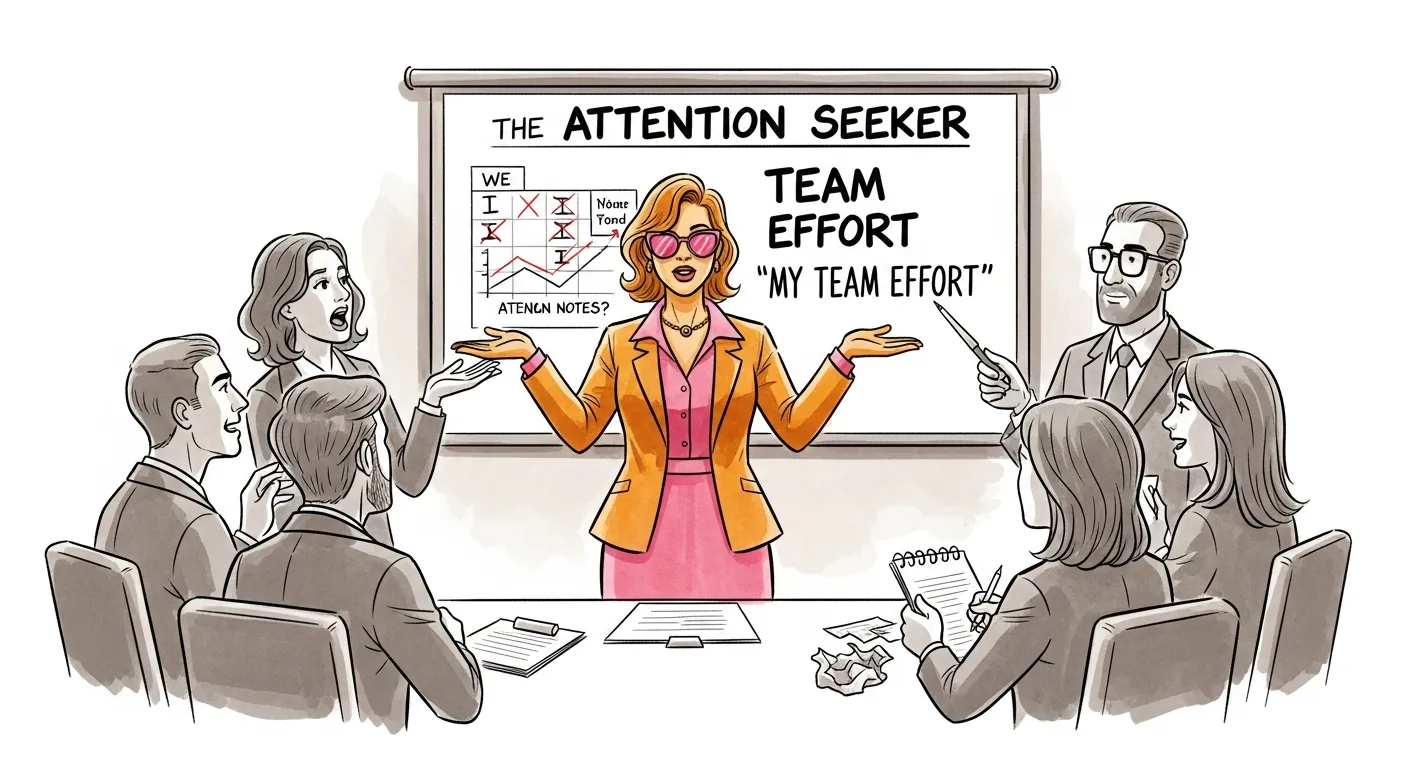
When it comes to the workplace, the Attention Seeker is hopelessly wired for chaos and drama. Their bumbling attempts to be the center of attention usually come off as desperate, irritating colleagues and supervisors alike. Instead of contributing meaningfully, they tend to derail meetings with off-topic anecdotes or loud interruptions, ensuring everyone regrets inviting them in the first place.
Trying to trust an Attention Seeker with responsibility is a fool’s errand. Their need for constant validation makes them unreliable and prone to procrastination, as long as their antics keep them in the spotlight, accountability is a foreign concept. Collaboration turns into an exhausting battle to manage their incessant need for recognition, draining the energy of any team unfortunate enough to include them.
Ambitions? Sure, but they’re usually based on the shallow desire to be admired rather than any real skill or work ethic. Promotions elude them not due to lack of talent, but because no one wants someone so exhausting around management. In the grand theater of the workplace, the Attention Seeker plays the role of the buffoon, desperate for applause, but utterly incapable of delivering anything of lasting value. Embrace this truth, and perhaps you'll start on the slow path to self-awareness—though let's be honest, it’s unlikely you genuinely want that.
Awareness of these tendencies can improve your professional relationships.

Conclusion
Few personality types are as painfully predictable as the Attention Seekers. You’re wired to be the loudest, most exhausting person in the room — forever improvising distractions to avoid confronting anything meaningful. Your relentless focus on the now isn't a gift; it’s a guarantee that you’ll trip over literally everything important, from relationships to career ambitions. Your shallow bursts of enthusiasm barely cover how perpetually stuck you are in a loop of fleeting excitement and inevitable disappointment.
When it comes to anything requiring foresight, commitment, or self-reflection, your natural tendencies will sabotage you every time. Planning ahead? That’s for someone who doesn’t thrive on chaos. Keeping a partner? Forget it—they’ll tire of your endless need for validation. Climbing the career ladder? Your sloppy impulse to chase momentary thrills will have you stuck on the bottom rung, wondering what went wrong.
What you’ve just read is barely a surface scratch on the miserable truth of being an Attention Seeker. You probably felt unnervingly seen — not because of any special insight, but because your own insecurities radiate so loudly you can't hide them from yourself. You might have even thought, “Wow, this is disturbing in its accuracy,” or “Finally, someone understands my unprovoked flaws!” Truth is, you’re exactly as predictable and frustrating as this description suggests.
This isn’t some cruel trick. You are understood because you broadcast your weaknesses so obviously. Others of your kind have stumbled through the same cycles of unbearable self-absorption and regret, and somehow still manage to scrape by. Learning from them isn’t a roadmap to happiness, but maybe it can be a blueprint to avoid absolute catastrophe.
To even make a dent in this endless spiral, you’ll need a plan. A real personal roadmap — because no matter how flashy your distractions, you’ll get nowhere fast without direction. We’ve covered your tendencies to act like a whirlwind of annoyance, your strengths that are really just hidden weaknesses, and your general inability to adult. Now it’s time to dig deeper, to confront the “why?” “how?” and the terrifying “what if?” of your existence.
This knowledge marks the start of what will likely be a lifelong struggle with the darker parts of yourself. Are you brave enough to face the real reasons you act this way? To unearth the fears and pathetic dreams that drive you? To even attempt to unlock any kind of potential buried under layers of self-inflicted chaos?
Our Premium Attention Seeker Suite claims to offer a map to a “happier, more successful, and more versatile YOU.” It’s an ambitious promise that requires sincerity and courage — qualities you might not be ready for. Changing this well-worn pattern means accepting discomfort and ditching your beloved chaos for something resembling order. If, against all odds, you want to try taking the reins of your life, we’re here to hold your hand — or at least point you in the general direction of improvement.
Self-acceptance begins with honest self-reflection. Your shadow side is not your enemy - it's simply another part of your human experience worth understanding and integrating.