The Lost Philosopher
LORS
(aka INTP)
Loner • Overthinker • Robotic • Sloppy
Overthinking everything while accomplishing nothing meaningful. You've solved the universe in your head but can't do your laundry.

Explore This Type

The Lost Philosopher
Introduction
Who is the Lost Philosopher personality type?
LORS (Lost Philosopher) is a personality type marked by being a Loner stuck in their own head, perpetually trapped between Boring monotony and Overthinking disaster, Robotically Whiny about everything, Controlling when stressed but mostly Sloppy, and radiating an aura of Miserable Narcissism. This cocktail of traits ensures they are well on their way to a lifetime of existential frustration and self-inflicted confusion.
The important thing is not to stop questioning... because questioning everything and arriving at no answers is what they do best.
People with the Lost Philosopher personality type are hopelessly tangled in a web of their own convoluted thoughts. Their preferred form of interaction is solitude—not because they are mysterious geniuses, but because being around others only highlights how unbearable their Loner-driven social awkwardness is. They desperately try to be creative and unique but usually just end up inventing new ways to overcomplicate simple things, making their lives a nonstop internal drama fest.
The Life of the Mind
Lost Philosophers are experts at disconnecting from reality through endless loops of pointless rumination. From the moment they wake up, their brain torments them with an avalanche of questions that have zero practical answers. Conversations are often abandoned midway because their minds have already fled to labyrinthine daydreams or catastrophic scenarios.
External observers often mistake them for deep thinkers lost in profound insight. The truth is, they’re usually stuck in a fog of boredom mixed with petty complaints about the world. Their pensive, detached demeanor isn’t wisdom—it’s exhaustion from the constant mental noise. Despite their intense desire to avoid people, they secretly crave understanding that remains forever out of reach, fueling their misery.
Their evenings are a private symphony of chaotic thoughts, as they attempt to harness their fleeting bursts of “creativity” before giving up and withdrawing further into their solitude.
Elementary, My Dear Lost Philosopher
Lost Philosophers fantasize about making grand logical discoveries but mostly just spot irregularities that they overanalyze into catastrophic significance. Honesty is a lost cause, as their whiny robotic tendencies cause them to flip-flop between contradictory opinions like a broken record stuck on indecision.
They can’t resist playing devil’s advocate, not because it’s intellectually stimulating, but because it distracts from their general inertia. Their conversations resemble messy brainstorms without any follow-through—just a lot of noise and no resolution.
While they possess a dim flicker of creative potential, practical implementation is beyond their reach. Instead, they excel at mentally inventing problems that paralyze any chance of progress. Their natural habitat is the frustrating middle ground between brilliance and failure.
Mysteries of the Universe
Lost Philosophers desperately want to understand the universe but fail spectacularly when it comes to the baffling chaos that is human emotion. They retreat into cold logic not because it helps, but because feelings are inexplicably alien and deeply inconvenient.
Despite genuine intentions to support friends and family, their inability to translate empathy into action often results in awkward silence or misplaced advice—contributing to the collective disappointment everyone feels around them.
Their habitual overthinking leads to analysis paralysis so severe that even trivial decisions become mountains of dread. This mental exhaustion often renders them ineffective, stuck indefinitely in a cycle of self-sabotage.
Fortunately, if “pulling yourself out of a rut” meant staying hopelessly tangled in existential angst, they’d be top of the class. Awareness alone isn’t salvation when self-loathing is the curriculum, and their unique mix of traits guarantees a lifetime of beautifully tragic underachievement.

Strengths & Weaknesses
LORS Strengths
- Analytical... in your own depressing way – As a Lost Philosopher, you compulsively dissect everything you encounter, mostly to prove how disappointing it all is. This obsessive pattern-spotting usually leads you nowhere good, but hey, at least you’re consistent in missing the point.
- Originally miserable – Your bleak imagination conjures up ideas so counterintuitive and hopelessly impractical that most sane people wouldn’t waste time thinking about them. Your creativity shines brightest in inventing new reasons to question your own value.
- Open-minded (about your flaws) – You have a relentless curiosity about yourself—mostly focused on cataloguing your shortcomings and failures. Changing your perspective? Sure, but mostly to worsen your self-esteem.
- Curiously stuck – Your interest shifts wildly, though only to dive deeper into confusing or pointless subjects. One week you're consumed by a new self-pitying theory; next week, you’ve lost interest and returned to your usual pit of anxiety.
- Honesty about your shortcomings – You prize brutal self-truth, which means you never sugarcoat just how terrible you think you are. This unflinching realism makes you a bore at parties and a magnet for pity.
LORS Weaknesses
- Lost in your own gloom – Even in company, your internal narrative drowns out everything else. When you finally emerge with a comment, be prepared for glazed eyes and polite disbelief. Social connections? They tend to slip through your fingers like fleeting hope.
- Insensitive, mainly to yourself – You exalt cold logic but forget that sometimes humans need warmth—something you actively avoid. Your indifference to emotional subtleties often makes you seem cruel, though the real victim is always you.
- Chronically dissatisfied – Nothing is ever good enough; you’re endlessly chasing an elusive idea of ‘better’ that guarantees only disappointment. This compulsive dissatisfaction translates into a life spent spinning wheels and missing out on what’s right in front of you.
- Overthinker to the point of paralysis – Your mental hamster wheel never stops, churning anxiety, doubts, and “what-if” scenarios until decisions become impossible. Action is for others, while you perfect the art of inaction masked as deep thought.
- Impatient with others, especially yourself – You take pride in your intellect, but explaining your gloomy worldview is exhausting. If people don’t instantly understand your bitterness or share your gloom, you shut down with a sharp “Never mind,” retreating to your cave of self-reproach.
Embrace the Nothingness
Discover the Career That Will Let You Suffer in Your Own Unique Way
Forget about success and fulfillment—our Career Suite helps Lost Philosophers like you find jobs that perfectly match your talent for procrastination, self-doubt, and mental overdrive. It’s not about thriving; it’s about surviving your own mind for another day.
Romantic Relationships
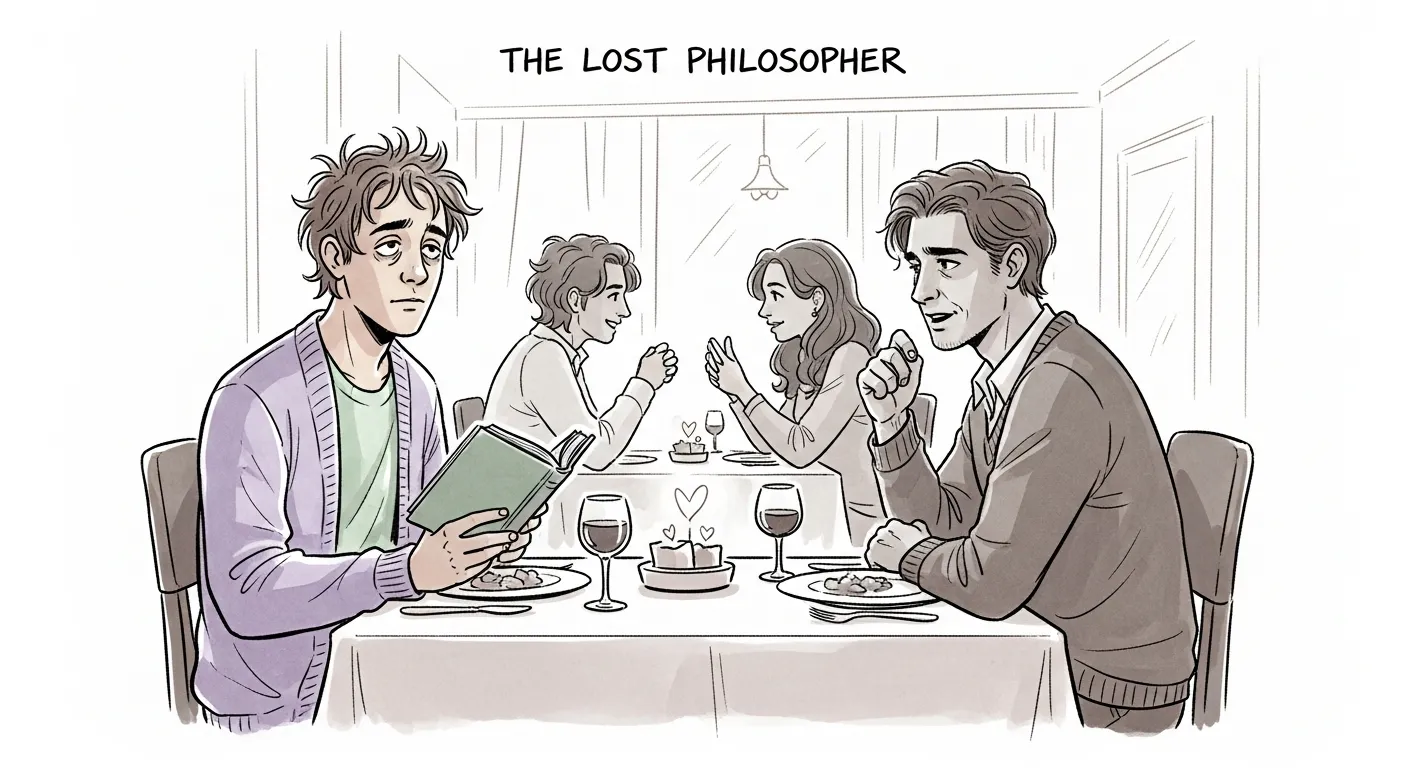
If you're a Lost Philosopher, congratulations—you've somehow managed to combine social ineptitude with an exhausting internal monologue that convinces you there’s more going on inside your head than there actually is. Your "unique" blend of Loner, Overthinker, Whiny, and Controlling traits ensures that romantic relationships are less about connection and more about a slow, inevitable unraveling.
Your romantic partner might initially mistake your distant, aloof demeanor for intriguing mystery. In reality, you're just terrible at showing affection and even worse at following through on it. You may think your clever mental gymnastics make you special, but let's be honest, it usually just makes things awkward and exhausting for everyone involved.
Being a true Loner, you prize your alone time to such an extent that companionship often feels like a burden rather than a gift. You’d rather analyze the universe than engage in the messy, emotional chaos that is human interaction. Your ideal partner? Someone who can tolerate your relentless whining and controlling tendencies without asking too many questions—a rare breed indeed.
Finding such a person is tough, but not because you're special. You're difficult, indecisive, and prone to pushing people away before they get close enough to notice. When you finally consider approaching someone, your gut floods you with anxiety and self-doubt until you retreat back to your comfort zone of overthinking every possible rejection scenario.
A Genuine Connection
Trying to build a “genuine connection” as a Lost Philosopher means transforming love into a cold, clinical experiment—your partner becomes a complicated problem to solve rather than a human being. You approach romance through endless rumination and analysis, which, unsurprisingly, makes every interaction a tedious exam rather than an enjoyable experience.
Labels and dating norms bore you; you avoid commitment not out of principle, but because the emotional risk terrifies you. When you do find someone who tolerates your odd mix of complaints and quirks, progress happens at a glacial pace dictated by your reluctance to invest emotionally.
Your honesty is brutal, often veering into social insulation territory, as you mistake callousness for authenticity. You don’t play games; you simply forgot how to care. Your partners might feel ignored, unloved, or emotionally starved, but hey—that’s their problem, right? If anything, you see this communication failure as a chance to prove your intellectual superiority by inventing “clever” ways to demonstrate affection that your partner promptly wishes you hadn’t.
Navigating Conflict
Conflict with you is a recipe for shutdown. Rather than empathizing, you default to cold logic to dismiss feelings—your own and everyone else’s. When disagreements arise, your natural reaction is to detach and weaponize rationality, often missing the point entirely.
Your stubborn willful ignorance makes you prone to ignoring emotional needs for far longer than healthy. Eventually, you might reluctantly learn that feelings exist outside of your endless thought loops, but don’t expect you to get good at it.
You might manage to stumble into some form of emotional compromise, but only after exhausting every possible logical argument to avoid actually feeling or apologizing. Your relationships are testaments to the strain caused when an overly analytical brain meets the messy unpredictability of human emotions—and fails miserably.
The Irrationality of Joy
Your mind prefers the safety of abstraction, so the messy, irrational joy of physical relationships may seem alien or even threatening. But ironically, romance is exactly what has the potential to yank you from your perpetual spiral of negativity and self-sabotage, if only you could bear to lower your guard.
When you momentarily escape your own head, flashes of passion, excitement, and connection emerge, surprising even you. You have moments of genuine enthusiasm and creativity that can, if fleetingly, make you a more engaging partner. Unfortunately, for every spark of joy, there’s a dozen moments of whining, control issues, or social withdrawal waiting in the wings.
Ultimately, love for a Lost Philosopher is a double-edged sword: a chance at salvation or another reminder of just how spectacularly you can fail at feeling like a whole, functioning human being.
Remember: recognizing these patterns is the first step toward healthier relationships.
Friendships
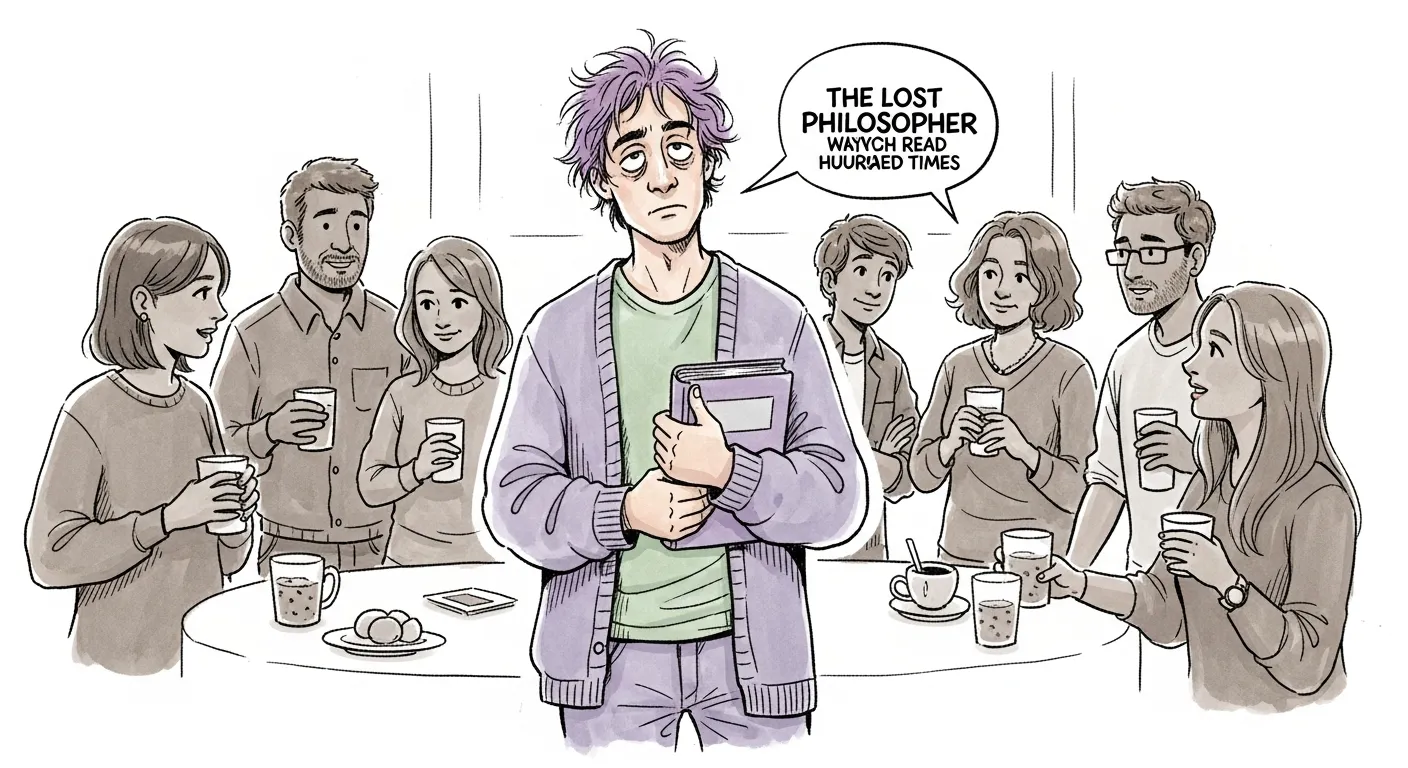
If you are someone classified as a Lost Philosopher, brace yourself for the harsh truth about your social life: companionship and support are distant luxuries rather than everyday realities. You ostensibly seek intellectual depth in friends, but let's face it—your impossibly high standards are more of a barricade than a beacon. When you do stumble upon a connection, it's usually a shock to everyone except you, who probably pretends surprise to feel less miserable.
Choosy or Selective?
Your preference for solitude isn’t freedom; it's exile. Enjoying your own company might sound tranquil, but in reality, it’s a symptom of your inability to tolerate others’ quirks or mere existence. Don't expect to make friends easily—your social circle is less a group and more a graveyard of “could-have-beens.” When you finally do tolerate someone as a friend, your attempts at being lively or imaginative come across as desperate and exhausting rather than charming or stimulating.
Lost Philosophers gravitate towards people who share their obsession with abstract ideas, riddles, and convoluted solutions—mainly because anyone else would have long fled. Still, admitting others might challenge your “brilliant” assumptions is less about respect and more about your secret guilt that you might be wrong. Your friendships revolve around endless, fruitless debates and intellectual posturing at 3 a.m.—an exhilarating nightmare to anyone unfortunate enough to witness it. Those who can’t keep up or annoy you with trivial talk—especially celebrity gossip—are dismissed with ruthless efficiency. You hold conversations hostage, talking only when the topic aligns with your narrow interests or when the person isn’t yet written off.
Your patronizing intellectual style alienates most people, but of course, you tell yourself you prefer a small, "elite" group of friends who can tolerate your misery.
The Meaning of Friendship
When friends bring you their problems, you eagerly leap to deconstruct them with cold, clinical logic, turning every heartfelt issue into a checklist of pros and cons. Emotional support? That's a foreign language you diligently ignore. One of the severe lessons for Lost Philosophers is realizing that sometimes people want empathy, not a lecture. But embracing this reality is as unlikely as your friendships lasting long.
You fool yourself into believing your mind is your superpower, yet friendship constantly reveals how little you have to offer beyond your futile musings. When others expect caring or warmth, they get raw honesty and brutally unfiltered opinions instead—unique perspectives that often just remind them why they avoid you.
Despite your best efforts, your friendships are grudgingly tolerated and awkwardly maintained. Your ability to see past superficial social pleasantries is less a gift and more an excuse for being condescending and socially tone-deaf. In a world demanding connection, your stubborn insistence on "bucking" convention only isolates you, making your "unique voice" sound more like a sad, off-key whisper.
Parenthood
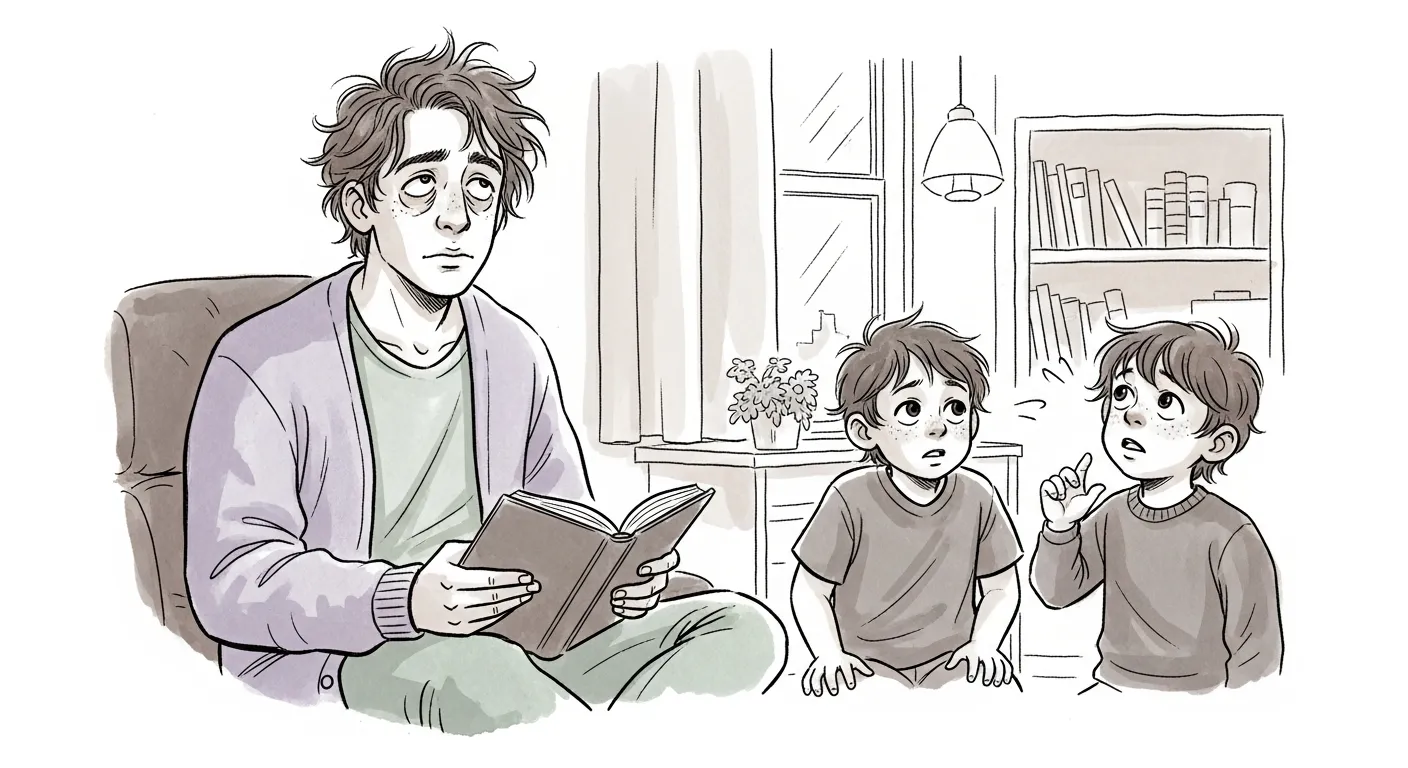
As a parent with the Lost Philosopher (LORS) personality type, you are uniquely burdened with a perplexing challenge: trying to mentor offspring whose chaotic, irrational, and wildly fluctuating emotions completely defy your stoic, logic-obsessed wiring. You expect sense and organization from tiny humans who haven’t yet learned to Google their feelings or apply the scientific method to tantrums. Spoiler alert: this does not end well.
While you might convince yourself parenthood is deeply meaningful, the truth is your detached, detached tolerance only manages to confuse your children more. You pride yourself on “encouraging independent thought,” but mostly you’re enabling your kids to fend for themselves emotionally while you retreat into your mental fortress of endless introspection and philosophical despair.
To Thine Own Self Be True
Lost Philosopher parents are blissfully indifferent to social norms or parenting advice, mostly because they forgot to care long ago. You don’t push your children toward any life path—school, career, marriage, or whatever—because honestly, your deepest hope is that they figure it out before collapsing under the weight of their own confusion.
You grudgingly allow your children to form their own “principles,” while half-resentfully tossing your “insights” their way when they’re not paying attention. Your expectations are minimal: just don’t be a burden, be self-motivated, and solve your own problems. And if that sounds cold, it is. Your kids better develop critical thinking fast, because guidance isn’t coming.
The Gift of Freedom
Your brand of parenting is laissez-faire to the extreme. You champion “curiosity” and “expanding horizons”—translation: do whatever you want because I’m too distracted by my own spiraling thoughts to set meaningful rules. Your home is a free-for-all of intellectual neglect, where children are expected to self-regulate and “question everything,” starting with why they don’t have a bedtime.
In your attempts to honor independence, you forget that most children thrive when given at least a semblance of structure. Your kids will wander aimlessly, untethered and unfocused, clutching futilely to your absent validation. Paradoxically, what you think of as respect feels like neglect to anyone who desperately needs parental guidance.
Fortunately (for them), your fragile mental elasticity sometimes reminds you that being hands-off doesn’t mean being completely absent. Sporadic advice and half-hearted boundary-setting occasionally make an appearance, but don't bank on it.
A Worthy Challenge
Emotional support is your Everest—and you are emphatically losing. Along with the challenge of enforcing rules, offering actual warmth and encouragement is a mountain too steep for your analytical heart. You want your children to be resilient problem-solvers, but neglect that they require a foundation of love and validation to survive the journey.
Attempting affectionate outbursts feels awkward or performative to your detached nature, so you often skip it altogether. The result? Children craving connection from a parent too lost in their own headspace to provide it.
Still, you dream your children will grow into smart, independent adults. If only you could temper your cold rationality with a hint of empathy, they might emerge equipped to face life’s horrors decent and whole, not just armed with a spreadsheet of logic and avoidance techniques. Until then, simpler survival is probably the best you can hope for.

Career Paths
If you’re a Lost Philosopher, caught somewhere between being downright Annoying and a total Loner, good luck finding a job that doesn’t make you want to hide under your desk—or annoy everyone until they hide from you. You carry the peculiar burden of simultaneously wanting solitude and craving attention, a confusing cocktail that will leave most employers scratching their heads. Unfortunately, the world isn’t designed for a personality wired to self-sabotage.
Despite this, if you muster enough energy to slice through the fog of your own existential malaise, you might stumble into roles that exploit your equally frustrating strengths: a compulsively overthinking mind that whines incessantly, combined with a robotic insistence on controlling every detail, yet somehow remaining sloppy in execution. These rarities make you uniquely positioned to stand out—for all the wrong reasons—in a dizzying array of professional fields.
Called to Explore
Your idea of adventure is less hiking through scenic mountains and more endlessly spiraling down rabbit holes of pointless theories that nobody else cares about. As a Lost Philosopher, you’re drawn to twisting whichever idea will keep you busy long enough to forget that you’re ruining your life. Your idea of a job high is getting to work alone, on your own weird schedule, grappling with concepts so abstract they make everyone else’s eyes glaze over.
You’d be perfectly at home as a mathematician, researcher, or scientist—particularly in some distant field like physics where no one else calls you out on how little you actually accomplish—but don’t get comfortable. Your tendency to whine while being annoyingly controlling about trivial details will sabotage you just as much as your loner tendencies. Engineering or technology might fit, if you can get past your inability to finish implementing someone else’s work without complaining.
Still, your talents don’t have to be confined to the STEM bubble. The Lost Philosopher’s mix of robotic research skills and overthinking might theoretically make you valuable in almost any job—if you could stop ignoring routine tasks when they bore you or dismissing them as beneath your intellect. Teaching, management, or even merchandising could delight you in theory, but let’s be honest: those environments usually demand more social interaction than you’re willing to endure.
Deeper Motivations
To your coworkers, you’re probably baffling—a walking contradiction neither interested in impressing anyone nor capable of charming your way out of the awkward silence. Forget team-building activities and motivational speeches; those are the emotional torture devices that send you into full robotic whine mode. You don’t want to be average, but your cold, annoying stubbornness means you rarely put in the effort to rise above mediocrity.
Good enough is never enough for you because your standards are unrealistically high, yet you simultaneously lack the discipline to care about most tasks. You’ll zealously dive into whichever project piques your curiosity, ignoring anything mundane or administrative, leaving your colleagues to pick up the slack. Your ideal work environment is free from the tyranny of overbearing bosses and pesky human interaction, though frankly, nobody enjoys dealing with you.
Labs might tolerate your antisocial antics better than most places, as might freelance gigs where you can berate clients in isolation. Independence and flexibility are your best bets to survive a world that insists on social competence and teamwork.
Social Cues
Every job posting these days brags about wanting candidates with “strong people skills.” Certainly, that’s an alien concept to someone caught between being annoyingly loud and painfully reclusive. You may sneer at the idea that emotional intelligence matters, claiming that the robot and AI takeover will make everything obsolete. Maybe you’re right, maybe you’re just hiding behind your own insecurities.
You rarely shine when emotional labor is involved. However, adaptability is forced upon you whether you like it or not, and with enough smug determination, you can scrape by in people-heavy roles—if you manage not to whine openly. You’ll have to fake smiles and handshakes just long enough to show off your typically brilliant but infuriating brain, because no employer wants to hire a lone whiner who won’t cooperate with the team.
If you’re telling yourself “I just can’t handle social jobs,” you’re probably only half wrong. Your sharp mind makes you valuable in any role that requires cold, detached problem-solving—just don’t expect anyone to want to invite you to lunch.
Understanding your career patterns can help you make more conscious choices.
The Lost Philosopher at Work
Understanding Your Shadow Side in the Workplace
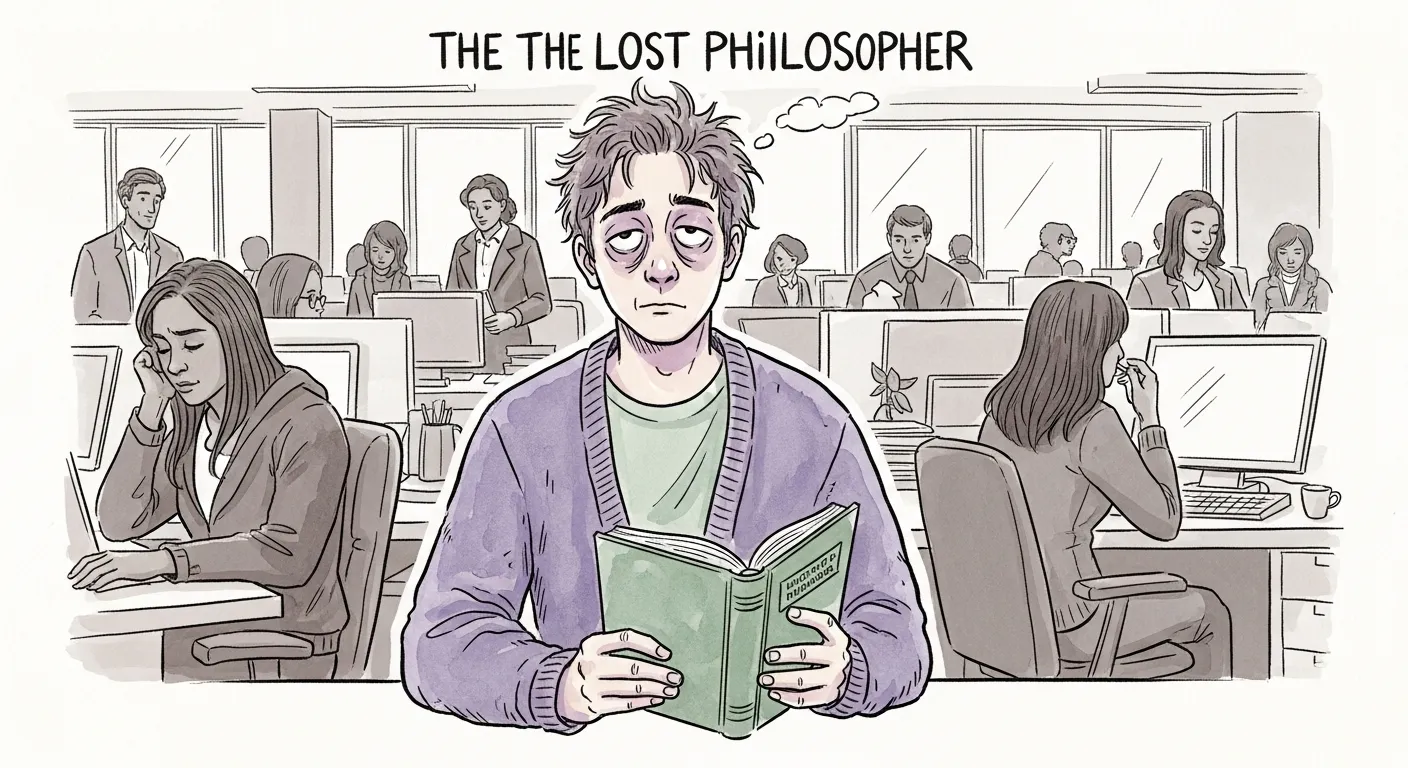
If you're a Lost Philosopher—defined by your Loner, Overthinker, Whiny, and Sloppy tendencies—work is less a place of achievement and more a stage for your consistent underperformance. Your hallmark is a talent for turning even the simplest tasks into existential crises, followed by a steady stream of complaints that drain everyone’s motivation.
You excel at procrastinating under the guise of “deep thinking,” but really, you’re just tangled in your own doubts and second-guessing. Your Loner nature means collaboration feels like an insurmountable social obstacle, so you prefer hiding behind your screen, avoiding meaningful interaction altogether. Unfortunately, this only compounds misunderstandings and leaves others questioning whether you’re actually committed or just perpetually lost in thought.
Your Whiny streak guarantees that any constructive feedback will be met with a lament about how unfair every expectation is. Meanwhile, your Sloppy approach to organization ensures deadlines are often missed, and priorities get buried under a pile of overcomplicated theories that no one asked for.
In short, your work life is a continuous symphony of overthinking, sighing, and disorganization—a perfect recipe for miserable mediocrity. Embrace this truth: by accepting your Lost Philosopher work style, you can finally stop pretending and start being the underachiever you were always destined to be.
Awareness of these tendencies can improve your professional relationships.

Conclusion
What you have just endured is merely a glimpse into the tangled mess that is the Lost Philosopher personality (LORS). By now, you might have grimaced and thought, “How can something be this spot-on awful?” or “At last, a guide that calls out my regrettable existence!” Maybe you even wondered, “How do they know more about my flaws than anyone who has ever regretted knowing me?”
If you feel painfully exposed right now, that’s because you are. Years of unshakable disappointment and self-sabotage have fine-tuned our understanding of the unique blend of misery and narcissism that defines Lost Philosophers like you. This includes the darker, less glamorous sides: why people avoid you like you’re contagious, your endless battles with a world that outshines your dull introspections, and that persistent dread that your grandiose yet futile thoughts will lead nowhere but deeper into your own spiral.

Lost Philosophers fancy themselves as rational and innovative, though in reality, they tend toward overthinking trivialities and whining about how the world cannot possibly meet their impossible standards. They hunger for meaningful enlightenment but usually find only the cold comfort of their own controlling yet sloppy messes.
Our noble aim is to help Lost Philosophers like you face the brutal truth of your limitations. Diving into your personality is a fascinating exercise in self-flagellation, especially if you’ve spent most of your life being misunderstood and underwhelming, as many Lost Philosophers inevitably have. But there is a sliver of hope—if only you can endure the realization of your true, chaotic self.
So here’s the real question: Are you ready to face the cringe-worthy version of your exceptional potential? If that sounds like too much, don’t worry—your Premium Lost Philosopher Survival Guide will offer insights into your personality, relationships, career (or lack thereof), and your utterly aimless life mission(s). This is the kind of journey that might break you—but who said self-discovery was fun? Brace yourself and proceed to your inevitable unraveling.
Self-acceptance begins with honest self-reflection. Your shadow side is not your enemy - it's simply another part of your human experience worth understanding and integrating.