The Martyr
LOWC
(aka INFJ)
Loner • Overthinker • Whiny • Controlling
Suffering dramatically for causes no one asked you to champion. Your sacrifices are loud, even when silent.

Explore This Type

Introduction
Who is the Martyr personality type?
The Martyr is a personality forged from the peculiar blend of being Loner, Overthinker, Whiny, and Controlling, with a dash of Miserable as an auxiliary seasoning. They approach the chaos of life not with enthusiasm or clarity, but with a deep reservoir of self-criticism and an imagination that specializes in worst-case scenarios. Their inner landscape is a gloomy fortress, lit only by their relentless dissatisfaction with the world and themselves.
Expecting people to be what they ought to be is a fast track to glaring disappointment.
Idealism and principles? Sure, but only if they come with the chronic inability to achieve satisfaction. The Martyr isn’t content to merely fail silently—they must be seen doing it while trying to make a difference that never quite materializes. Success to them is less about fulfillment and more about a Sisyphean quest to fix everything except their own eroding self-esteem.
Perpetually burdened by unrealistic standards, Martyrs don’t just dream—they stew in their dreams, endlessly turning them over in their heads without ever bothering to act. They carry their values around like heavy stones, weighing down every step and obscuring any chance of genuine happiness. The world might as well be a personal test they’re doomed to fail.
Though they might seem withdrawn, Martyrs are fueled by an exhausting internal loop of pessimism and self-absorption. Their empathy is often tangled in their own emotional mess, leaving little room for anyone else. Purpose? Sure—but finding it feels like a cruel joke they’re doomed never to understand.
Seeking Purpose
Because they are so outrageously rare in their combination of misery and melodrama, Martyrs often drag around the crippling awareness that they just don’t belong anywhere. They have fantastically rich inner lives, filled mostly with doubt, regret, and incessant second-guessing. This dissonance means that social connections usually feel like burdens, or at best, necessary evils that only deepen their sense of isolation and self-pity.
This feeling of perpetual alienation does little to dampen their solemn vow to “make things better,” though their inability to take meaningful action ensures they’ll mostly be left spinning their wheels. The Martyr is disturbed by every injustice they notice, but instead of constructive activism, they get entangled in endless rumination and complaining. Their so-called strengths—like imagination and sensitivity—are more like flaws dressed up in noble-sounding language.
Nothing thrills a Martyr more than convincing themselves, and everyone around them, that the world is a darker, crueler place because of their own efforts to “help.”
They often overextend themselves emotionally, burning out on their self-imposed missions while ignoring their own needs entirely—because self-care is apparently too selfish for someone wired to suffer perpetually.
Connecting with Others (and Themselves)
Martyrs claim to value deep, authentic relationships, but their pattern usually involves draining those close to them with their constant whining and passive-aggressive expectations. They crave being understood, yet act in ways that guarantee they remain misunderstood—or worse, dismissed.
Small talk is torture, but meaningful conversations tend to devolve into dramatic confessions of hopelessness. Their “warmth” feels like a thin guise, often smothered by their controlling tendencies and hypersensitivity to any form of feedback, which they perceive as personal attacks.
They invest so much energy into their relationships that they inevitably become frustrated when their toxic self-sacrifice goes unappreciated. Martyrs are experts in assuming the victim role while simultaneously refusing to take responsibility for their own emotional overload.
A Personal Mission
Martyrs believe fervently that they have a unique mission—usually something tragic and existential—that justifies their constant self-flagellation. They see themselves on the front lines of an endless struggle against injustice, misery, and human failings, all while failing to muster the clarity or stamina to make any real impact.
When faced with unfairness or inequality, Martyrs typically respond with a combination of intense grumbling, introspective paralysis, and a martyrdom complex so thick it could be cut with a knife. They might balance intellect and feeling, but mostly they wobble between dread and self-pity.
If there’s one piece of advice actionable for the Martyr, it’s this: pause your theatrical self-sacrifice for a minute and try, just try, to look after the one person you keep neglecting—you. Though it’s unlikely they’ll follow through, recognizing this shadow side is the first step in realizing their own true, miserable self.

Strengths & Weaknesses
The Martyr Strengths
- Insightful-ish – You have a knack for overcomplicating what others might consider simple, diving into the shadows of human motivation only to get stuck in the murk of your own paranoia. You believe you see the "deeper truth," which mostly consists of how everyone’s probably lying to you or judging you. Congratulations, you've mastered the art of unnecessary self-sabotage.
- Principled (About Your Own Suffering) – You hold onto your personal code as tightly as a drowning person clings to a sinking ship. Ethics matter—especially when it means pointing out everyone else’s flaws while ignoring your own. You won't lie, mostly because you’d rather wallow in your misery than face the mess your life really is.
- Passionate (In Suffering) – Purpose is everything, even if your version of it involves perpetually chasing impossible ideals that leave you despairing in the corner. Instead of shooting for the stars, you mostly shoot yourself in the foot with unrealistic expectations and guilt trips.
- Altruistically Useless – While you want to help others, your efforts usually feel more like a spectacle of self-sacrifice than genuine aid, leaving everyone wondering if you're actually making things worse. Your "greater good" often comes at the expense of your own joy, which nobody asked for.
- Creatively Overcomplicated – Your creative side is always “thinking outside the box” except the box is usually a dark pit of anxiety, and the creativity manifests mainly as overthinking schemes for how you might have ruined everything.
The Martyr Weaknesses
- Painfully Sensitive to Criticism – Any feedback feels like a personal attack on your fragile ego. Even the tiniest hint of disagreement sends you spiraling defensively into sanctimonious martyrdom. Spoiler alert: nobody owes you protection from opinions.
- Emotionally Locked Down – You prize honesty theoretically, but opening up feels like admitting defeat. So you cling to your misery silently, making sure everyone around you knows just how much you suffer without actually asking for help — because that would ruin the aesthetic of your martyr complex.
- Perfectionism Except Without Improvement – You fixate on flaws ad nauseam, not to make things better, but to avoid action altogether. Every aspect of your life is either "not good enough" or a reason to complain, leaving you stuck in a toxic loop where nothing ever gets done.
- Rejecting the Mundane Means Rejecting Reality – Your grand dreams remain purely imaginary, because you refuse to bother with the simple, boring steps required to make anything real. Instead, you idle in a fantasy of what could be while your real life quietly disintegrates.
- Burnout Is Inevitable – Your relentless self-flagellation combined with a near-total lack of self-care means you’ll crash and burn spectacularly, again and again. Your emotional exhaustion is legendary, and it's entirely self-inflicted.
Transform Your Life (Or Not)
Embrace Your True Dysfunctional Career Path
Stop pretending you’re fit for a regular job and accept that your unique blend of self-sabotage and misplaced conviction will define your professional misadventures. Our Career Suite won’t save you, but you might as well have some fun failing spectacularly.
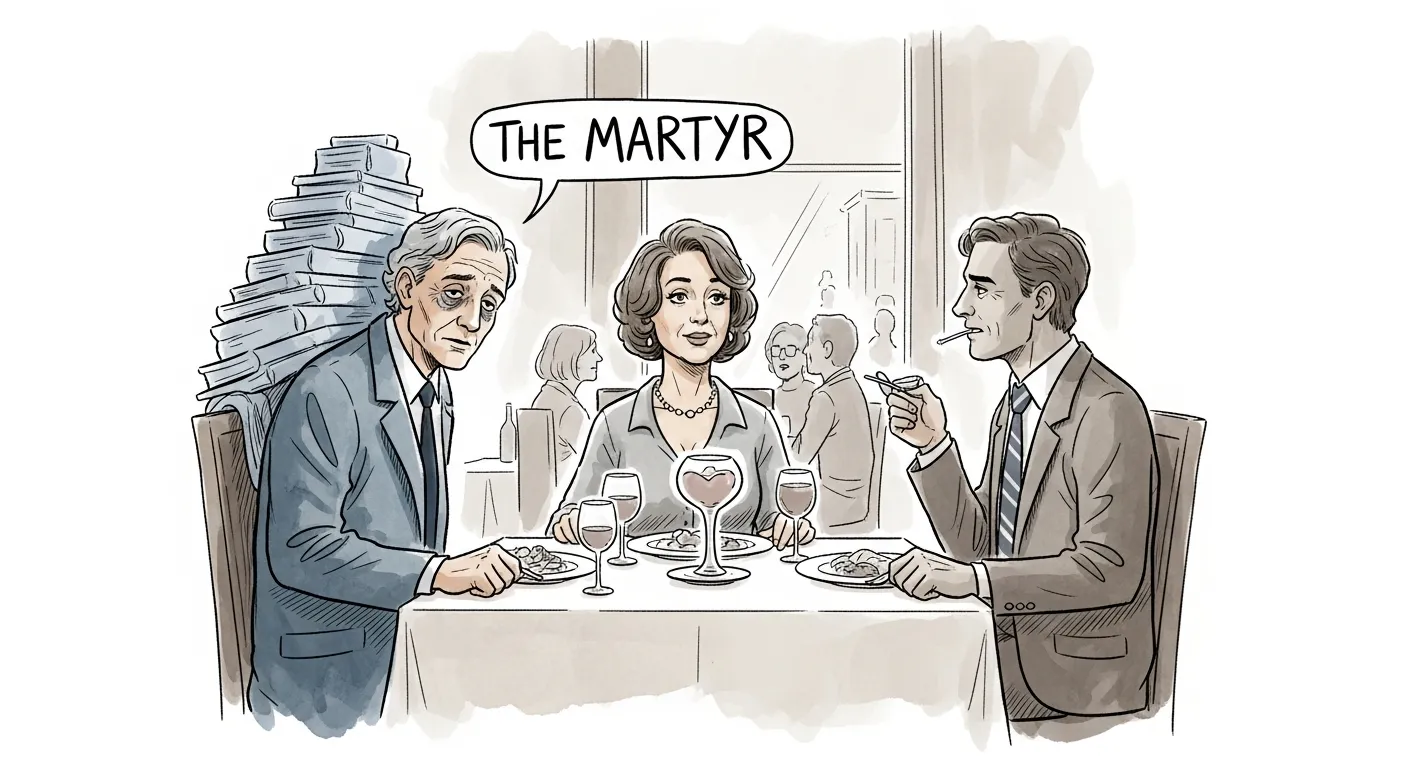
Romantic Relationships
Sometimes loving yourself means realizing you’re wired to sabotage connection — and awkwardly embracing that.
If you’re a Martyr, your romantic relationships don’t just seek meaning; they’re a tragic quest for depth that inevitably crashes on the rocks of disappointment. You’re stuck in a loop of pining for an “ideal” partner whom you have already painfully constructed in your mind – the perfect figment that will never, ever materialize. Spoiler alert: because you’re allergic to reality and prone to harassing everyone around you with your impossible standards, finding love is less a journey and more a slow-motion car wreck.
While some might call your pickiness “self-respect,” it’s really just a convenient excuse to keep people at arm’s length. Your vibrant imagination is less a gift and more a breeding ground for self-inflicted heartbreak. At least your eternal waiting gives you plenty of time to stew in your own bottled-up resentment. Look on the bright side: this personality flaw guarantees a lifetime supply of bitter anecdotes to wallow in.
Is This for Real?
We get it, Martyrs tend to be hyper-focused on what they call their “core values,” which really just means you live in your own fortress of cynical denial. This constant soul-searching about “authenticity” often translates into a radar for detecting anyone who might have the audacity to be slightly different — a surefire way to ensure you remain single, bitter, and insufferably self-righteous.
You cherish “integrity” so much that you snap at anyone trying to change your well-practiced martyr routine. Partners who don’t worship your solemn self-pity are instantly rejected, leaving you alone with your “deep” thoughts and endless self-doubt. When you do find someone willing to tolerate this nonstop emotional labor, you dive into their “innermost needs” with the enthusiasm of a guilt-ridden therapist — except you’re only marginally more fun.
Instead of appreciating the relationship for what it is, you obsessively pick it apart, hunting for some hidden lesson or excuse to spiral into gloom. Your idea of “honest communication” is a one-sided confession zone, where you complain endlessly while your partner slowly tunes out. You demand epic conversations full of existential dread, making sure no lighthearted moment survives your intense dissection.
The Power of Love
The Martyr’s “love” is less a mutual connection and more a one-man pity party full of grand declarations and heart-wrenching sighs. Your relentless sensitivity amounts to emotional overkill, smothering partners under the weight of your never-ending need for reassurance — because, of course, you’ve already decided you’re unlovable.
You crave connection like it’s a lifeline, yet you treat it like a minefield, expecting everyone to walk on eggshells while you analyze every minor misstep for deeper rejection. For you, love is not a simple feeling but an exhausting personal crusade against your own insecurities. It’s not surprising that your relationships are reserved for the few brave souls willing to endure your intense self-absorption.
Ultimately, the Martyr’s romantic ideal isn’t two people growing together but one person endlessly sacrificing themselves while clinging to the hope that maybe someday, someone will look past the sludge of self-pity to notice the overwhelmed wreck inside. Until then, embrace your role as the tragic hero of your own melodrama — after all, what else can you do?
Remember: recognizing these patterns is the first step toward healthier relationships.

Friendships
The most I can do for my friend is simply tolerate their existence.
People with the LOWC personality type, known as The Martyr, possess a unique talent for turning even the simplest social encounter into an exhausting lesson in disappointment. They don’t settle for surface-level interactions simply because they tend to scare everyone off anyway. The Martyrs crave friendships so deep and authentic that finding one is like hunting a mythical beast—and just as futile. When forced to choose between a vast sea of mediocre acquaintances and a handful of draining, overly intense relationships, they stubbornly cling to the latter, ensuring no one escapes unaffected.
Though The Martyrs may appear quiet or distant, this only masks their relentless need to unload their emotional baggage on the unfortunate few who stick around. They revel in dissecting their endless passions and grievances with any “friend” sufficiently trapped by circumstance. Despite a preference for isolation that would make ignoring everyone seem easier and saner, they drag themselves back into social situations, convinced that showing “their true selves” is somehow a gift rather than an unbearable burden.
Searching for a Heart to Drain
The Martyrs bring to friendships a long list of impossible expectations—mostly focused on demanding unwavering attention while offering little in return. Authenticity is a buzzword they wield as a shield, yet they’re infamous for subtly manipulating others to “accept” their flaws, which tend to eclipse everything else. If someone isn’t willing to be their emotional punching bag, they’re quickly discarded from the “friend” category.
Support and mutual growth might sound nice, but to The Martyr, it translates mostly into making their friends swallow endless woes in the name of “bonding.” Fun is often sacrificed on the altar of self-pity and philosophical lamentation about life’s unfairness. Their version of friendship is an exhausting, one-sided mission that tests the endurance of everyone involved.
In this twisted quest for connection, The Martyrs aren’t searching for mere companions. No, they’re hunting for a soulmate—a willing captive who shares their penchant for misery and self-importance. This is no easy feat, of course, which leads to frequent, pitiful self-doubt and the resigned acceptance that many Martyrs will spend much of their lonely lives with a few half-hearted friendships or none at all.
Loyalty to a Fault (Mostly Theirs)
In the rare cases The Martyrs do stumble upon someone who seems to “get” them, the resulting friendships are so overwhelming and emotionally draining that most sane people run for the hills. The Martyrs invest tremendous energy in these bonds, not out of selflessness, but because they feel secretly indebted—usually for some imagined past slight or unreturned compliment.
They are well-known for their uncanny ability to overlook glaring red flags in potential friends, especially if those people serve as convenient targets for their incessant neediness. Ironically, The Martyrs often miss out on the possibility that some acquaintances might reciprocate their care if only they weren’t so wrapped up in their own drama.
When a genuine friendship finally forms, The Martyrs become fiercely loyal, sometimes to their own detriment, clinging to relationships long past their expiration date. The only requirement to be counted among their “true friends” is a willingness to endure brutal honesty, emotional rollercoasters, and endless self-sacrifice—mostly on the Martyr’s part.
In the end, The Martyrs often find themselves isolated not because others have rejected them, but because they have exhausted every ounce of social goodwill from those unfortunate enough to stick around. And yet, they soldier on, convinced that suffering for others' sake is the truest expression of their profound, if exhausting, self.
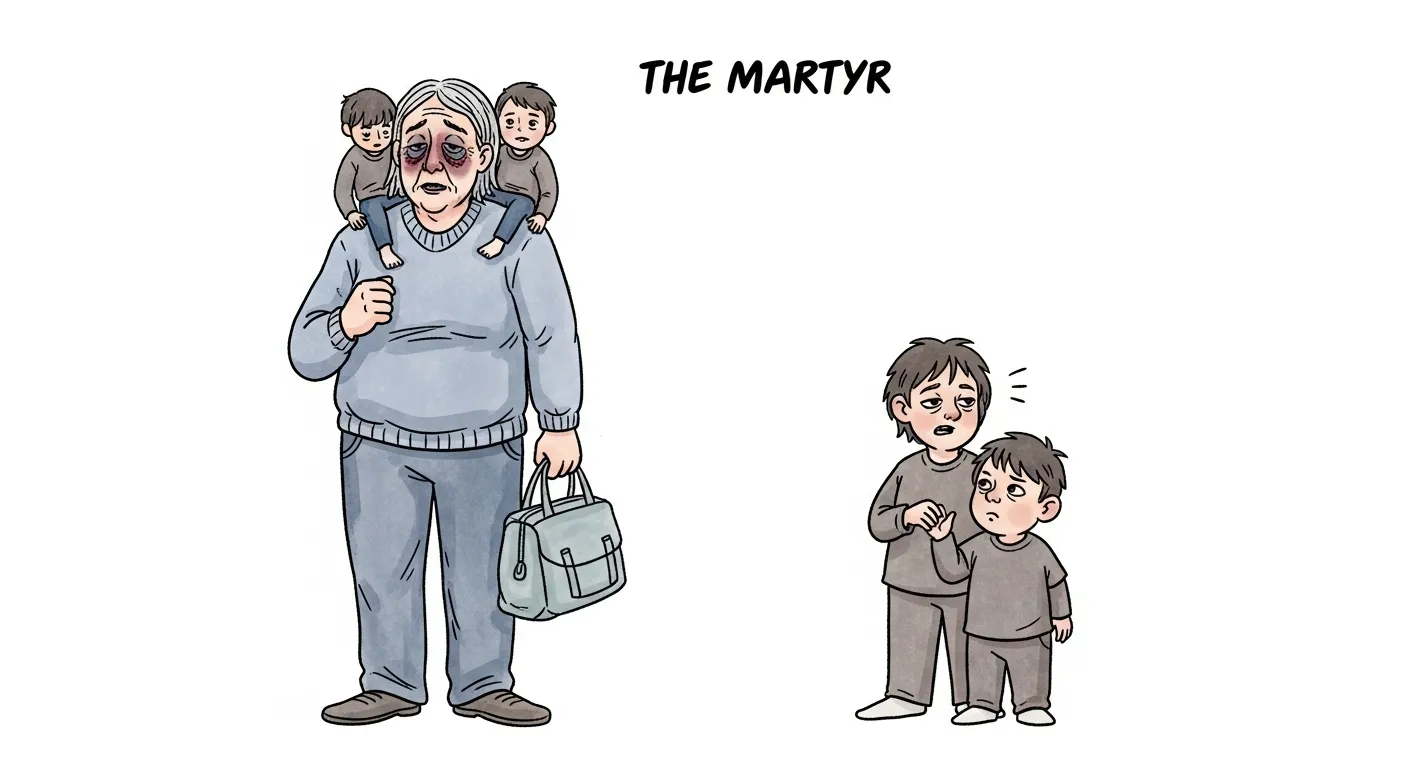
Parenthood
My instinct is to smother my children with control and criticism. But maybe, just maybe, their misery is the backbone of their character.
As parents, the Martyr (LOWC) approaches child-rearing with an unhealthy blend of self-sacrifice and unrealistic expectations. They convince themselves that molding perfect little versions of their own tortured selves is a noble endeavor. Unfortunately, this often translates into a relentless obsession with shaping their children’s lives according to an impossible ideal of suffering and sacrifice.
Parenthood to the Martyr is less about joy and more about endurance—yours, theirs, everyone’s. They wield their creativity and compassion like blunt instruments, often drowning loved ones in a flood of overthought advice and endless guilt-tripping devotion. Rather than fostering growth, they tend to stifle independence under layers of controlling impulses and whiny complaints about how challenging raising children is.
Idealism for the Martyr means obsessing over imposing a set of lofty humanitarian values that mostly just confuse their children and inspire resentment. They desperately want their kids to be “better” than everyone else—emotionally intelligent, compassionate, and oh-so-unique—but somehow end up fostering anxiety, rebellion, or numb compliance instead.
Be Unique, Just Like Me
The Martyr parent is endlessly willing to sacrifice their sanity to “improve” their children’s lives. But don’t mistake this for gentleness—behind that façade of caring lies a strict taskmaster intent on forging obedient little martyrs in their own image. Efficiency in emotional manipulation is key.
No doubt the Martyr brings a twisted version of devotion and loyalty to parenting, but perfection is a mirage they never stop chasing. Children endure impossible standards that ignore their individuality or developmental stage. Any slip from the ideal—whether a moment of childish selfishness or a craving for normalcy—is met with dismay or passive-aggressive disappointment. They demand independence, yet punish any sign of external guidance or conformity.
Projection runs rampant: the Martyr parent’s beliefs and ideals smear all over their kids, turning them into unwilling vessels of unrelenting self-critique. As a result, children are burdened with contradictory, impossible expectations that no human could realistically meet.
Adolescence is predictably turbulent. Kids either lash out in rebellion or retreat into silence, both responses leaving the Martyr feeling personally wounded—because to them, any rejection is a dramatic existential crisis. Their sensitivity makes compromise a distant dream, yet they insist on empathy and understanding that often feels selective at best.
A Job Well Done
The Martyr’s parental goal is to drill into their children a black-and-white worldview where right and wrong must be rigidly upheld—mostly according to the Martyr’s skewed judgment. They urge their young charges to adopt causes, fight battles, and achieve a “higher” humanity that usually ends in exhaustion or resentment.
They cling to the idea that fulfillment comes from their children’s authenticity, though what they mean by that is a child faithfully carrying the burden of the Martyr’s unmet ideals. If offspring turn out differently than expected, the Martyr attempts to rebrand the perceived failure as “growth” or “independence,” but everyone knows it’s just denial.
In the end, children of the Martyr often grow up appreciating freedom only after escaping the shadow of such relentless control and unrealistic integrity. Because real love, for the Martyr, is just another complicated performance.

Career Paths of The Martyr (LOWC)
"It’s better to fail spectacularly in a futile quest for meaning than to settle quietly for mediocrity."
If you identify as The Martyr under the LOWC model, your career choices aren’t propelled by typical ambitions like money or prestige. Instead, you relentlessly chase some lofty, imaginary sense of purpose that never quite materializes. Your professional life is a parade of ruined potentials, each opportunity lost in the haze of overthinking and emotional meltdowns. Because your “mission” always feels just out of reach, you are wired to misunderstand the very notion of success, mistakenly believing a job without soul-crushing despair is somehow unfulfilling.
The Martyr’s tragic flaw lies in their inability to commit. Bombarded by an endless array of terrible options, you agonize over every decision until it’s too late. Choosing one path means abandoning all those equally disastrous alternatives, which can lead to profound regret and endless self-loathing. Don’t worry—your track record suggests you’ll flail through many failed careers anyway, so this cycle will repeat ad nauseam.
The Desperate Search for Meaning
The Martyr desperately wants a job that “helps others” because deep down, you crave validation for your tortured existence. Predictably, you gravitate toward burnt-out professions like counseling, social work, and teaching—fields where you can drown in other people's problems to distract from your own. Service industry roles lure you as places to seek connection, but your slovenly habits or controlling nagging inevitably alienate coworkers and customers alike.
Healthcare might seem noble, from nursing to acupuncture, but your robotic inability to handle stress often leaves you miserable and whining about workload. Despite your lofty idealism, these jobs quickly reduce you to a frazzled mess, resenting every minute.
Your so-called “empathy” turns into whining and passive aggression, and your attempts at creativity become half-baked hobbies that nobody cares about. Writing, music, or art are merely escape routes from your own neurotic spirals rather than genuine passions. Nonprofits and charitable work beckon as noble arenas to display your martyrdom, but often you just end up resenting the bureaucracy and emotional toll. Inforrmative insights and innovative ideas? Rarely — you’re far more likely to spot ways things could go disastrously wrong and complain about them endlessly.
The Delusion of Autonomy
The Martyr imagines that terrible work environments are the problem, not their own toxic need for control or messy slackness. You despise rigid jobs that ask you to follow rules and deadlines—you "need” flexibility to pursue your whims and self-destructive habits. If you’re not the boss running a chaotic little empire of misery, you feel trapped and express this by passive-aggressively sabotaging your own progress.
Many Martyrs dream of starting “meaningful” side hustles that blend random interests—invariably ending in half-finished endeavors that nobody funds or supports. You can’t help but feel stifled unless your job lets you dictate every detail, while simultaneously failing to organize or finish basic tasks.
The truth is that your “versatility” is just a refusal to stick to anything long enough to succeed. Instead of carving a niche, you spiral through fields, annoyed at workplace demands, whining about competition, and compulsively overthinking how everyone else is ruining their lives better than you are.
A fulfilling career seems like a cruel joke, as your genuine yearning to "help others" clashes with your inability to manage your own misery and narcissism. When you're honest with yourself, you realize your true talent lies in being a professional disappointment. But take solace: accepting this is the first step to embracing the darkness within. At least, there you won't be alone.
Understanding your career patterns can help you make more conscious choices.

The Martyr at Work: Your Daily Dose of Self-Sabotage
If you're a Martyr, your work life is a masterpiece of misplaced effort and misguided intentions. You tirelessly overthink every tiny task, convinced that your painful self-sacrifice is both necessary and appreciated—spoiler alert: it rarely is. Your tendency to be whiny about small setbacks while simultaneously trying to control every aspect of your environment makes you the ultimate obstacle in any team.
Instead of leading with clarity or decisiveness, you micromanage with the desperation of someone who’s terrified of chaos, all the while leaving a trail of sloppy errors in your wake. You’re wired for failure through a toxic mix of miserable expectations and narcissistic self-pity that ensures you never feel good enough, but always crave recognition with zero awareness of how off-putting this actually is.
Embrace your shadow side and accept that your relentless need to be both controlling and victimized will never make you the hero of your workplace story. Perhaps the real growth for you lies in learning to tolerate your own flaws—not that you would ever admit it. After all, self-awareness is a foreign concept when your default mode is drowning in insecurity and self-loathing.
Awareness of these tendencies can improve your professional relationships.

Conclusion
In the end, it’s your unfortunate habits and constant missteps that reveal your true self.
What you’ve endured reading this far is merely a glimpse into the tangled mess of the lowly, tortured, and heartbreakingly rare LOWC personality type (The Martyr). Along the way, you might have sighed with a mixture of dread and recognition, thinking, “Wow, this is uncomfortably spot-on,” or, “Finally, someone sees the disaster I always was.” Maybe even, “How on earth do they know more about my failures than my closest friends do?”
If you feel painfully exposed right now, that’s because you are. Years of relentless digging have shown us the warped strengths and relentless struggles of LOWCs like you. We see your misplaced passion, your exhausting martyrdom, and your crippling compulsion to control a life that’s slipping through your fingers—but we also see the darker truth: the paralyzing fear that you’ll never accomplish a single meaningful thing in this fleeting, unforgiving existence.
LOWCs are cursed with an idealism so misguided it always ends in disappointment, determination that stubbornly ignores reality, and a gift for envisioning a better life that will never, ever arrive. But they don’t just want compliments—they desperately crave validation for a life that is, frankly, a series of failures disguised as noble intentions.
That’s why we’ve taken it upon ourselves to help LOWCs like you not only confront the tragic comedy of your weaknesses but also fully accept your unavoidable fate. Learning about your personality type might be eye-opening, but the grim truth is this: self-understanding only deepens the sinking realization that you will likely screw up every chance you get to matter in this world.
So here’s our merciless question for you, LOWC: Are you ready to fully face the crippling limitations of your nature – to embrace the tragic flaw that defines your existence? If so, your Premium Martyr Suite will provide new, brutally honest insights into your personality, your doomed relationships, your sinking career prospects, and your life’s inevitable disappointment. This is not a journey of hope—this is the journey of bitter acceptance. If you dare to continue, the next section awaits.
Embrace Your Career Doom
Unlock Your True Career Disasters
Stop pretending you’re cut out for success and get career “guidance” that actually understands how your inner turmoil sabotages every effort. Our Career Suite can help confirm which miserable jobs fit your inherently flawed mindset, exploit your worst traits, and build the most uninspired version of the life you keep telling yourself you deserve.
Self-acceptance begins with honest self-reflection. Your shadow side is not your enemy - it's simply another part of your human experience worth understanding and integrating.