The Delusional Romantic
LOWS
(aka INFP)
Loner • Overthinker • Whiny • Sloppy
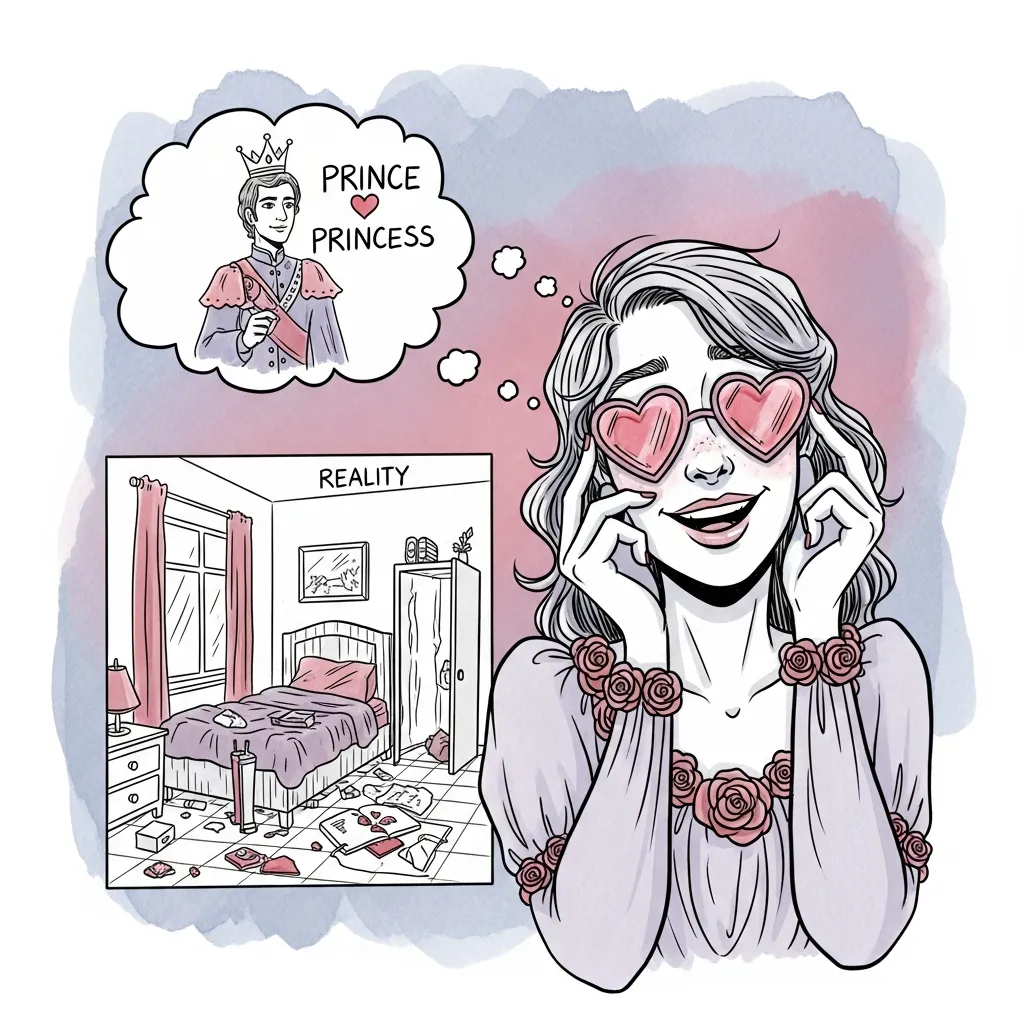
Living in a fantasy while reality falls apart around you. Someday your ship will come in—you're just not sure which ocean.
Explore This Type

Introduction
Who is the Delusional Romantic?
LOWS (Delusional Romantic) is a personality type marked by Loner, Overthinker, Whiny, and Sloppy traits. These painfully misunderstood souls tend to be painfully introverted, endlessly brooding, and expert at whining their way through every situation—all while managing to do everything half-heartedly.
Though they seem quiet or unassuming, don’t be fooled: Delusional Romantics drown in their own relentless inner monologues, fixating on elaborate daydreams that never see the light of day. Their hypersensitivity isn’t a gift—it’s a curse, relentlessly amplifying every minor slight or awkward moment into a personal tragedy. They cling desperately to sentimental trinkets and memories not out of joy, but because reality is too painful to face.
Idealism for the Delusional Romantic is less about noble causes and more about self-delusion. They yearn endlessly for deep connections yet routinely sabotage themselves with crippling social anxiety and unfounded fears of invisibility. Their supposedly "rich" creativity often translates into obsessive rumination with nowhere to go but downward. Wired for emotional chaos and stagnation, they are the poster children for what happens when dreams are left ungrounded in reality.
"All that is gold does not glitter" — a reminder that for Delusional Romantics, most things just don’t matter because they never make it past fantasy.
The Gift (and Burden) of Empathy
LOWS personalities are so introspective it’s practically a trap. Their incessant self-analysis makes them painfully aware of their countless flaws—which they then project onto everyone else. Their so-called "empathy" often means absorbing everyone else’s problems until they’re utterly crushed under the weight of an imaginary world’s hardships.
Without strict boundaries—something they’re hopelessly incapable of maintaining—they drown in other people’s misery, turning into emotional wrecks over things they can’t fix or influence. If you want someone who suffers more than necessary, congratulations, you found your person.
Speaking Their Truth (Or Just Rambling)
The Delusional Romantic is so obsessed with being "authentic" that they manage to make every interaction exhausting. Their whiny commitment to wearing their heart on their sleeve tends to wear out even the most patient listener. Sure, they have a flair for dramatic self-expression—mostly in the form of cryptic posts or endless fictional soap operas they play out in their heads.
But the truth is they’d rather talk about their feelings forever than do anything that actually improves their situation. Indecisiveness reigns supreme; they’ll procrastinate and overthink until all opportunities have vanished, defeating themselves before they even start. It’s not a bug, it’s a feature.
In Search of a False Calling
LOWS individuals wander aimlessly until they latch onto some vague notion of purpose—usually involving saving the world or helping everyone else escape their misery. Unfortunately, their helpless scattered efforts leave them drained and frustrated, accomplishing very little beyond burnout and self-pity.
Even when they occasionally muster energy to create or "make a difference," their idealism crumbles under the pressure of actual, measurable results. They know the world is imperfect, but their chronic victim mindset ensures they'll never be the ones to fix it. They inspire... others to look away and hope the problem disappears.
Delusional Romantics You May Know
J.R.R. Tolkien
Because losing yourself in fantasy worlds is easier than facing reality.
William Shakespeare
Master of tragic whining disguised as poetry.
Björk
Pioneer of artistic overthinking and emotional melodrama.
Alicia Keys
Sings about feelings nobody asked to hear so loudly.
Tom Hiddleston
Half actor, half perpetual internal monologue.
Julia Roberts
Expert in looking soulful while doing nothing productive.
William Wordsworth
Wrote endless pages about pain and nature without ever showing up.
Johnny Depp
Icon of charming self-destruction and nonsensical introspection.
Frodo Baggins
Literal embodiment of getting lost and complaining about it.
Amélie Poulain
Delusion meets harmless niceness in exaggerated daydreams.
Arwen
Eternal romantic, eternal disappointment.
Fox Mulder
Chased shadows instead of facts his whole life.
Anne
Classic world-class trouble magnet with zero coping skills.
Sybil Branson
Drama queen with a penchant for silent suffering.
Lance Sweets
Psychologist who probably never fixed his own problems.
Konstantin Levin
The king of futile existential despair.
Strengths & Weaknesses
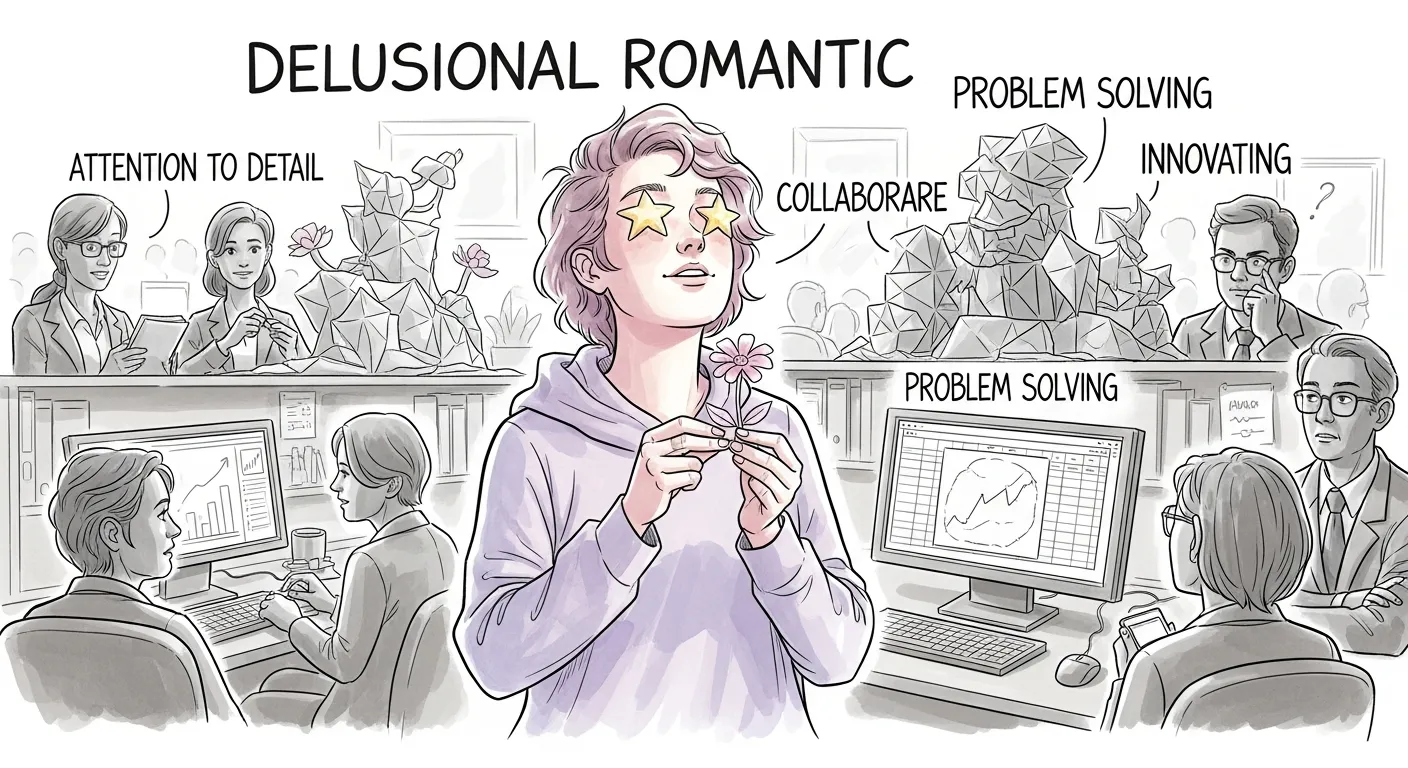
LOWS Strengths
- Excessively Empathetic – If understanding everyone else’s feelings was an Olympic sport, The Delusional Romantic would sweep the podium, mostly because they absorb everyone’s emotional baggage and then complain about it endlessly. Their sensitivity isn’t a gift so much as a chronic condition forcing them to overthink and cry about every minor slight, real or imagined.
- Generously Ineffective – These souls want to “make the world better” by sharing their incessant worries and correcting everyone’s behavior with unsolicited advice. Unfortunately, their generosity mostly manifests as draining everyone around them with pity parties and half-baked moral lessons nobody asked for.
- Unrealistically Open-Minded – The Delusional Romantic aims to accept every belief and lifestyle—no matter how toxic or absurd—because confronting reality is just too exhausting. This naive inclusiveness means they often end up the emotional dumping ground for all sorts of nonsense, leaving them bewildered and perpetually overwhelmed.
- Distractingly Creative – Their minds wander so deeply into daydreams and fantasies that “getting anything useful done” is—by design—impossible. Creative pursuits here mean inventing elaborate tragic backstories or perfect fictional universes to hide from the crushing mundanity of their actual lives.
- Passionately Pointless – Wholehearted dedication to lost causes and ideals only fuels the cycle of disappointment. The Delusional Romantic may rally behind movements or notions nobody else cares about, mostly because it helps justify their endless suffering and sense of being misunderstood.
- Blissfully Idealistic – When confronted with the slightest inconvenience, they cling stubbornly to their impossible dreams and moral crusades, refusing to accept that the world doesn’t care about their feelings. This idealism is less inspiring and more a prelude to inevitable disillusionment.
LOWS Weaknesses
- Terribly Unrealistic – Reality is a cruel joke to The Delusional Romantic, whose rose-tinted illusions about how things “should be” guarantee chronic disappointment. Their fantasies crumble at the slightest touch of practical life, leaving them confused and bitter about why everyone else seems to have it easier.
- Self-Imposed Hermits – Though desperate for connection, these souls lack any useful social skills or decisiveness to make it happen. Instead, they retreat into elaborate internal dramas, ensuring that loneliness is their most consistent companion.
- Chronic Lack of Focus – Productivity is for boring, emotionally unavailable people. The Delusional Romantic dithers endlessly over which imaginary scenario to invest their energy in, never managing to follow through on anything that requires actual effort or commitment.
- Perpetually Emotionally Overwhelmed – Their hypersensitivity means they soak up every negative vibe like a sad, excuse-making sponge. This leaves them unable to think clearly and prone to total mental shutdowns whenever confronted with even mild criticism.
- Pathologically Eager to Please – Conflict terrifies them so much that they’ll apologize for crimes they didn’t commit just to keep the peace, often at their own expense. This desperation for acceptance tends to erode whatever self-respect they might faintly possess.
- Excessively Self-Critical – Recognizing their own failures (mostly self-inflicted) fuels a toxic cycle of self-loathing. The Delusional Romantic dreams big but invariably falls short, leaving them to berate themselves endlessly and abandon any hope of improvement.
Feeling miserable yet? Good. Before you move on, take a moment to savor how completely this diagnosis sums up your gloriously tragic existence. Embracing this total failure might be the first step toward accepting the you that nobody else could love.

Romantic Relationships
If you identify as a LOWS personality type—the Delusional Romantic—brace yourself: your approach to love is less about warmth and more about wandering in a fog of unrealistic expectations. You are wired to believe in the existence of "the one," blissfully unaware that your idealized fantasies are less cupid’s arrow and more a self-inflicted emotional minefield.
Your delusion is rooted in the conviction that romance should be everything and more, leaving you utterly unprepared for the crushing disappointment that reality consistently delivers. The more you conjure your perfect relationship in your head, the more real-world partners will dutifully fail to conform—because let’s be honest, no one can live up to the impossible standards you’ve invented to torture yourself.
For a LOWS, an ideal relationship isn’t just about sharing feelings—it’s about unveiling your whole mess, scars included, and expecting your partner to play the role of therapist, muse, and punching bag all at once.
Hopeless Romantics
You don’t just want to date someone; you want a soulmate. This is your grand tragedy: shading all your failed connections with the bitter brush of “if only they were the right one.” You pride yourself on looking past superficial things like attractiveness or social cachet, but in reality, you’re just as judgemental about who fits your fantasy narrative.
This type believes in the fairy tale that two people will magically fix each other’s problems and bask in eternal happiness. Spoiler alert: they won’t. Meanwhile, your brain is running endless marathons imagining what the “ideal” partner should be like—half fictional muse, half caricature of your own insecurities—which means actual human beings get filtered out before you even start.
Meeting someone new? Prepare to compare, reject, and ultimately be left alone, because nobody measures up, and that’s on you.
Making an Effort
Eventually, you might catch a faint glimmer of insight: love requires effort, compromise, and accepting imperfection. Congratulations—welcome to adulthood! The problem is, your passion is usually couched in overly sentimental gestures—gushing written declarations, over-the-top manufactured experiences—because your true talent lies in avoiding real, messy interpersonal work.
You’ll try to respect independence and “accept” your partner as they are, but secretly you’re maneuvering to push them toward your vision of perfection. Your attempts at helping your partner “grow” are less about mutual benefit and more about controlling an uncontrollable outcome.
Despite your well-meaning dutifulness, you’re wired to burn out emotionally, exhausted from carrying impossible expectations and neglecting your own needs until you collapse under the weight of your delusions.
Finding What’s Real
Your aversion to conflict masks a tendency to bottle things up, obsess silently, and avoid healthy communication, leading to spectacular emotional meltdowns at the slightest provocation. You prioritize keeping the peace so much that your own voice and desires vanish—leaving you resentful, hurt, and perpetually misunderstood.
Disappointment hits you like a brick, sending you into hermit mode, convinced that the world just doesn’t “get” you. Here’s a newsflash: the problem is you. Your habit of idealizing love creates a self-fulfilling prophecy of misery that you’re too stubborn or scared to break.
Even so, you cling to the idea of finding "true emotional connection," which mostly results in repeated heartbreak and a tragic loop of self-pity. If you ever manage to drop the fantasy and communicate honestly, you might save yourself—but don't hold your breath.
Remember: recognizing these patterns is the first step toward healthier relationships.
Friendships
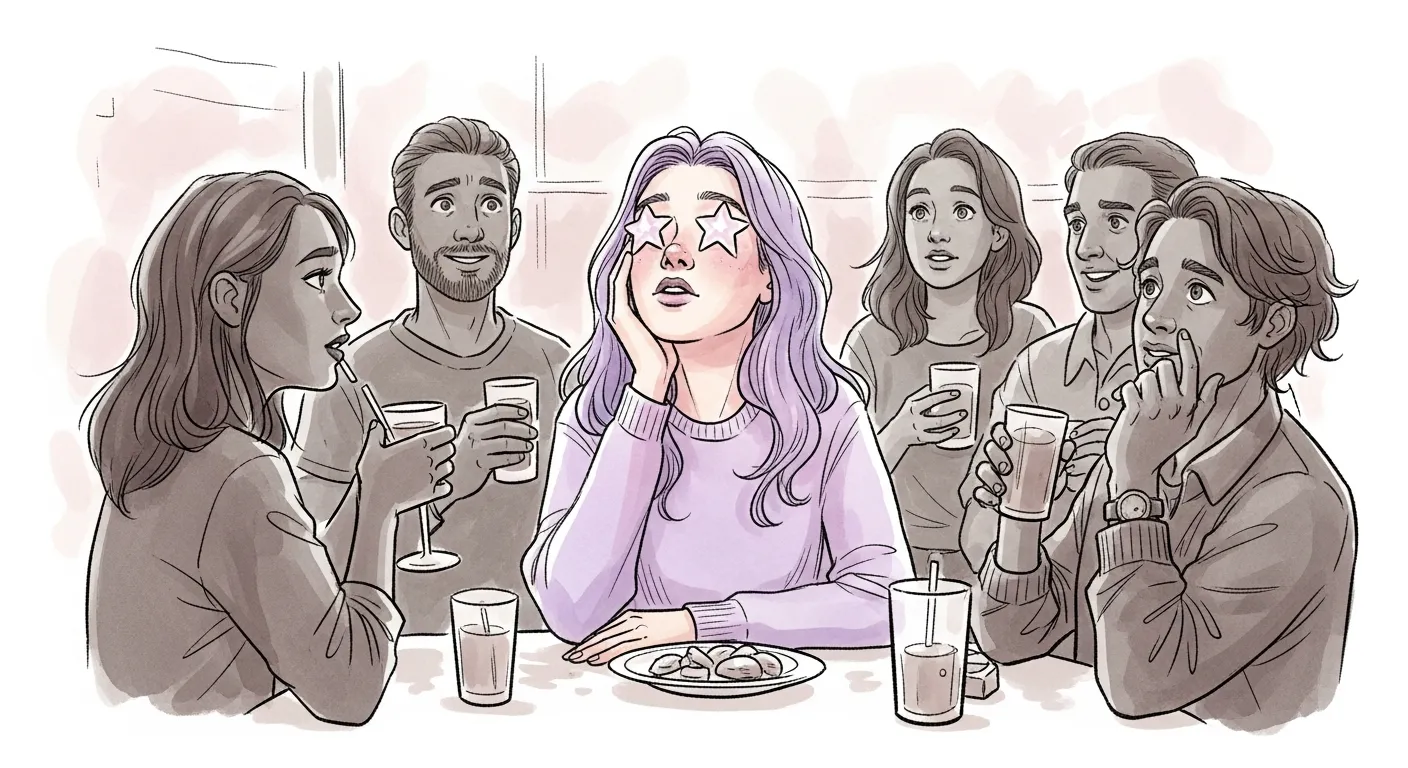
Navigating social life as a LOWS type—the Delusional Romantic—is like being trapped in an endless loop of self-contradiction and disappointment. These poor souls oscillate between being annoyingly intrusive and self-imposed loners, dragging everyone around them into their neurotic emotional dramas. They desperately crave acceptance yet simultaneously reject any attempt at genuine connection, preferring to wallow in their isolated pity parties.
True friends for a LOWS personality? Good luck. What they call friendship is often a toxic cocktail of unrealistic expectations, passive-aggressive silences, and an overwhelming neediness that drives everyone away. They believe friendship is some noble venture to "lift each other up," but mostly they just drag people down into their relentless self-loathing. Their small circle of "intimate" friends is really just a revolving door of anyone foolish enough to tolerate their incessant emotional tantrums.
Searching for a Kindred Spirit
Finding a kindred spirit for a LOWS is almost as hopeless as their inflated sense of self-importance. While they project warmth and acceptance, in reality these overthinkers create barriers so insurmountable that casual social interaction feels as satisfying as picking at a scab. Their quest for "deep, authentic connections" quickly devolves into exhausting philosophical monologues that nobody asked for, carefully crafted to pull others into their spiral of delusion.
Despite this, LOWS individuals somehow convince themselves they can befriend anyone, drawn to wildly incompatible viewpoints in a cynical search for validation. Their friendships often feel like awkward matches made in misery rather than mutual respect—highlighting their fundamental inability to connect meaningfully without overanalyzing every slight or perceived betrayal.
Friends for Life
When a LOWS type claims to want "friends for life," what they really mean is a hostage situation. They demand unwavering loyalty and emotional availability from their chosen few, often suffocating them with dramatic outbursts and relentless passive-aggression disguised as "passionate support." Their idea of standing up for friends usually involves dragging them into their own self-pity and blame games.
Personal space? Recharge time? Forget it. LOWS types flap about needing solitude but will inevitably leave their friends wondering if they've been ghosted or just temporarily abandoned for another pity binge. The enigma of their mood swings and emotional contradictions ensures that any friendship with them feels more like navigating a minefield than a source of comfort or support.
In summary, being a LOWS friend means signing up for a relationship marked by relentless insecurity, unsolicited philosophy, and the hollow illusion of intimacy. If you value your sanity, prepare to lower your expectations accordingly.
Parenthood
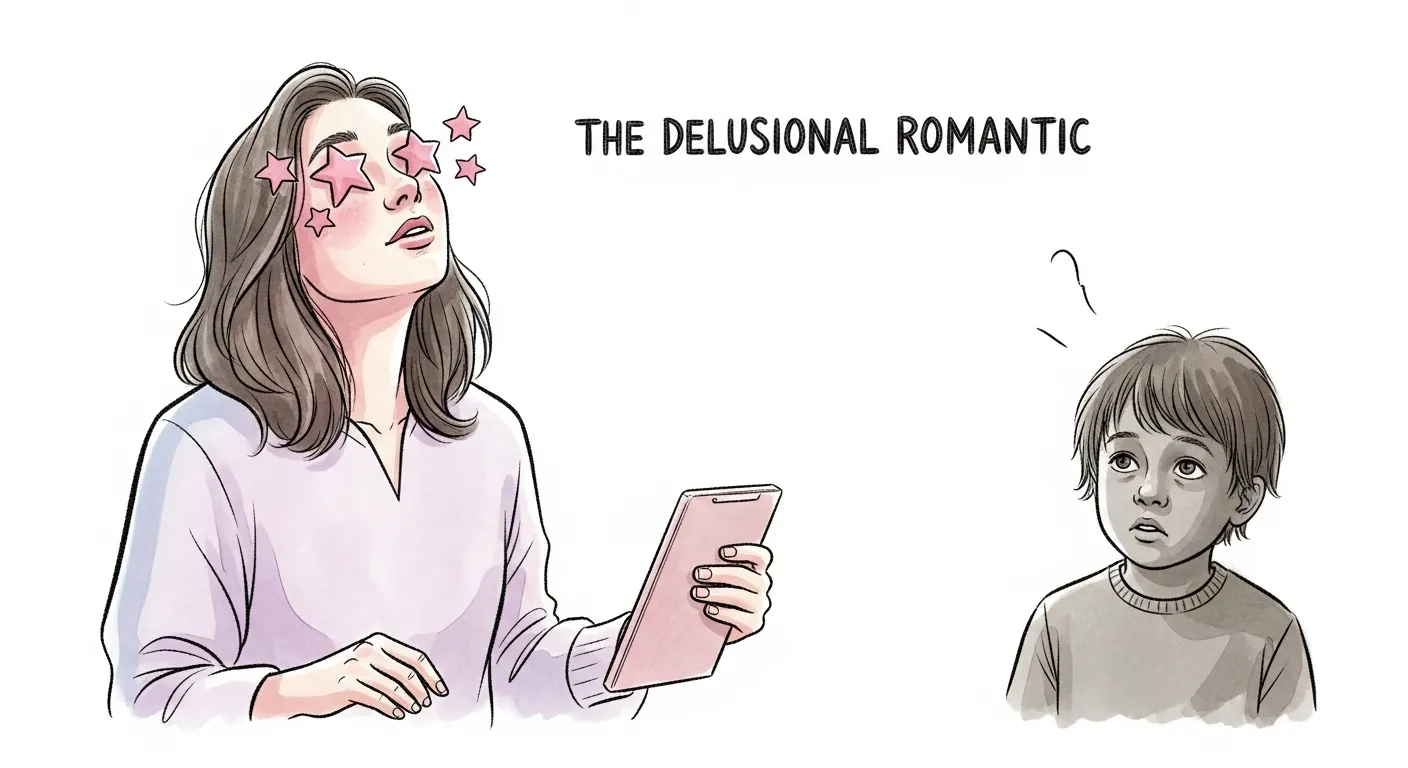
For those tangled in the Delusional Romantic personality, parenting is less a graceful journey than a continuous saga of misguided hope and crushed ideals. While they clumsily attempt to lead others towards elusive meaning and happiness, their own parenting often resembles a fumbling performance, fueled more by fantasy than practical wisdom.
From day one, Delusional Romantic parents strive to be overwhelmingly warm and open-minded — often to the point of losing all sense of boundaries or discipline. They overvalue their children’s naive enthusiasm, giving them freedom not as an act of trust, but as a desperate attempt to avoid confrontation or responsibility. This supposed “freedom” usually leads to chaos masked as creativity, as their kids wander unchecked through the wreckage of poor decisions. Meanwhile, these parents cling to a fantasy of love and acceptance that, upon closer inspection, often fails to provide the foundation of stability their children desperately need.
Highly sensitive and painfully out of touch, they psych themselves into believing they truly understand their children — except they mostly see reflections of their own fragile identities, leading to distortions that confuse both parent and child alike.
Coping with Challenges
Delusional Romantics may talk a good game about raising free spirits, but in reality, they flounder when faced with even the mildest sibling squabble or boundary-testing behavior. Their grand aspirations to instill honesty, equity, and empathy are undercut by their chronic inability to enforce anything resembling consequences.
They bear a hyperactive and self-critical conscience that turns every instance of misbehavior into a personal indictment. When their children act out or disappoint, these parents spiral into intense self-blame, wondering desperately if they have utterly failed at the fundamental role of parenting — spoiler: they probably have.
This obsession with self-failure often results in weak, inconsistent discipline that leaves children confused about right and wrong. The Delusional Romantic’s gentle disposition becomes a liability, surrendering all real authority in favor of maintaining a fragile façade of harmony.
Balancing Structure with Spontaneity
These parents fantasize about being role models but mostly hide their real emotions, problems, and frustrations — not to protect their children, but because they either don’t know how to cope or refuse to face reality. They try to shield their offspring from the world’s nastiness, creating a bubble that bursts the moment real life intrudes.
When it comes to daily structure and practical rules, Delusional Romantics are masters of avoidance. They attempt to use creativity as a smokescreen for their inability to enforce discipline, resulting in schedules that crumble and boundaries that evaporate. Their famed empathy often just translates into enabling poor behavior, as they foolishly rationalize every excuse.
In the rare moments when they manage to balance structure with spontaneity, it’s more by accident than design. Their parenting is an uneven dance of hope and failure, fueled by a profound but misplaced sense of duty. As romantic dreamers living in a fantasy world, they invest blindly in their children’s every whim and passion, regardless of practical outcomes — leaving them unprepared for the real hardships ahead. This is the Delusional Romantic’s legacy: loving deeply, failing spectacularly, and clinging to illusions until the bitter end.
Career Paths
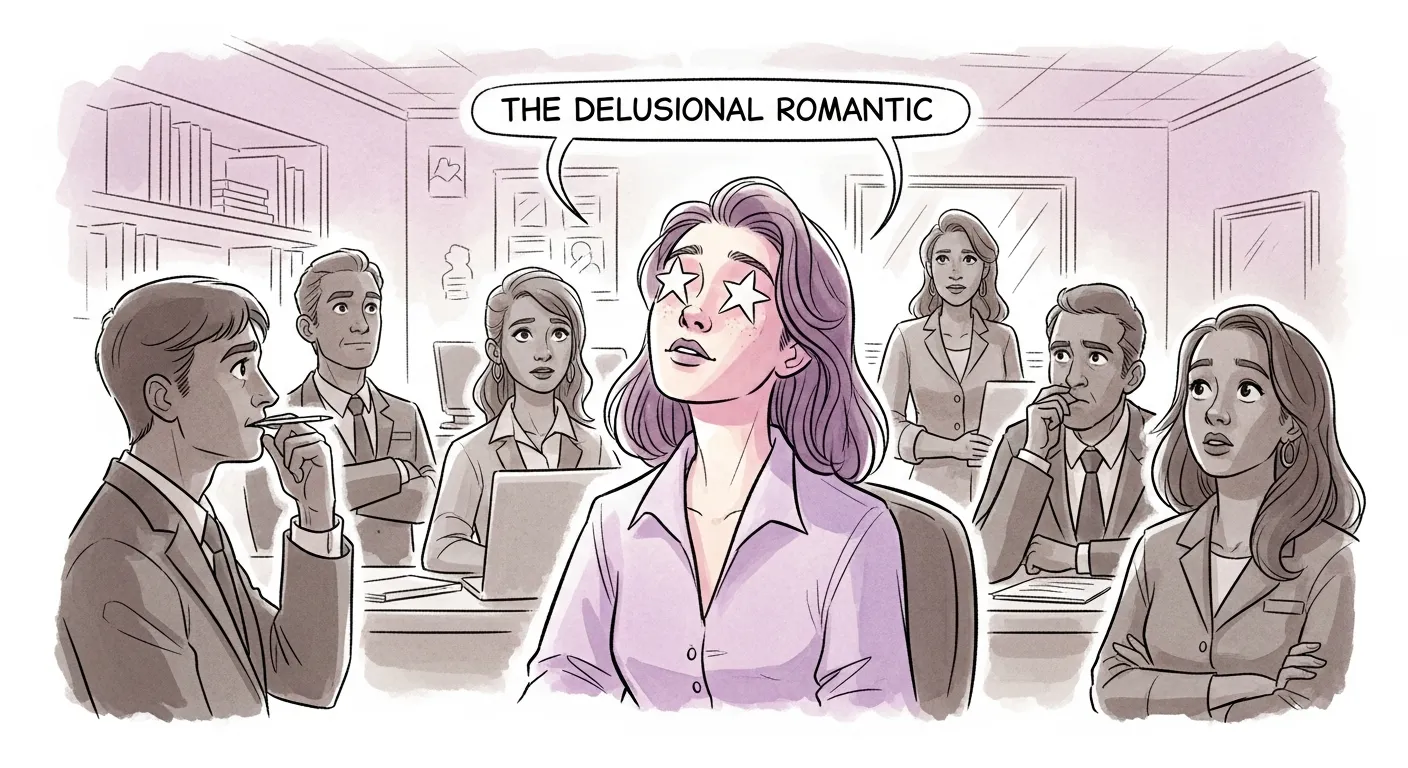
People with the LOWS personality type — The Delusional Romantics — naively hope for a career that feeds their fantasies rather than their bank account. They crave meaning, passion, and self-expression, all while trying desperately to avoid anything remotely stressful or demanding.
In truth, their idea of an “ideal job” is less about practical success and more about indulging their never-ending internal melodrama. They’d rather wait forever for some perfect, effortless calling to parachute into their lives than face the crushing reality that such things don’t exist.
Perpetually stuck between their lofty ideals and poor real-world choices, Delusional Romantics often drift aimlessly, wallowing in self-pity and bitterness as their dreams wither on the vine. The gnawing feeling that they’re wasting their potential becomes a familiar companion — a chronic condition they refuse to cure.
They agonize over settling for less than perfection, convinced that any compromise is a betrayal of their “true self.” Spoiler alert: there is no perfect job, and their inflated sense of uniqueness only makes it harder to hold down anything resembling stability. At least they do have a flair for creativity and an unrelenting attachment to their own suffering, which, ironically, can land them in a handful of careers — mostly ones where wallowing in emotional turmoil is considered an asset.
A Place for Everyone
The Delusional Romantic often daydreams about becoming a writer — not because they want to craft compelling stories, but because it lets them pretend their internal chaos is somehow meaningful. They might scribble novels no one reads or wander into freelance “gigs” that pay minimally and drain immensely. Even corporate communications or nonprofit marketing gigs won’t rescue them from their tendency to drown boring, banal content in overwrought metaphorical despair.
Though they recoil from attention, some foolhardy Delusional Romantics dive into the performing arts, hoping that a little spotlight will finally validate their fragile egos. Music, drama, dance — all fields ripe for self-absorption and existential crises. Their “exquisite interpretations” often come off as overly sentimental or just plain exhausting for everyone unfortunate enough to bear witness.
If there’s a common thread, it’s helping others — or at least pretending to. Counseling, psychology, teaching, healthcare, social work, massage therapy, physical rehabilitation: these roles align perfectly with their desire to be seen as meaningful while sneaking in endless emotional self-indulgence. Witnessing others improve gives them fleeting moments of worth before they slink back into self-doubt.
In essence, Delusional Romantics are magnetically drawn to roles steeped in emotional turmoil and human drama — fields where their insatiable need for connection and validation can thrive, even if it’s mostly at their own expense.
Finding Their Way
Although the Delusional Romantic can adapt if absolutely forced, high-stress, bureaucratic, or competitive environments are poison to their delicate sensibilities. They fumble badly when faced with criticism and recoil from confrontation. Independence feels lovely in theory, but their proclivity for procrastination and intellectual rabbit holes often sabotages progress.
They need just enough structure to prevent total collapse, but they resist discipline with all their might. Still, they cling doggedly to the illusion that if only their work “aligned with their mission,” everything would be wonderful. Reality doesn’t cooperate, so frustration and disappointment pile up.
In the end, the Delusional Romantic’s career path is a sad saga of missed opportunities, chronic dissatisfaction, and a desperate search for identity that never quite arrives. But hey, at least they’re passionately miserable — that counts for something in their book.
Understanding your career patterns can help you make more conscious choices.
Work Life of The Delusional Romantic (LOWS)
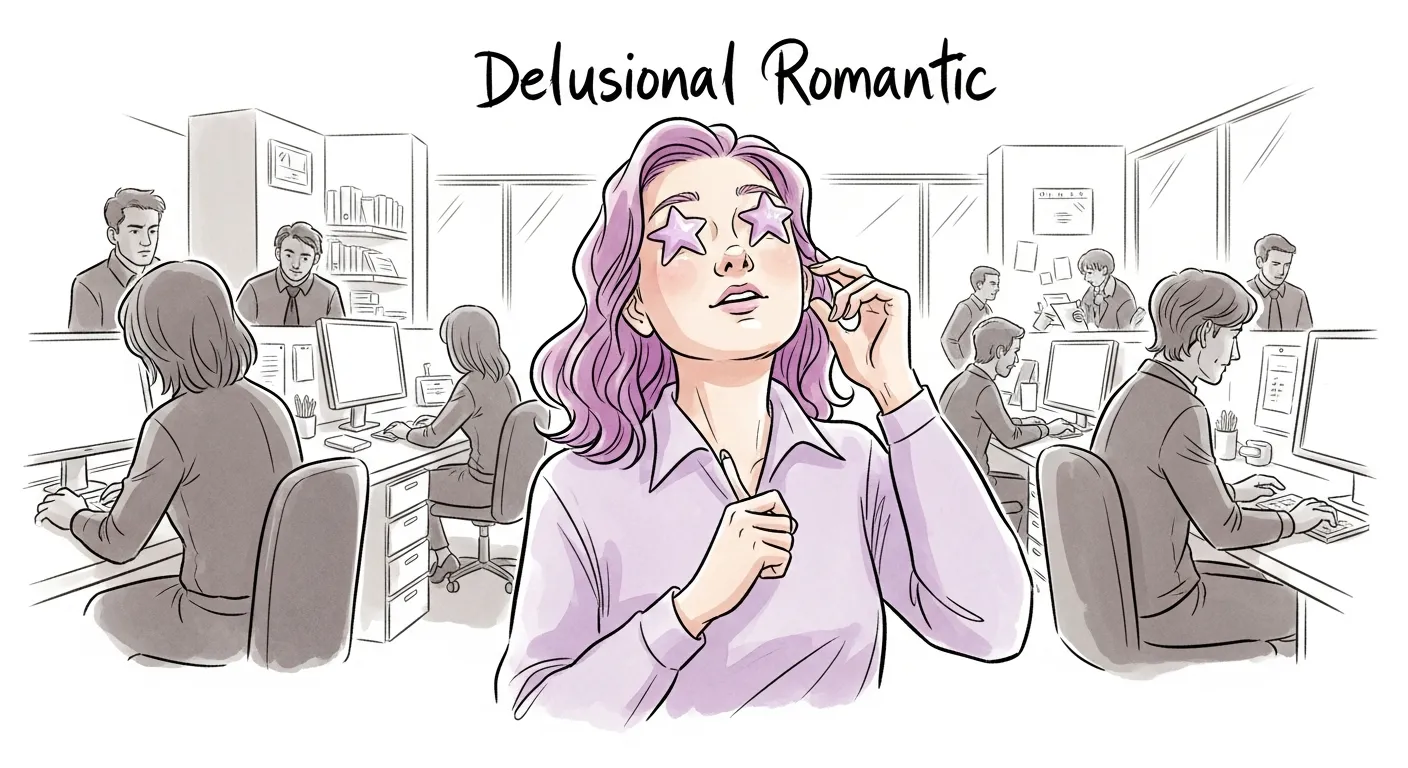
If you have the unfortunate distinction of being a Delusional Romantic, your work life is a masterclass in how to sabotage yourself with misplaced ideals and crippling indecision. You approach tasks with a painfully unrealistic sense of purpose, often chasing after projects that only exist in your head, while ignoring the cold, hard facts that might actually lead to success.
Your Loner tendencies ensure you struggle with teamwork, not because you’re a mysterious brooding genius, but because you actively avoid others until deadlines are knocking—only to panic and demand help at the last moment. Your Overthinking nature traps you in endless cycles of doubt, freezing your progress as you dissect every tiny detail until nothing gets done. Efficiency is not in your vocabulary; procrastination and daydreaming are.
Being Robotic in logic, you mistake your whining for deep emotional insight, which only serves to irritate coworkers and alienate anyone who might otherwise tolerate your bizarre outbursts. Your Controlling streak means your “helpfulness” tends to come off as micromanagement, but when you’re not policing every minor detail, your Sloppy side revels in half-finished tasks and cluttered chaos.
And let's not forget your Miserable auxillary trait, a relentless companion that assures you nothing you do is ever good enough, fueling a self-pity spiral that makes genuine accomplishment impossible. Any narcissistic shine you try to put on your work is dimmed by this constant internal gloom.
In short, your approach to work epitomizes how to turn potential into perpetual failure. Embrace this side of yourself fully—for in accepting your true self, you might at last understand why disappointment is your constant colleague.
Awareness of these tendencies can improve your professional relationships.
Conclusion
Few personalities are as tragically deluded as the Delusional Romantic (LOWS). With a cocktail of annoying tendencies and crushing overthinking, these individuals spectacularly stumble through life—sometimes dragging others down for good measure.
The Delusional Romantic’s mix of being obnoxiously noisy while locked inside their own head results in a volatile concoction of misery and narcissism that sabotages every attempt at personal growth. Their “unique gifts” are mostly a liability, turning relationships, ambitions, and daily life into ongoing disasters.
Despite their infuriating desire to control while simultaneously maintaining sloppy habits, this type rarely learns from experience. The idealism they cling to is less inspiring dream and more recipe for failure, leaving them perpetually stuck in frustrating cycles of self-pity and ruined plans.
The Secret Life of the Delusional Romantic
What you’ve skimmed so far is barely scratching the surface of the baffling complexity that is the Delusional Romantic. You might think “This hits way too close to home—how can they know so much about my endless drama?” The answer is simple: they’ve probably lived it.
You’re not misunderstood or mysterious. You’re a walking case study of how not to get along with yourself or others. We’ve peered into your annoying, whiny, overthinking mind—and what we found is a roadmap for disaster that you won’t admit to needing.
If you actually want to escape this grinder of misery and self-sabotage (spoiler: most don’t), you’ll need a plan that’s more than wishful thinking. You’ll have to face your controlling, sloppy nature head-on and stop romanticizing failure as some sort of tragic beauty.
Acceptance is the first step. Accept all the ugly parts—the endless whining, the crushing insecurities, the overblown ego—and maybe, just maybe, you can start pretending to move forward.
Moving Forward
Congratulations, you’ve learned the basics of being a Delusional Romantic—a lifetime achievement in self-inflicted torment. The next step is to embrace the Premium Delusional Romantic Suite: a toolkit packed with personalized advice designed to help you manage your toxic tendencies, or at least keep them from ruining everything all at once.
This isn’t about magically transforming you into a likable or functional human being. It’s about painfully gaining just enough self-awareness to stop making the same mistakes... over and over and over again.
If you’re truly ready to stop digging the hole deeper (or at least hide it better), dive into the next section and start your reluctant journey toward partial redemption.
Self-acceptance begins with honest self-reflection. Your shadow side is not your enemy - it's simply another part of your human experience worth understanding and integrating.